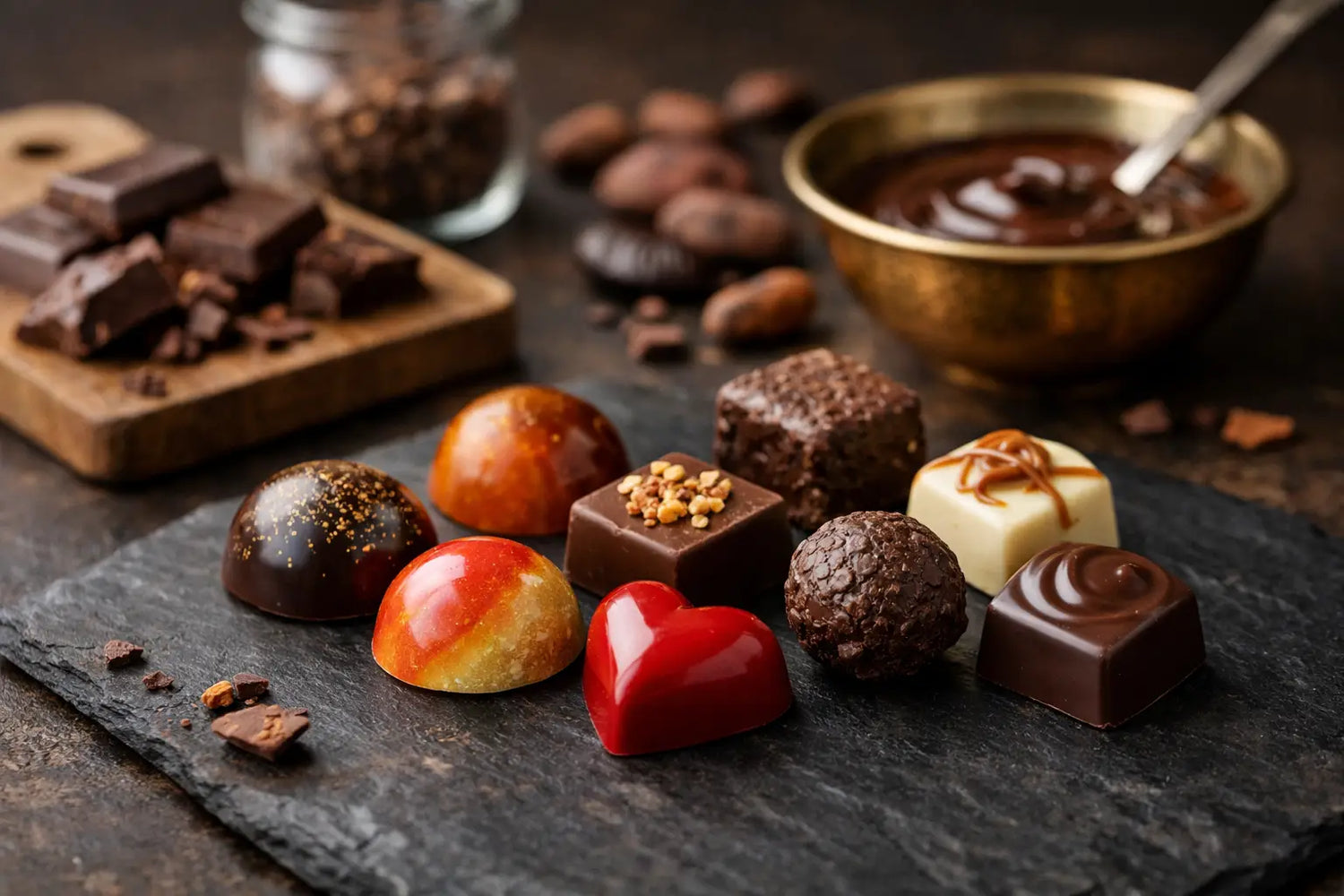
A chocolate bar can look deceptively simple: cacao, sugar, perhaps a little cocoa butter or milk. Yet the distance between a mass-market bar and a carefully made artisan chocolate is substantial. If you have wondered why are artisan chocolates expensive, the answer is not one luxurious detail. It is a chain of choices, beginning at the cacao farm and continuing through every stage of making, finishing, and presentation.
Price alone does not guarantee excellence, and not every expensive chocolate delivers meaningful quality. But when a maker works bean to bar, sources cacao with care, produces in small batches, and finishes each piece by hand, the higher price reflects work and ingredients that industrial chocolate is designed to minimize.
Why are artisan chocolates expensive? It starts with cacao
Cacao is not a uniform commodity. Like coffee, wine, or olive oil, it carries the character of where it was grown, how it was fermented, and how it was dried. Beans from Madagascar may offer bright red-fruit notes, while a well-fermented cacao from Ecuador may lean floral, nutty, or deeply cocoa-forward. These distinctions are the foundation of fine chocolate.
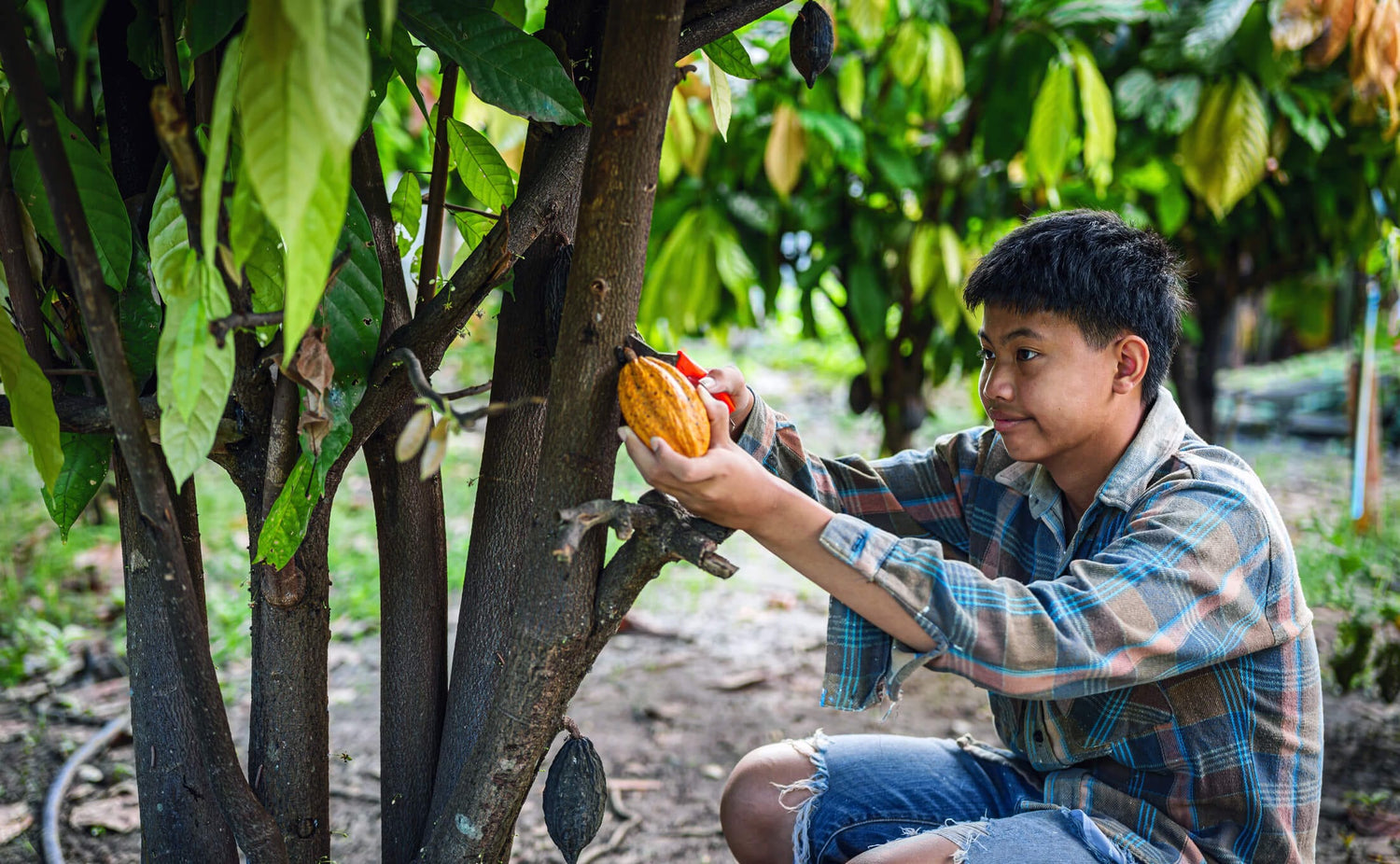
High-quality cacao costs more because it demands more at origin. Farmers and post-harvest teams must harvest ripe pods, ferment beans with precision, turn and monitor the fermentation, and dry them slowly enough to protect flavor. When cacao is bought through transparent, relationship-based, or ethically minded sourcing channels, more value can remain with the people producing it. That is not simply a marketing story. Better compensation and long-term purchasing relationships can support the consistency required for exceptional beans.
Industrial chocolate often relies on vast volumes of standardized cacao, selected primarily for reliability and price. A bean-to-bar maker may instead seek a specific harvest, cooperative, or region because of its flavor profile. Those smaller lots are harder to source, assess, transport, and replace. They also invite variation from season to season, which is part of their authenticity.
Bean-to-bar production requires time, skill, and equipment
Many traditional chocolatiers create beautiful confections using purchased couverture: chocolate that has already been manufactured by a large producer. There is real craft in tempering, molding, filling, and decorating couverture. Bean-to-bar chocolate adds another demanding layer: the maker produces the chocolate itself.
This means cleaning and sorting beans, roasting them, cracking and winnowing away the husk, refining the nibs with sugar, conching the chocolate to develop texture and aroma, aging it when needed, tempering it, and finally molding or using it in confections. Each stage can improve or diminish the final result.
Roasting is not a generic step
Roasting brings out cacao's aroma, but it must be adapted to the bean. A light roast may preserve delicate fruit notes. A deeper roast can create warmth and body, but taken too far it can erase origin character and introduce bitterness. Makers test, taste, and adjust rather than applying one setting to every cacao.
Refining and conching shape the experience
Fine chocolate should feel smooth and melt cleanly on the palate, but smoothness takes time. Refining reduces particle size, while conching develops flavor and manages moisture and acidity. Large factories perform these steps at immense scale with highly efficient equipment. Small workshops have lower output, more hands-on oversight, and less room for error.
A batch may take days from roasted bean to finished chocolate. During that time, the maker is paying for skilled labor, energy, equipment maintenance, quality control, and ingredients without yet having a finished product to sell. This patient production is one reason artisan chocolate has a different cost structure from a candy bar made by the millions.
Small batches do not benefit from factory economics
Scale changes everything. Large confectionery companies can buy ingredients in enormous quantities, automate repetitive tasks, spread equipment costs across millions of units, and negotiate lower shipping and packaging rates. Artisan makers do not have those advantages.
Small-batch production makes it possible to work with distinct origins and to give closer attention to each roast, recipe, and mold. It also means more setup and cleanup time per bar or box of pralines. A limited seasonal collection may involve developing a recipe, testing shelf life, hand-filling molds, applying decoration, and assembling gift packaging for a relatively modest run.
That small scale is a trade-off. It may mean a favorite origin is available only while a particular harvest lasts, or that production quantities are limited around holidays. For many chocolate lovers, however, that is precisely the appeal: the chocolate has not been engineered to be identical and available everywhere, forever.
The cost of craft continues beyond the chocolate
A finished bar is only one expression of artisan work. Pralines, truffles, mendiants, and filled seasonal pieces demand additional precision. Ganaches must be balanced for flavor and texture. Fillings need to remain stable and safe within their intended shelf life. Shells must be tempered correctly, then released cleanly from their molds. Decorations are often applied by hand.
Freshness matters, particularly for ganaches made with cream, fruit, nuts, spices, or other natural ingredients. An artisan maker may choose shorter production windows and more careful inventory management rather than relying on a long shelf life supported by extensive additives. The result can be more vivid flavor, though it requires the customer to enjoy the chocolates within the recommended period.
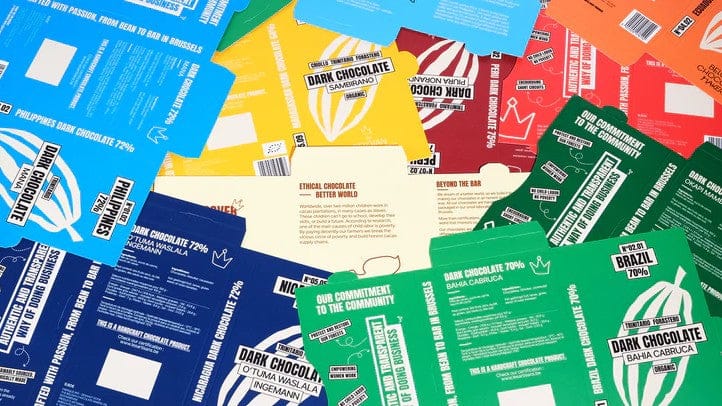
Packaging also has a practical role. Fine chocolate is sensitive to heat, humidity, light, and strong odors. A well-designed box or gift format protects delicate pieces, communicates origin and ingredients clearly, and makes the product appropriate for a meaningful gift. Premium presentation adds cost, but it should never be used to disguise ordinary chocolate. The product inside remains the point.
Ethical sourcing is part of the value, not an extra
Cacao has a long history of pricing pressure, opacity, and unequal value distribution. Buying chocolate made from carefully sourced beans does not solve every structural challenge in the cacao sector. Still, traceability gives buyers a better basis for asking where the beans came from, how they were handled, and whether the maker can speak honestly about their supply chain.
Ethical sourcing can cost more because it prioritizes quality and accountability over the lowest possible ingredient price. It may involve smaller supply chains, direct communication with partners, third-party logistics for specialty lots, and a willingness to pay more for cacao that has been properly fermented and prepared.
The meaningful question is not whether a package uses the word “ethical.” It is whether the maker can explain its approach with specificity. Origin, producer relationships, ingredient choices, and in-house production are all useful indicators. Transparency does not need to be theatrical to matter.
How to tell whether the price is worth it
The best artisan chocolates offer evidence of their value. Look for a clear cacao origin or a thoughtful explanation of sourcing. Check whether the maker produces chocolate from beans or uses couverture, since both can be excellent but represent different levels of involvement. Read the ingredient list: a short list is not automatically superior, but unnecessary fillers, artificial flavors, and heavy reliance on substitutes can tell you a great deal.
Then taste with attention. Good chocolate should have a clean snap when appropriate, a smooth melt, and a flavor that develops rather than disappearing into sweetness. In a filled chocolate, the shell and center should feel balanced. The goal is not intensity for its own sake. A delicate milk chocolate, a bright single-origin dark bar, and a carefully made hazelnut praline can each be exceptional in different ways.
For gifting, the value is also experiential. A box of thoughtfully made chocolates carries a sense of occasion because it reflects time, skill, and a specific point of view. It is a more considered choice than a generic luxury label, especially when the recipient values food with a story behind it.
A higher price can buy a more honest chocolate
Artisan chocolate is expensive because real chocolate making is demanding. Fine cacao costs more to grow and source well. Small batches require more labor per piece. Bean-to-bar production requires specialized knowledge, time, and equipment. Fresh fillings, careful finishing, and protective gift-ready packaging add further value.
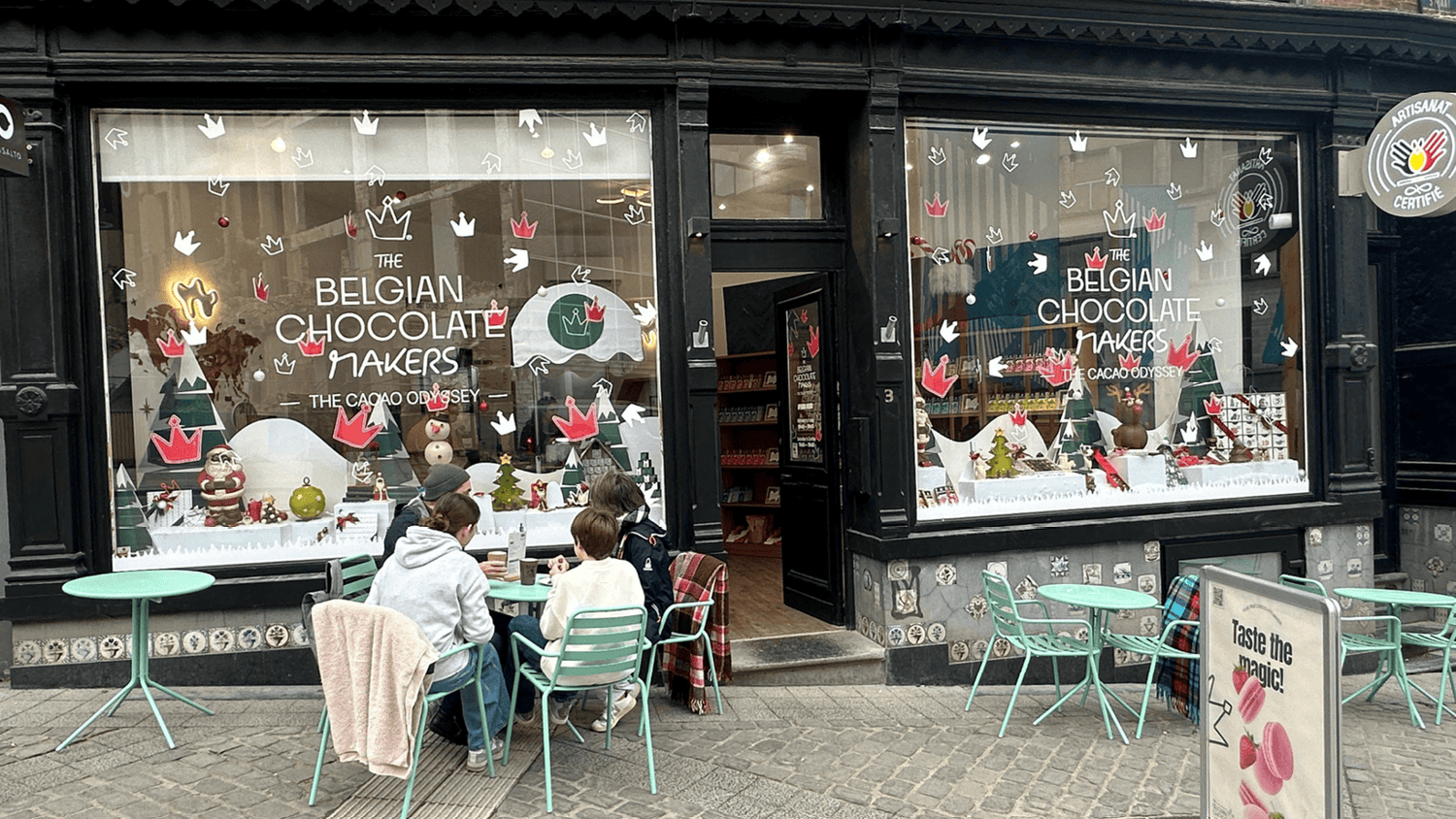
At The Belgian Chocolate Makers, that philosophy begins with transforming selected cacao beans in our Brussels workshop rather than treating chocolate as a ready-made ingredient. For the buyer, the most rewarding approach is simple: choose chocolate whose flavor, origin, and craftsmanship feel worth savoring. A small piece, enjoyed slowly, can reveal far more than its size suggests.