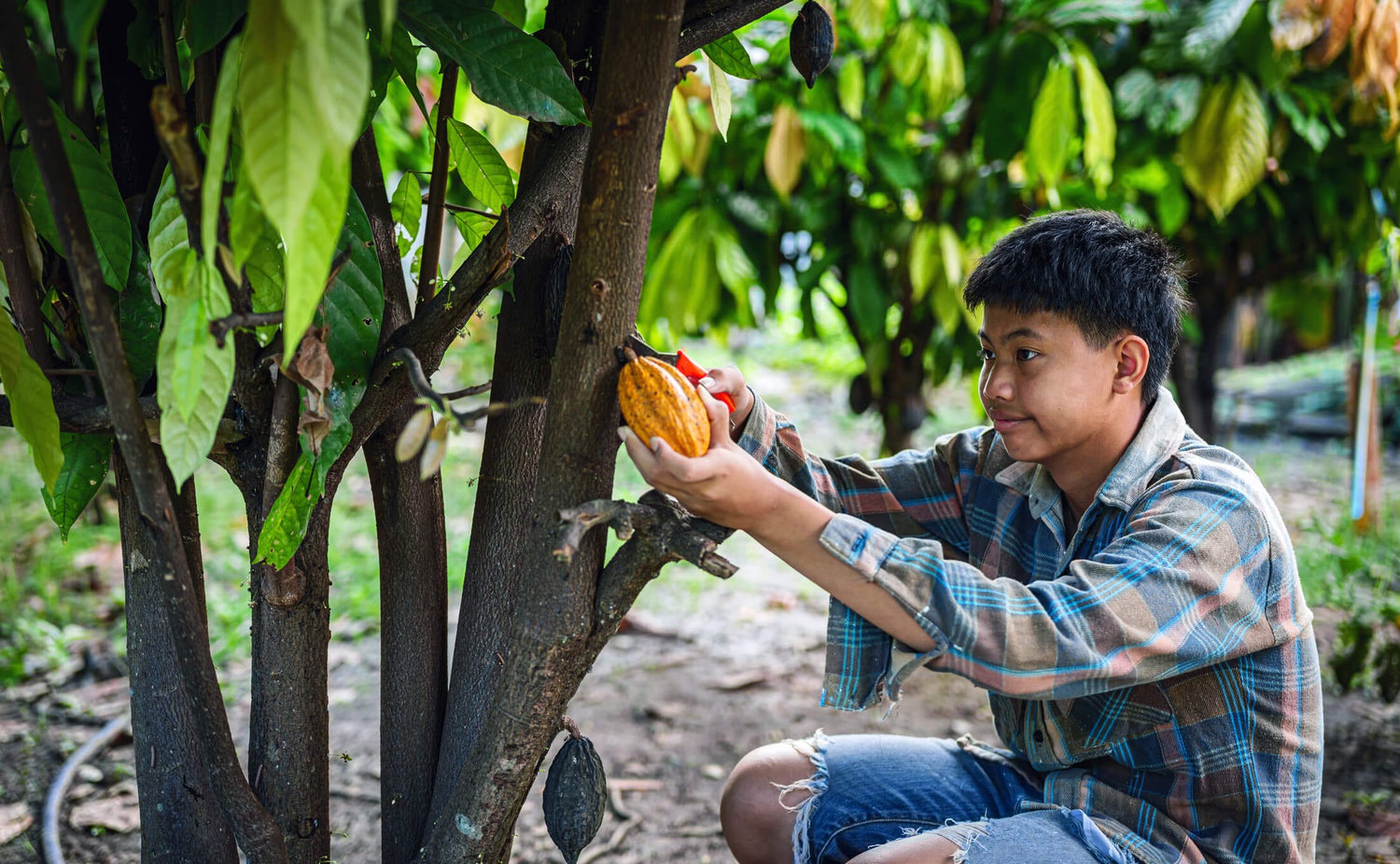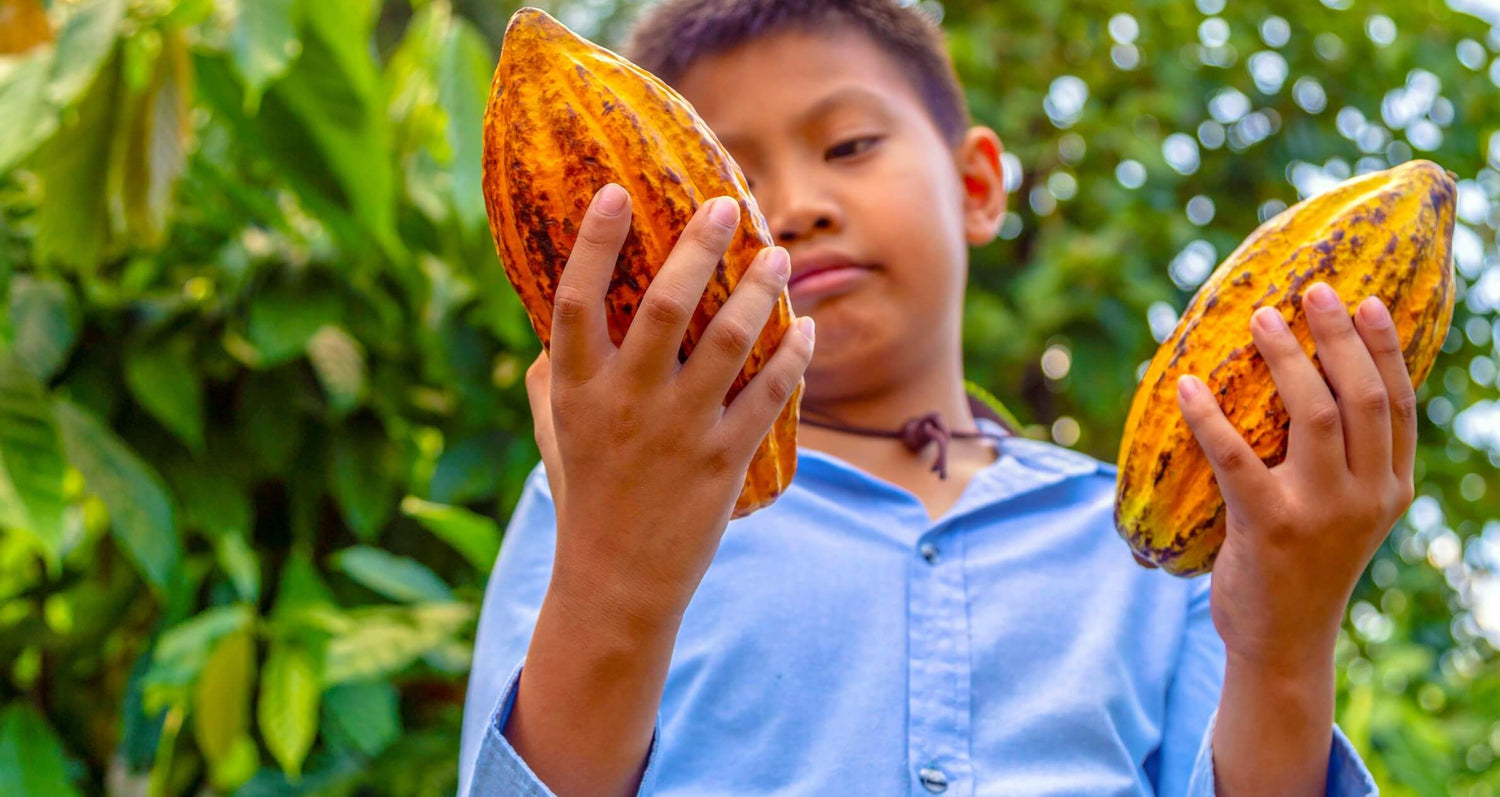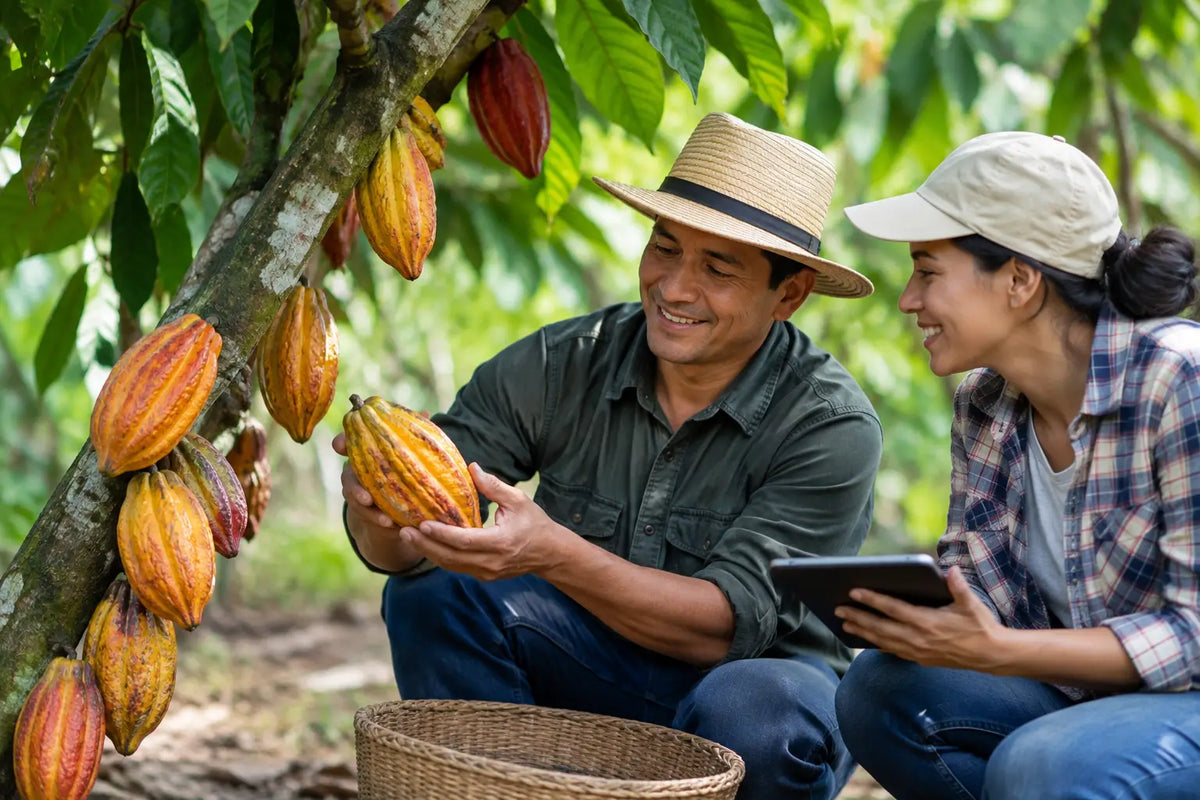
A beautiful cacao landscape and a few photographs of harvested pods do not make an ethical supply chain. An ethical cacao farm case study should answer harder questions: Who grows the cacao? Who makes decisions about price and quality? What happens after the beans leave the farm? And can the claims be traced through every stage that shapes the finished chocolate?
For buyers of fine chocolate, these questions are not separate from flavor. The care given to trees, workers, fermentation, drying, and transport is often reflected in the character of the beans. Ethical sourcing is not a decorative story placed around a bar. It is part of the work behind a chocolate with a clear origin, a distinct profile, and real integrity.
Why a farm case study matters
Cacao is frequently discussed as though it were one ingredient with one uniform value. It is not. Cacao comes from farms of very different sizes, regions, farming systems, and commercial realities. One community may sell wet beans to an intermediary on the day of harvest. Another may ferment and dry cacao collectively, giving it greater control over quality and market access. A meaningful case study makes those differences visible.
This matters because broad labels can conceal important details. Certification can be valuable, but it does not automatically explain whether farmers receive a sustainable income, whether labor conditions are monitored, or whether a buyer has a long-term relationship with a producing community. Direct trade can also be meaningful, but the phrase alone does not prove that pricing is fair or that communication is consistent.
The strongest case studies replace vague assurances with evidence. They explain the farm or cooperative structure, the route beans take to market, the quality work performed after harvest, and the basis on which a premium is paid. They also acknowledge what remains difficult. Agricultural livelihoods are affected by weather, disease, changing local costs, and volatile commodity markets. Ethical sourcing is a continuing commitment, not a claim that every challenge has been solved.
The people behind the beans
A credible ethical cacao farm case study starts with people rather than packaging. It identifies whether the cacao comes from individual family farms, a cooperative, an estate, or a combination of these models. Each structure has different strengths and risks.
Smallholder farms can preserve deep agricultural knowledge and diversify income through crops such as plantain, cassava, fruit, or timber trees. Yet smallholders may have limited bargaining power, especially when buyers are distant and harvest volumes are modest. Cooperatives can help members pool cacao, invest in fermentation facilities, and negotiate collectively. But their effectiveness depends on transparent governance and clear distribution of benefits. Larger estates may offer more centralized quality control, while requiring equally close attention to wages, worker representation, housing, and safe conditions.
The key question is not which model sounds best. It is whether the people doing the growing and post-harvest work have meaningful agency and receive compensation that recognizes both their labor and their contribution to quality.
Price deserves particular attention. A buyer paying above the commodity market is a positive sign, but the number needs context. Is the price agreed before harvest or renegotiated after the beans are ready? Is it paid directly to farmers, through a cooperative, or through several intermediaries? Does it include a separate premium for fermentation quality, organic practices, or community projects? Are payments timely?
A thoughtful case study does not need to disclose every commercial detail. It should, however, make the pricing approach understandable. Ethical trade becomes more credible when it shows how value moves back toward the people who create it.
Ethical practice includes everyday work
Labor conditions cannot be reduced to a single policy statement. Responsible sourcing looks at the everyday reality of farm work: access to protective equipment, appropriate tools, safe handling of fermentation and drying equipment, and conditions for seasonal workers as well as permanent staff.
It also requires a serious approach to child labor. In cacao-growing regions, children may live on family farms and participate in age-appropriate household activities. That is not the same as hazardous work, missed schooling, or exploitation. A reliable sourcing partner recognizes this distinction, has procedures for identifying risks, and works with communities on practical prevention rather than relying on a simple promise that problems do not exist.
Quality is part of the ethical equation
Fine chocolate begins long before roasting. Once cacao pods are opened, the beans and pulp must ferment properly to develop the precursors of chocolate flavor. They then need careful drying to reach a stable moisture level without acquiring smoke, mold, or contamination. These steps require time, knowledge, infrastructure, and labor.
When farmers and cooperatives are paid only for volume, there is little reward for the extra attention that fine-flavor cacao demands. When a buyer recognizes quality through consistent purchasing and differentiated pricing, it can support better post-harvest practices and reduce pressure to rush beans through the process.
This is where ethics and craftsmanship meet. A chocolate maker cannot create the fruit, floral notes, gentle acidity, or deep cocoa character that were lost through poor fermentation. The maker can refine, conche, and balance the chocolate with care, but the bean sets the foundation.
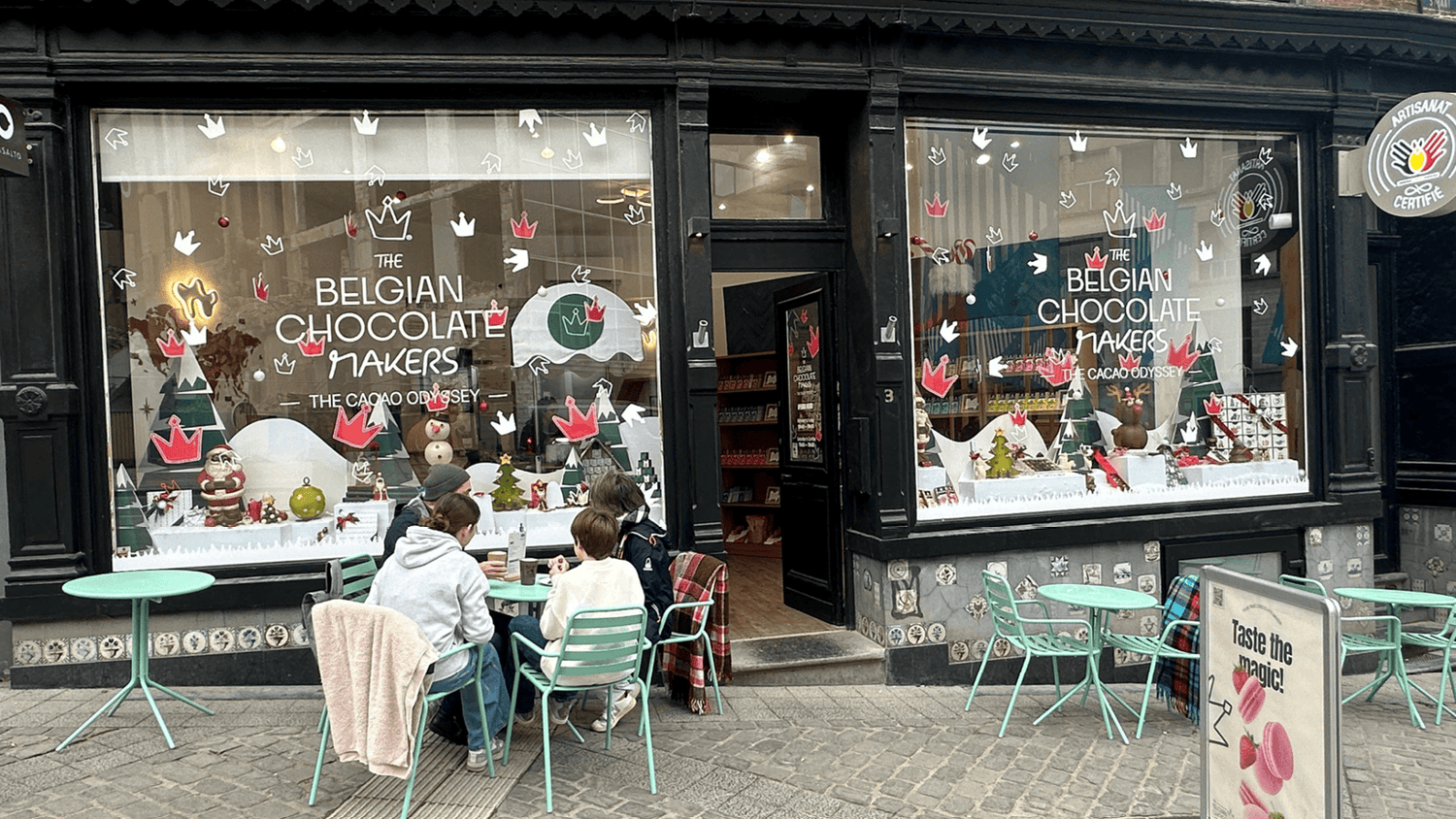
At The Belgian Chocolate Makers, working bean to bar means treating that foundation with respect. Roasting and refining in our own workshop gives us a closer relationship with the material itself. It also makes origin more than a line on a wrapper. A bean's quality, harvest conditions, and post-harvest handling are present in every decision made at the chocolate-making table.
What traceability should actually reveal
Traceability is often presented as a neat line from a farm to a chocolate bar. Real supply chains are rarely that simple. Beans may be collected from many nearby farms, fermented at a central facility, stored by an exporter, and shipped alongside other lots. That does not make traceability impossible. It means the claim should be precise.
A strong ethical cacao farm case study explains the level of traceability available. Is the cacao traceable to a named farm, a village, a cooperative, a district, or a defined lot? Who maintains the records? How are beans kept separate, if separation is claimed? What information is shared with the chocolate maker and, where appropriate, with the customer?
Specificity builds trust. If a maker purchases from a cooperative of several hundred growers, that is still a valuable origin story. There is no need to pretend that every bar comes from a single plot. What matters is that the description matches reality and gives buyers a truthful view of how cacao was sourced.
Traceability should also extend beyond location. It should reveal continuity. One-off purchases can offer an interesting bean, but longer relationships create more room for planning, quality improvement, and honest feedback. A buyer that returns each season, communicates specifications clearly, and pays reliably is better positioned to support lasting progress than one that appears only when a particular flavor is fashionable.
Environmental care needs local context
Cacao can be grown beneath a diverse canopy of shade trees or in more intensive systems with little shade. Neither image alone tells the whole story. Shade-grown agroforestry can support biodiversity, protect soils, and provide farmers with additional crops. It may also lower yields or require more land management. Intensive farming can increase short-term output, while creating risks for soil health, water systems, and resilience if poorly managed.
An ethical case study should therefore describe practices, not just use environmental language. Look for information about tree cover, soil management, crop diversity, water use, disease control, and whether farm expansion threatens forests. It should also recognize farmers as practical stewards balancing productivity with the long-term health of their land.
Climate change makes this balance more urgent. Irregular rainfall, higher temperatures, and new pest pressures affect both yields and flavor consistency. Responsible sourcing can support adaptation through agronomy training, disease-resistant planting material where appropriate, diversified crops, and purchasing relationships that do not abandon growers after a difficult harvest.
Reading claims with a discerning eye
For a gift buyer or chocolate enthusiast, there is no need to become a supply-chain auditor before choosing a bar. A few well-placed questions can separate meaningful origin information from polished language.
Look for a named origin and a clear explanation of who supplies the beans. Notice whether the maker describes post-harvest practices, not only the farm landscape. Consider whether pricing, cooperative support, or long-term purchasing is discussed with enough detail to be useful. Finally, pay attention to humility. The most trustworthy accounts tend to describe progress and challenges together.
Ethical cacao is not defined by perfection. It is defined by a willingness to know the source, pay attention to the people whose work makes chocolate possible, and keep improving the relationship from harvest to finished bar. When that care is matched by skillful bean-to-bar making, a piece of chocolate becomes more than a luxury. It becomes a thoughtful way to enjoy craft while honoring where its flavor began.