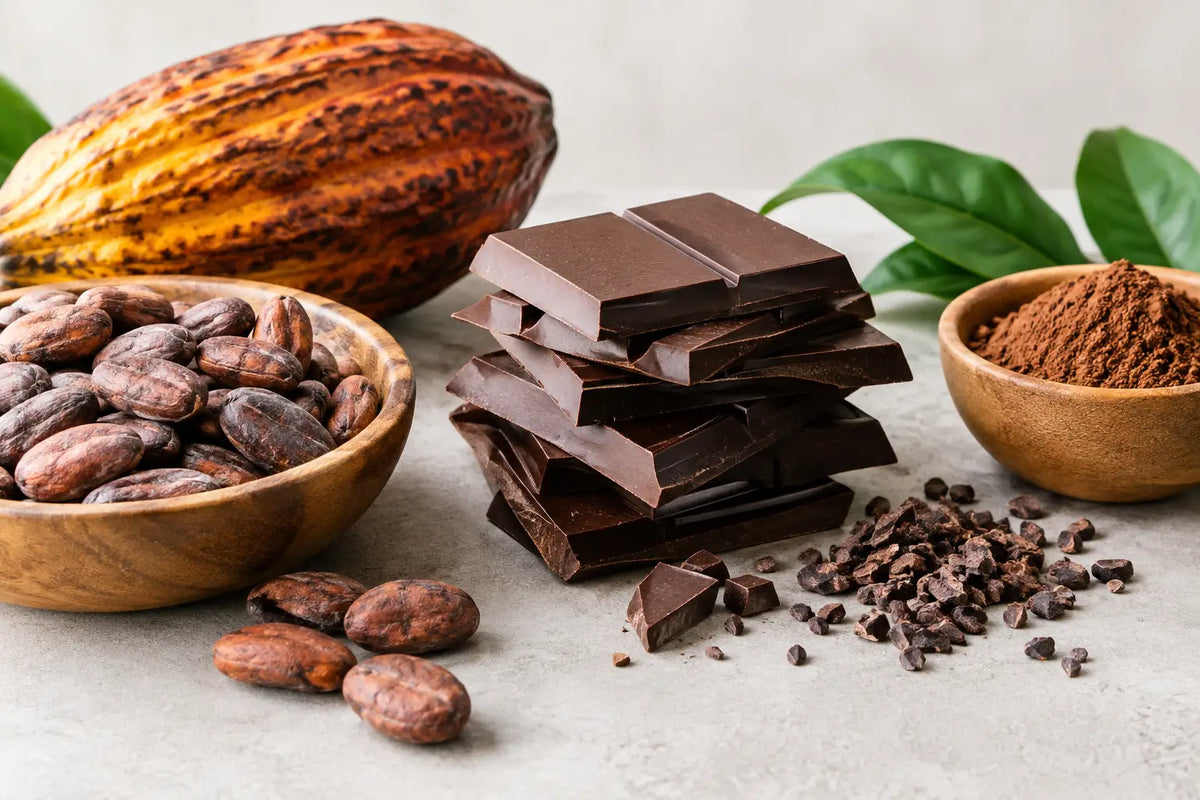
A dark chocolate bar can begin with nothing more than cacao beans and sugar, yet the answer to “is bean to bar vegan” is not automatic. Bean-to-bar describes how chocolate is made: a maker sources cacao, roasts it, refines it, conches it, and molds it in-house. Vegan describes what is in the finished product. The two can align beautifully, but they are not the same promise.
For shoppers seeking chocolate with both craft integrity and plant-based ingredients, the distinction is worth making. A carefully made single-origin bar may be naturally vegan. A bean-to-bar milk chocolate, a filled praline, or a seasonal creation may not be. The answer is always found in the recipe, the production practices, and the label.
Is bean-to-bar chocolate vegan by default?
No. Bean-to-bar chocolate is not vegan by default, although many dark bean-to-bar bars are. The term refers to a chocolate maker’s control over the transformation from raw cacao bean to finished bar. It says something meaningful about craftsmanship, freshness, and traceability, but it does not dictate whether dairy, honey, or other animal-derived ingredients are used.
A classic dark chocolate recipe is often vegan because it contains cacao beans, cocoa butter, and sugar. Some makers add vanilla or a small amount of lecithin to improve texture. These ingredients are generally plant-based, though every product should still be checked individually.
Milk chocolate contains milk powder, milk solids, or another dairy ingredient, so it is not vegan. White chocolate is also usually made with milk, cocoa butter, and sugar. Filled chocolates require even more attention: ganache, caramel, buttercream, and praline fillings often contain cream, butter, milk, or honey.
The useful question is not simply whether a chocolate is dark or handmade. Ask: what exactly did the maker put into this particular bar?
Why the bean-to-bar method still matters to vegan buyers
While bean-to-bar is not a dietary certification, it gives a conscientious buyer a better starting point. Makers who handle chocolate from cacao bean through final molding know their ingredients, their process, and the story behind each origin. That proximity can make recipes clearer and questions easier to answer.
In conventional chocolate production, a chocolatier may work with purchased couverture, a ready-made chocolate produced elsewhere. There is nothing inherently wrong with couverture, but its ingredient decisions were made upstream. A true bean-to-bar maker has direct control over roasting profiles, sugar levels, cocoa butter additions, inclusions, and the final texture of the bar.
That control can be especially valuable for people who care about both vegan suitability and responsible sourcing. A short ingredient list does not guarantee that a product meets every ethical standard, just as an origin story does not guarantee a vegan recipe. Still, when a maker is transparent about the cacao and the transformation, it is easier to make an informed choice.
How to tell whether bean-to-bar chocolate is vegan
The ingredient list is the first place to look. It should be specific, readable, and consistent with the type of chocolate you are buying. For a plain dark bar, the list may be remarkably short. For a flavored or filled product, it deserves a slower read.
Look for obvious dairy ingredients
Milk powder, whole milk, skim milk, cream, butter, whey, casein, lactose, and milk fat all make a chocolate non-vegan. These can appear in places shoppers do not expect, including caramel pieces, cookie inclusions, toffee, and flavored fillings.
Do not rely solely on the percentage of cacao. A high cacao percentage does not always mean a bar is dairy-free. Some dark milk chocolates contain substantial cacao alongside milk, and a dark bar may include milk-derived flavor components or inclusions.
Check fillings, flavorings, and inclusions
Plain bars are usually the simplest choice, but special recipes can be more complex. Honey is not considered vegan by most vegans. Marshmallow, nougat, and certain glazes may contain gelatin. Some flavored products use dairy-based powders, while some liquor-filled chocolates contain cream-based liqueurs.
Nuts, fruit, spices, and coffee are naturally plant-based, but a fruit-and-nut bar can still be made on a milk chocolate base. A cacao-forward recipe and a vegan recipe are related only when the full ingredient list supports both.
Understand the “may contain milk” statement
A label that says “may contain milk” or “made in a facility that also handles milk” is different from a product listing milk as an ingredient. The statement usually indicates a risk of unintended cross-contact during production. For someone with a milk allergy, that warning requires particular care and medical guidance. For a vegan shopper, the personal threshold varies.
Small workshops may produce both dark and milk chocolate. Even with thorough cleaning and careful production scheduling, shared equipment can create trace traces of allergens. A maker that states its practices clearly is offering useful information, not diminishing the quality of its chocolate.
Are dark bean-to-bar bars always the safest choice?
Plain dark chocolate is often the most straightforward option, but “often” matters. A bar made from cacao beans, cocoa butter, and sugar is a strong vegan candidate. It also gives the cacao itself room to speak, revealing whether an origin leans toward red fruit, toasted nuts, citrus, caramel, or deep cocoa notes.
Yet dark chocolate comes with trade-offs. Higher cacao percentages can be less sweet and more intense, which some first-time craft chocolate buyers find challenging. A well-made 60% to 70% dark bar may feel more balanced and approachable than a very high-percentage bar, while still being vegan if its recipe contains no dairy.
Cocoa butter is sometimes misunderstood because of its name. It is a fat pressed from cacao beans, not dairy butter, and it is vegan. In a properly made chocolate, it contributes a clean melt and a satin-like texture. It is one of the reasons a simple dark chocolate can feel luxurious without relying on milk.
Vegan chocolate and ethical sourcing are separate questions
A product can be vegan without being traceable, and traceable without being vegan. Buyers who care about both should consider them as two distinct standards.
Bean-to-bar chocolate has the potential to connect a finished bar to a specific country, region, cooperative, or farm. That origin information gives context to flavor, but it also invites better questions about how cacao was purchased and how value moves through the supply chain. Responsible makers should be able to speak plainly about their sourcing approach rather than using vague claims as decoration.
Ingredient transparency matters in the same way. A maker should identify what is in a bar and avoid making the shopper guess about dairy or other animal-derived additions. For gift buyers, this clarity is particularly valuable. A beautiful chocolate box is more generous when the recipient can enjoy it with confidence.
It is also worth separating vegan from other dietary terms. Vegan does not necessarily mean organic, fair trade certified, low-sugar, nut-free, soy-free, or allergen-free. Those may be meaningful priorities, but they require their own verification.
Choosing vegan bean-to-bar chocolate for a gift
When selecting chocolate for a vegan recipient, a single-origin dark bar is often an elegant place to begin. It feels intentional, offers a distinct taste of cacao origin, and is less likely to contain hidden dairy than an assortment of filled chocolates. Still, confirm the specific product before ordering, especially if the gift is meant for someone with an allergy.
For a more generous presentation, look for a clearly labeled vegan collection rather than assuming every item in a dark chocolate assortment qualifies. Truffles, spreads, mendiants, and seasonal pieces can vary significantly from one recipe to another. The most thoughtful gift is not necessarily the largest box. It is the one chosen with the recipient’s preferences in mind.
The same principle applies to personal indulgence. Read the label, ask for clarity when needed, and let the maker’s process add meaning to the choice. When cacao is transformed with care, a vegan bar can offer more than a dietary fit: it can be a direct, expressive taste of craft, origin, and chocolate in its most essential form.