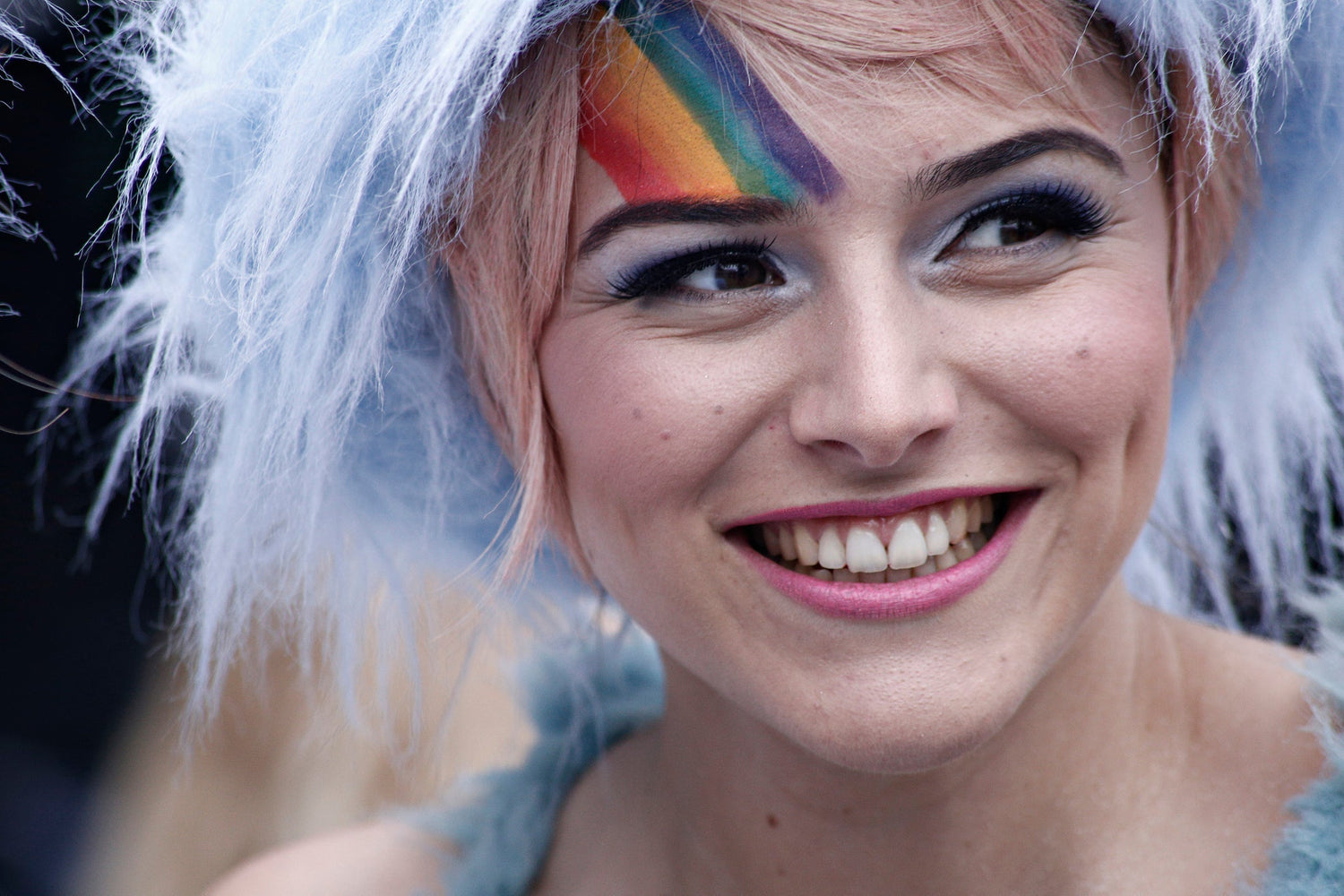
Every year, when Pride Month arrives, at The Belgian Chocolate Makers, we feel something that surprises many people.
Sadness.
Not because we are ashamed of who we are. Quite the opposite. Pride reminds us of one of the most powerful moments of our life: our very first Pride.
We still remember the feeling. The freedom. The relief. The realization that we were not alone.
For years, we had carried the weight of insults, judgment, and rejection. Like many LGBTQ+ people, we learned very early that being different could make you a target. we learned to hide parts of ourself. To be careful. To fit in.
Then came that first Pride.
For the first time, we were surrounded by people who understood. People who had fought the same battles, carried the same fears, and survived the same loneliness. It was not just a celebration. It was liberation.
We felt proud. Proud of who we were. Proud of having survived. Proud of standing in the open after years of being told that we should stay invisible.
And yes, there was also a quiet sense of revenge. Not the revenge that seeks to hurt others, but the kind that comes from simply existing and thriving despite everything. A way of saying to everyone who had tried to make us feel ashamed: You did not win.
That feeling is why Pride will always matter to me.
Yet every year, we also feel a growing sadness.
Because somewhere along the way, it seems that many people have forgotten why Pride exists.
Pride was never born as a festival.
It was born as a protest.
The first Pride marches were acts of courage and resistance. They were organized by people who risked their jobs, their families, their safety, and sometimes even their lives simply for demanding equal rights and human dignity.
Today, we have music stages, corporate sponsors, and colorful parades. There is nothing wrong with celebration. Joy itself can be an act of resistance.
But celebration without memory is dangerous.
Because while some of us can dance openly in the streets, millions of LGBTQ+ people around the world still cannot.
There are still young people hiding who they are because they fear rejection. There are still teenagers thrown out of their homes by parents who should love them unconditionally. There are still people who stay silent at work, at school, or in their communities because authenticity comes with a cost.
And this reality is not something that only happens somewhere else. It is all around us. At The Belgian Chocolate Makers, many members of our family are gay or lesbian. They are colleagues, friends, leaders, creators and innovators. They help shape who we are every single day. Their talent, their kindness, their creativity and their commitment define them far more than their sexual orientation ever could.
Yet even today, many LGBTQ+ people still carefully measure what they say, what they reveal, and how much of themselves they feel safe sharing. That alone is a reminder that our work is not finished.
Even in countries where legal equality exists, social acceptance remains fragile.
And then there is the political hypocrisy.
Every year, we see political parties proudly marching beneath rainbow flags while spending the rest of the year voting against LGBTQ+ rights, blocking progress, or remaining silent when our communities are attacked.
Perhaps that is why we struggle with some of the choices being made around Pride today.
Brussels Pride is now organized by Visit.Brussels. Political parties are welcomed into the parade, even when their actions throughout the year do not always reflect the values they celebrate for a single afternoon. Yet companies like ours, openly queer and actively committed to inclusion every day of the year, are denied the opportunity to be associated with the event in the same way. We are even denied recognition through initiatives such as the Queer certification.
We do not raise this because we believe businesses should replace activists. Pride belongs first and foremost to the community and to those who fought for our rights.
But we do believe that Pride should recognize authenticity wherever it exists.
When a company creates a workplace where LGBTQ+ people can thrive, when it openly supports equality, when it refuses to hide its values, it is contributing to the same cause. Inclusion should not be reserved for one day a year, nor should it be limited to certain types of organizations.
This is not about visibility.
It is about consistency.
If Pride is truly about celebrating those who advance equality, then actions should matter more than logos, and commitment should matter more than appearances.
But despite all of this, we remain hopeful.
Because every pride still matters.
It matters for the teenager who sees thousands of people living openly and realizes they are not alone.
It matters for the person who has spent years hiding and finally finds the courage to be themselves.
It matters because every generation deserves to know that there is a community waiting to welcome them.
Pride is not just about celebrating how far we have come.
It is about remembering those who fought before us, standing beside those who are still fighting today, and refusing to stop until nobody has to choose between being accepted and being themselves.
So yes, Pride still makes use a little sad.
Not because we have failed.
But because too many people are still waiting to experience the feeling we felt at our first Pride: the freedom to be themselves without fear.
That is why Pride must remain more than a celebration.
It must remain a promise.
A promise that we will keep marching, keep speaking, and keep fighting until dignity, equality, and acceptance belong to everyone.
Until that day comes, we celebrate.
We remember.
And we keep marching.