A beautifully made bar can lose its clean snap in a single warm afternoon. A gift box can arrive looking perfect, then develop a pale, dusty surface after a few days beside the stove. This chocolate storage temperature guide explains how to protect the flavor, texture, and polished finish that artisan chocolate makers work carefully to create.
Fine chocolate is not simply candy that can be left anywhere in the kitchen. Its cocoa butter is precisely crystallized during tempering, giving a finished bar its gloss, firm break, and satisfying melt. Heat, humidity, strong odors, and sudden changes in temperature can all disturb that balance. A few thoughtful choices at home will keep each piece closer to the condition in which it left the workshop.
The best temperature for storing chocolate
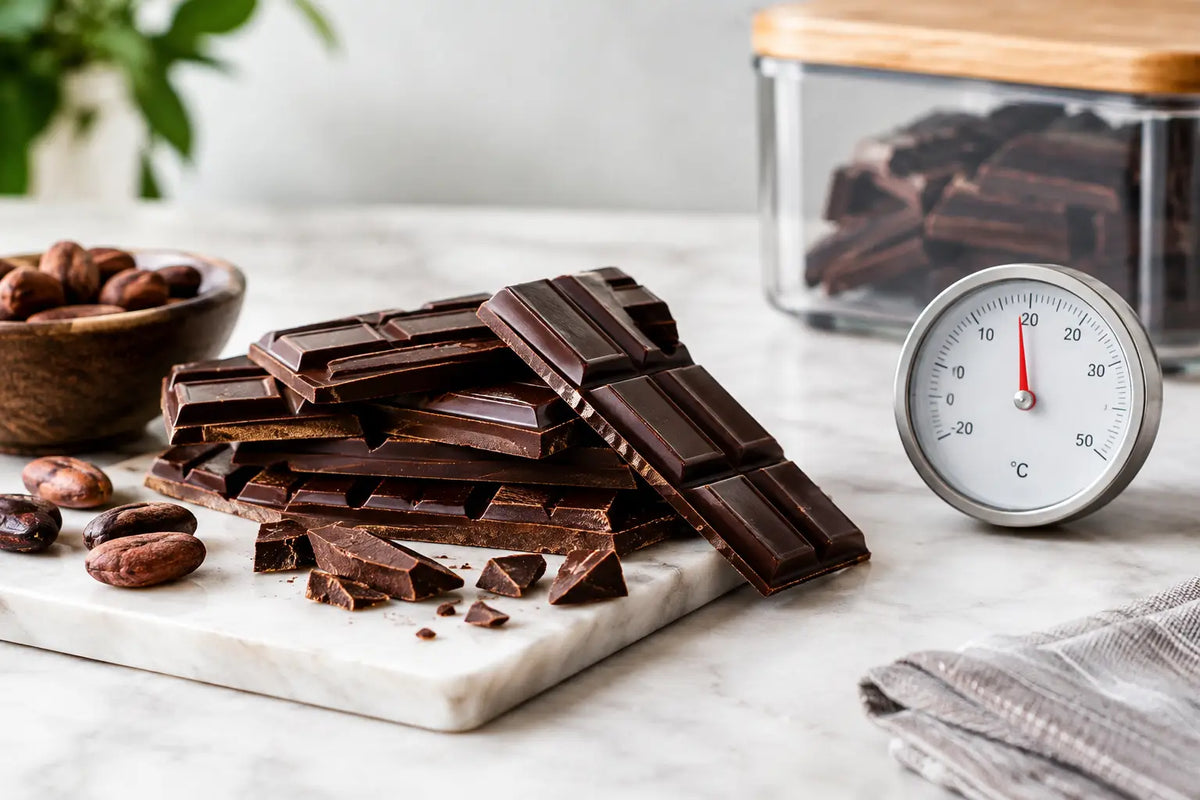
For most fine chocolate, the best storage temperature is between 60 and 68°F (16 to 20°C). A stable room around 64 to 66°F is especially favorable. At this range, cocoa butter remains firm, aromas stay clear, and the chocolate is less likely to develop bloom.
Consistency matters as much as the number on the thermometer. Chocolate does not respond well to a pantry that is cool overnight and hot by afternoon, or to a cabinet near an oven, dishwasher, radiator, or sunny window. Repeated warming and cooling encourages cocoa butter to migrate toward the surface, where it can form a grayish or whitish film.
If your home is regularly above 70°F, seek out the coolest stable interior cupboard or closet rather than the kitchen counter. In many homes, an interior shelf away from appliances is better than a pantry on an exterior wall, which may fluctuate with the weather.
Why temperature changes the character of chocolate
Cocoa butter is responsible for much of chocolate's pleasure. When it is correctly tempered, its crystals are arranged in a stable form. This structure creates shine, a crisp snap, and a smooth melt that releases the distinct notes of the cacao.
When chocolate gets too warm, some of those crystals melt. If it then cools slowly or unevenly, the cocoa butter may set in a less stable form. The result is fat bloom: a pale, streaked, or cloudy appearance on the surface. Bloomed chocolate is generally safe to eat, but its texture may be softer, grainier, or less elegant than intended.
Humidity creates a different problem. When moisture settles on cold chocolate, it can dissolve a little sugar at the surface. As that moisture evaporates, the sugar recrystallizes into a rough, powdery coating called sugar bloom. This is one reason the refrigerator can be a difficult environment for chocolate, even when its temperature seems sensible.
Neither type of bloom necessarily means the chocolate is spoiled. Still, for a carefully finished single-origin bar or a refined gift assortment, prevention preserves the full visual and textural experience.
Dark, milk, and white chocolate: does the ideal range change?
The same general range of 60 to 68°F works well for dark, milk, and white chocolate. The practical difference is their sensitivity. Dark chocolate, with its higher cacao content and lower dairy content, is often a little more forgiving. Its flavor can remain expressive for a long time when stored properly.
Milk and white chocolate contain more milk solids and sugar, making them more susceptible to picking up odors and showing changes in texture when stored poorly. They deserve the same cool, dry conditions, with particular care around heat and strong-smelling foods. A bar that tastes of coffee, onions, or refrigerator air has not been stored in a way that respects its ingredients.
Filled chocolates require another level of attention. Pralines, truffles, and other pieces with ganache, fruit, cream, nut paste, or liqueur fillings may have a shorter best-enjoyed window than solid bars. Temperature still matters, but freshness matters too. Keep the original box closed, store it cool and dry, and enjoy these pieces within the maker's recommended period.
The chocolate storage temperature guide for real homes
The ideal storage setup is simple: a dark, dry place with a stable temperature and low humidity. Aim for relative humidity below 50 to 55 percent where possible. Keep chocolate in its original wrapping, then place it in an airtight container if the surrounding area has noticeable odors or humidity.
Original packaging serves a purpose beyond presentation. Foil, inner wraps, and fitted boxes help shield chocolate from light, air, and scent transfer. This is particularly valuable for bean-to-bar chocolate, where delicate notes of fruit, toasted nuts, flowers, spice, or caramelized sugar can be part of the maker's intended expression.
Avoid leaving chocolate in a car, even for a short errand. Interior temperatures can rise quickly, while direct sun can soften a bar long before the room itself feels warm. The same applies to delivery boxes left on a porch in hot weather. Bring them indoors promptly and allow the chocolate to settle in a cool room before opening it.
For a gift you are holding for an upcoming occasion, resist the urge to display it near a window or under bright lights. A cool cabinet preserves the pleasure of the reveal far better than a beautiful but warm display spot.
Should you refrigerate chocolate?
Refrigeration is not the first choice, but it can be the better option when your home stays hot and humid and no reliably cool room is available. The key is protecting the chocolate from moisture, odors, and condensation.
First, keep the chocolate in its original packaging. Place it inside a tightly sealed airtight container or heavy resealable bag, pressing out excess air if possible. Let it remain protected in the refrigerator rather than opening the package each time you want a piece.
When you are ready to eat it, do not unwrap it immediately. Move the sealed container to room temperature and let it sit for several hours, or overnight for a larger box. This gradual warm-up prevents humid room air from condensing directly on the cold chocolate. Only open the package once it has reached room temperature.
Refrigeration may slightly mute aroma and make the texture feel firmer at first. Give a bar 15 to 30 minutes at room temperature after unwrapping before tasting. Chocolate is at its most expressive when it is neither chilled nor warm, but allowed to soften gently on the palate.
Can chocolate be frozen?
Freezing is useful for longer-term storage, especially if you have purchased more than you can enjoy within a few months. It is less ideal for delicate filled chocolates, whose textures can be affected by freezing and thawing. For solid bars, careful packaging makes a meaningful difference.
Wrap the unopened chocolate securely, place it in an airtight freezer-safe container, and freeze it away from strongly scented foods. When it is time to use it, thaw it slowly: first in the refrigerator for about 24 hours, then at room temperature while still sealed. This two-stage process reduces condensation and helps preserve the finish.
Freezing is a preservation method, not a way to repair chocolate that has melted or bloomed. If a bar has already been exposed to heat, freezing may firm it again, but it will not restore its original temper or gloss.
How to tell whether chocolate is still good
A visual change does not always mean chocolate should be discarded. A pale bloom, minor surface marks, or a softened snap can be disappointing, yet the chocolate may still be enjoyable. Taste a small piece. If it smells clean, tastes balanced, and has been stored safely, it is often perfectly suitable for eating or baking.
Use more caution with filled chocolates. If pralines or truffles are past their recommended enjoyment date, have been kept in heat, or show an unusual smell, flavor, or filling texture, it is best not to serve them. Solid chocolate is comparatively stable; fresh fillings are naturally more perishable.
The most reliable test is not appearance alone but the combination of packaging condition, storage history, date guidance, aroma, and taste. This is particularly true for premium chocolate made with minimal ingredients, where cacao character is clear and any storage flaw is easier to notice.
Serve chocolate at the temperature it deserves
Storage temperature and serving temperature are related, but they are not identical. Store chocolate cool, then allow it to come to a comfortable room temperature before tasting. A bar served straight from the refrigerator may feel hard and quiet, hiding the aroma and nuanced flavors that emerge as the cocoa butter begins to melt.
For a gift box, remove it from its cool storage place 30 to 60 minutes before serving. For a dark single-origin bar, break off a piece and let it rest briefly on the tongue rather than biting immediately. The first aromas should rise slowly, followed by the texture, then the finish.
A cool, dark cabinet and a little patience are usually all fine chocolate asks for. Treat it as a crafted food rather than a pantry afterthought, and every bar, praline, or thoughtful gift has a better chance to tell the story its cacao was chosen to tell.