A beautiful chocolate bar is not simply cocoa and sugar in a wrapper. Its snap, gloss, aroma, and slow melt are the result of careful roasting, refining, conching, and tempering. So, can chocolate be frozen? Yes, but freezing is best treated as a practical preservation method, not the ideal everyday home for fine chocolate. Done carefully, it can extend the life of chocolate you cannot enjoy soon. Done casually, it can leave even an exceptional bar dull, grainy, or scented with last week's freezer dinner.
For most artisan chocolate, a cool, dry, dark cupboard remains the preferred place to store it. Freezing becomes useful when your home is consistently warm, you have purchased more than you can eat within a few months, or you are saving a special selection for a later occasion.
Can Chocolate Be Frozen? Yes, With the Right Preparation
Chocolate freezes safely because its low water content makes it less vulnerable to the texture damage that affects many fresh foods. The challenge is not food safety so much as protecting quality. Chocolate readily absorbs odors, and rapid changes in temperature can create condensation on its surface. That moisture may dissolve a tiny amount of sugar, which recrystallizes as a pale, rough-looking coating known as sugar bloom.
Freezing can also disturb the stable cocoa butter crystal structure created during tempering. When this happens, fat bloom may appear: grayish or whitish streaks that look less elegant but are generally harmless to eat. The flavor may still be enjoyable, though the clean snap and polished finish of a well-made bar can be diminished.
The better the chocolate, the more reason to be deliberate. Bean-to-bar chocolate often expresses the character of its cacao origin through nuanced notes such as red fruit, toasted nuts, honey, citrus, or warm spice. Strong freezer odors and repeated temperature shifts can obscure those details. A little preparation protects the work that went into the chocolate before it reached your kitchen.
When Freezing Is Worth It
If you plan to eat a bar within several weeks, do not freeze it. Store it in a dark place at approximately 60 to 68 degrees Fahrenheit, away from direct light, humidity, and heat sources. A wine refrigerator set too cold is not necessarily better, and a standard refrigerator is usually too humid for unprotected chocolate.
Freezing makes more sense for unopened bars bought in quantity, seasonal chocolate you want to save beyond warm weather, or gift-worthy pieces you need to hold for a future celebration. It is also useful for people living in hot or humid climates where room-temperature storage is unreliable.
Filled chocolates require more judgment. A plain dark chocolate bar is the easiest format to freeze successfully. Pralines, truffles, and chocolate-covered fruits may contain ganache, cream, butter, fruit puree, or other fillings with their own shelf lives. Freezing can preserve them, but it will not make an old filling fresh again. If the product has a best-by date or storage instruction, follow that guidance first.
How to Freeze Chocolate Properly
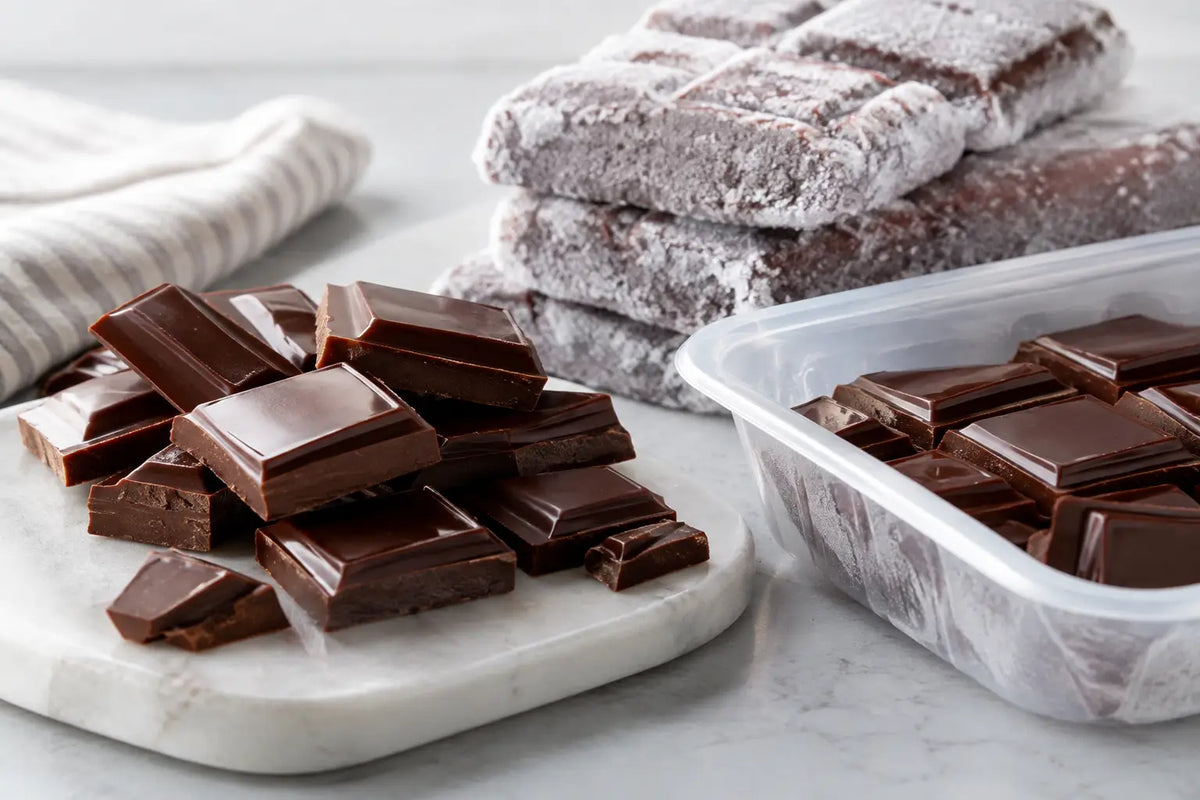
The goal is simple: keep out air, moisture, and odors, then avoid abrupt thawing. Leave unopened bars in their original packaging if it is intact. For opened bars, wrap them tightly in food-safe plastic wrap or place them in a small airtight bag, pressing out as much air as possible. Put that package inside a rigid airtight container or a second freezer bag for an added layer of protection.
For pralines and truffles, arrange the pieces in a single layer in a rigid container if possible. Separate layers with parchment paper so surfaces do not stick or become marked. Avoid loosely wrapped boxes, paper bags, and containers with gaps around the lid. Those materials invite freezer odors and moisture.
Label the package with the chocolate type and freezing date. This is especially helpful when you have several origins or recipes at home. A single-origin dark bar and a milk chocolate with a nut filling may need different priorities when you decide what to enjoy first.
Place the package in the most stable part of the freezer, away from foods with assertive aromas. The back is often preferable to the door, where temperatures fluctuate each time it opens. Keep chocolate away from fish, onions, garlic, and strongly flavored prepared foods. Chocolate's cocoa butter carries aroma remarkably well, which is wonderful during tasting and far less welcome when it picks up freezer scents.
For best quality, aim to use frozen plain chocolate within six to twelve months. It may remain safe beyond that period if continuously frozen and well sealed, but flavor and texture are unlikely to improve with time. Filled chocolates are best enjoyed sooner, often within one to three months, depending on the filling and the maker's stated advice.
Thawing Matters More Than Most People Expect
The most common mistake is opening frozen chocolate immediately on the counter. Warm, humid air meets the cold surface, and condensation forms almost at once. That is the situation most likely to cause sugar bloom.
Instead, move the sealed package from the freezer to the refrigerator and leave it there for about 12 to 24 hours, depending on its size. Then transfer it, still sealed, to a cool room-temperature cupboard for several hours. Only open the packaging once the chocolate has come fully to temperature.
This gradual approach allows any moisture to form on the outside of the package rather than on the chocolate itself. It is a small act of patience that can preserve the gloss of a molded bar and the delicate finish of a praline.
Once thawed, do not refreeze the chocolate unless there is a compelling reason. Each freeze-thaw cycle increases the likelihood of condensation, bloom, and texture changes. Thaw only what you expect to eat or serve in the near future.
What if Chocolate Develops a White Coating?
A pale coating can be disappointing, particularly on a carefully finished piece, but it does not automatically mean the chocolate has spoiled. Sugar bloom tends to feel dry or slightly rough and results from moisture. Fat bloom often looks smoother or streakier and comes from cocoa butter migration or temperature fluctuation.
In either case, the chocolate is usually safe to eat if it has been stored cleanly, smells normal, and is within its recommended shelf life. The visual finish and snap may be less refined, but it can still be delicious. Bloomed chocolate is also perfectly suitable for baking, hot chocolate, sauces, or melting into a ganache.
Storage Advice by Chocolate Style
Dark chocolate is generally the most forgiving choice for freezing. With less milk content and often fewer inclusions, it tends to retain its character well when carefully packaged and thawed.
Milk and white chocolate deserve extra attention because they contain milk solids and have a softer, more delicate texture. They can be frozen, but their flavor is more easily affected by poor packaging and their appearance may be more prone to bloom.
Chocolate with nuts, crisp inclusions, or dried fruit can also be frozen, although crunchy ingredients may lose a little of their original texture over time. For bars with fragile decorative finishes, take particular care not to stack heavy items on top of the package.
Fresh truffles and cream-filled pralines are the most variable category. Their fillings may have a shorter intended life than the chocolate shell, and condensation can be more noticeable on their surfaces. When in doubt, enjoy these creations while they are fresh, when the contrast between shell and filling is at its best.
A Better Alternative for Short-Term Storage
Many people reach for the freezer because they are worried chocolate will melt. Yet a cool interior cupboard is often enough. Choose a location away from ovens, sunny windows, radiators, and dishwashers. Keep the chocolate in its original wrapper and, if your environment is humid, place it inside an airtight container.
For gift chocolate, presentation matters as much as preservation. A well-stored box should arrive at the moment of sharing with its finish, aroma, and texture intact. That is why thoughtful storage is part of respecting the craft behind it, whether the chocolate is intended for a quiet tasting or a generous gesture.
Fine chocolate is made to be enjoyed, not guarded indefinitely. Freeze it when you need to protect it from heat or preserve a special selection, then thaw it patiently and give it the attention its flavor deserves.