A fine chocolate bar can sit quietly in a pantry for months, yet its character is never completely still. The question “can chocolate bars expire” has two answers: chocolate can outlast its printed date from a food-safety perspective, but it can also lose the aromatic precision, clean snap, and silky melt that make it worth savoring in the first place.
For a bean-to-bar bar made from carefully selected cacao, freshness is not merely a technical detail. It is part of the experience. Origin notes that once suggested red fruit, toasted nuts, honey, or deep roasted cacao may gradually soften as the bar ages or is stored poorly. Understanding the date on the wrapper helps you enjoy chocolate at its best rather than treating it like an ordinary pantry staple.
Can chocolate bars expire after the best-before-date?
Most chocolate bars carry a best-by or best-before date, not a hard expiration date. This date is the maker’s indication of how long the bar should retain its intended flavor, texture, appearance, and aroma when stored correctly. It does not mean the chocolate becomes automatically unsafe the following day.
Plain dark chocolate is particularly stable. Its relatively low water content makes it an unfriendly environment for many microbes, while cacao butter and sugar help preserve its structure. A well-wrapped dark bar may remain enjoyable beyond its best-by date, sometimes by many months. That said, “enjoyable” is the key word. The bar may no longer express the careful roast, fermentation, conching, and origin character intended by its maker.
Milk chocolate and white chocolate generally have a shorter window of peak quality because they contain milk solids. Bars with added ingredients can be less predictable still. Nuts may turn rancid, crisp inclusions can lose their texture, and dried fruit may become overly firm or stale. A filled chocolate bar, praline, or truffle should be treated more cautiously, especially if it contains cream, fruit purée, or other perishable ingredients.
The date is therefore useful guidance, not a reason to discard excellent chocolate without looking, smelling, and tasting thoughtfully.
What changes as a chocolate bar ages?
Chocolate does not usually spoil in the dramatic way fresh food does. More often, it slowly moves away from its finest form. The first changes may be subtle: a less vivid aroma when the wrapper opens, a slightly muted flavor, or a softer snap when you break off a square.
Over time, the fats in cacao and inclusions such as nuts can oxidize. This can create stale, waxy, cardboard-like, or faintly rancid notes. Chocolate also absorbs surrounding odors with surprising ease. A bar stored near coffee, spices, scented candles, or strong pantry ingredients may take on flavors that have nothing to do with the cacao’s origin.
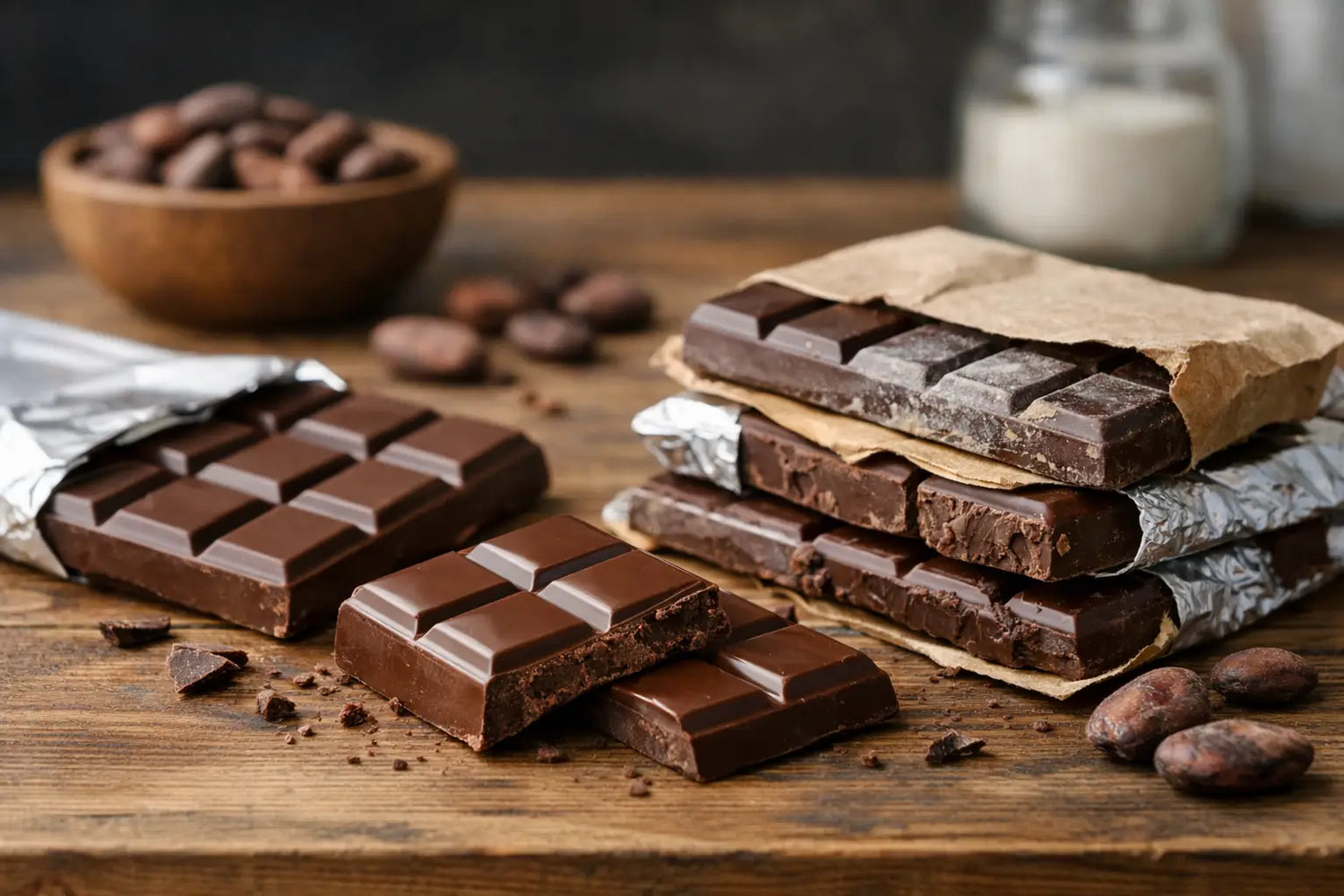
Texture can change as well. A properly tempered bar should have an even sheen and a crisp, clean break. Heat, humidity, and repeated temperature swings can disrupt that structure. The chocolate may look dull, feel soft, or melt less smoothly on the palate.
For craft chocolate, these shifts matter because the bar is designed to reveal the character of its cacao. The difference between a fresh single-origin bar and one that has spent a summer in a warm kitchen can be as noticeable as the difference between freshly roasted coffee and coffee left open for weeks.
The white film on chocolate is usually not mold
A pale gray or white coating is one of the most common reasons people assume chocolate has expired. In many cases, it is bloom, and it is not mold.
Fat bloom occurs when cacao butter migrates to the surface and recrystallizes, often after chocolate has been exposed to warmth and then cooled. It can leave a whitish, cloudy finish and may make the texture less elegant. Sugar bloom happens when moisture dissolves sugar on the surface; once the moisture evaporates, the sugar recrystallizes into a rough, pale layer.
Bloom can be disappointing on a premium bar, particularly when its glossy finish was carefully achieved through tempering. But it is generally a quality issue, not a safety issue. If the bar smells and tastes normal, bloomed chocolate can still be eaten or used in baking, drinking chocolate, sauces, or ganache.
Mold is different. Chocolate bars are too dry for mold to be common, but contamination can occur if a product has been exposed to substantial moisture or has a moist filling. Fuzzy growth, an unusual odor, visible moisture damage, or a clearly off taste are reasons to discard it.
How to store chocolate bars for their best flavor
The best storage conditions are cool, dry, dark, and consistent. For most chocolate, a temperature around 15 to 20° Celsius (60 to 68°F) is ideal. A pantry, cabinet, or wine-storage area away from direct sunlight and heat sources is often better than a refrigerator.
Keep bars in their original packaging until you are ready to enjoy them. Quality wrappers are designed to limit exposure to light, air, and odors. Once opened, wrap any remaining chocolate tightly and place it in an airtight container. This is especially useful for preserving delicate aromatics in fine dark chocolate.
Avoid leaving bars in a car, near an oven, or on a sunny counter. Even if melted chocolate resolidifies, its temper may be lost, and bloom may follow. Repeated warming and cooling is harder on chocolate than a stable, moderately cool environment.
Refrigeration is not usually the first choice because it introduces humidity, condensation risk, and household odors. In a very hot or humid climate, however, refrigeration may be the better option than allowing chocolate to melt. Seal the bar in an airtight container, then let it return to room temperature before opening the container. This reduces condensation on the chocolate’s surface.
Freezing can work for longer storage when done carefully, but it is best reserved for a surplus of unopened bars rather than a bar you plan to eat next week. Use airtight layers of protection, thaw slowly in the refrigerator, and allow the package to reach room temperature before unwrapping.
Which chocolate bars need the most attention?
A simple dark chocolate bar, particularly one with a high cacao content and no inclusions, is usually the most forgiving. It has fewer ingredients that can deteriorate separately and often retains its quality for the longest period.
Milk chocolate and white chocolate deserve closer attention because of their dairy content and higher proportion of milk fat. They are still shelf-stable products when properly made and stored, but their flavor can become stale sooner than dark chocolate. Their sweeter, creamier profiles also make oxidation easier to notice.
Bars with almonds, hazelnuts, pistachios, or other nuts should be enjoyed closer to their best-by date. Nut oils can become rancid even when the chocolate itself remains sound. Fruit, cookie pieces, caramel, and crisp inclusions introduce their own shelf-life considerations, from hardening and moisture migration to loss of crunch.
Filled confections are the category where the wrapper date deserves the greatest respect. A ganache, fruit center, or cream filling has a different water activity and stability from a solid bar. Store these products according to the maker’s instructions and do not rely on the long shelf life associated with plain chocolate.
How to decide whether an older bar is worth eating?
Start with the wrapper. If it is damaged, swollen, damp, or poorly sealed, be more cautious. Next, inspect the chocolate. A little bloom is usually harmless; fuzzy spots, unexplained moisture, or insect damage are not.
Then use your senses. Fresh chocolate should smell inviting, whether that means bright cacao, warm caramel, roasted nuts, or a particular origin-driven fruit note. If it smells musty, sour in an unpleasant way, stale, or rancid, it is past its best. A tiny taste can confirm the decision. Bitter is not the same as bad - many fine dark chocolates are intentionally intense - but stale, soapy, waxy, or rancid flavors suggest it is time to let the bar go.
When a bar is safe but no longer exciting enough to eat on its own, it may still have a second life in the kitchen. Melt it into a sauce, fold it into brownies, shave it over oatmeal, or use it in cookies where its subtleties are less central. Reserve your freshest bars for tasting slowly, square by square, when their craft can be fully appreciated.
A printed date is a useful promise of peak quality, but thoughtful storage is what protects that promise. Keep your chocolate cool, dry, and away from strong aromas, then trust your senses alongside the maker’s guidance. The reward is not just a bar that lasts longer, but one that tastes closer to the cacao story it was made to tell.