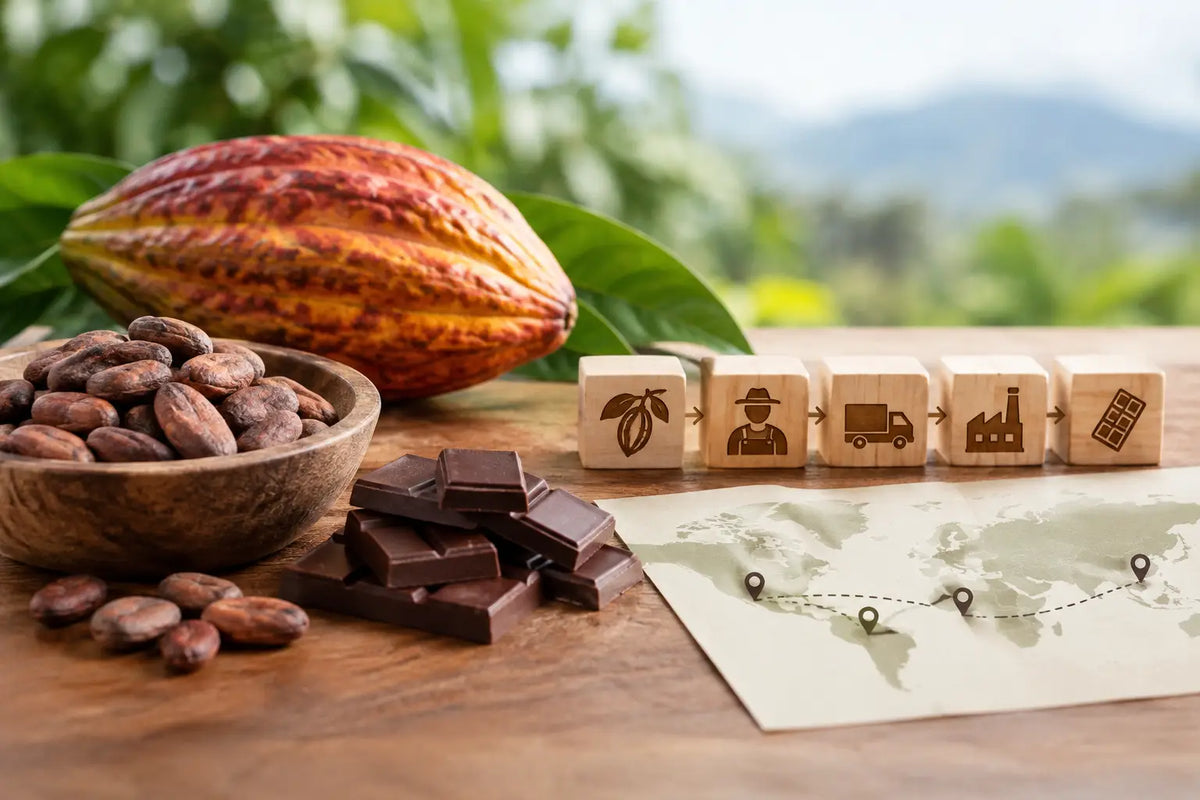
A chocolate wrapper can name a faraway country and still leave the most meaningful questions unanswered. Which community grew the cacao? Who handled it after harvest? Was the price paid connected to quality and long-term relationships? This cacao traceability buying guide is designed to help you look beyond attractive packaging and choose chocolate whose origin story is as considered as its flavor.
For a premium bar or a gift box, traceability is not a decorative detail. It is evidence of care. It gives buyers a clearer view of the people, places, and decisions behind each piece of chocolate, while helping explain why two bars with the same cacao percentage can taste entirely different.
What a cacao traceability buying guide should reveal
Traceability means being able to follow cacao through the supply chain, from a farm or farmer group to fermentation, drying, export, chocolate making, and the finished product. In practice, the amount of detail can vary. A small maker may be able to identify a cooperative, region, harvest period, and trading partner. A larger supply chain may only reliably identify a country or broad sourcing program.
Neither short supply chains nor long ones are automatically good or bad. The useful question is whether a chocolate company can explain its sourcing specifically and consistently. Clear information makes it easier to assess the product on its merits. Vague phrases such as “ethically sourced” may signal good intentions, but they do not, by themselves, tell you what has been traced or how farmers benefit.
Good traceability also supports better chocolate. Cacao is an agricultural ingredient with distinct varieties, growing conditions, and post-harvest practices. When makers know where their beans come from and how they were prepared, they can roast and refine with greater precision rather than treating every bean as interchangeable.
Start with the bean’s origin
Country of origin is a useful first clue, especially when comparing chocolates from regions known for different flavor profiles. Madagascar cacao may show bright red-fruit notes; some Ecuadorian beans can offer floral character; cacao from Peru, Tanzania, or the Dominican Republic may range from nutty and caramel-like to citrusy and winey. These are possibilities, not guarantees. Fermentation, drying, roast, and recipe all shape the final result.
Country is a beginning, not the full story
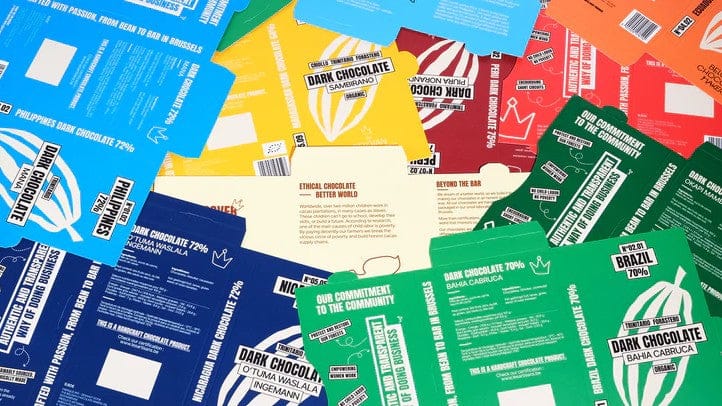
The most informative labels go further than a country name. Look for a named region, cooperative, estate, village, or farmer organization. This level of detail suggests that the maker has a defined supply relationship and is prepared to stand behind it.
Single-origin chocolate can be especially rewarding because it lets the character of a particular place come forward. Yet single-origin is not a universal quality stamp. A bar may be single-origin but provide little information about the people or systems behind the beans. Conversely, a blend can be responsibly sourced and expertly made if the maker explains why those beans were selected and how they are purchased.
For shoppers who want greater confidence, seek language that identifies the source and the relationship: a cooperative name, a direct trade partner, a harvest lot, or an explanation of the maker’s purchasing approach. Specificity matters more than romantic wording.
Follow the chain beyond the farm
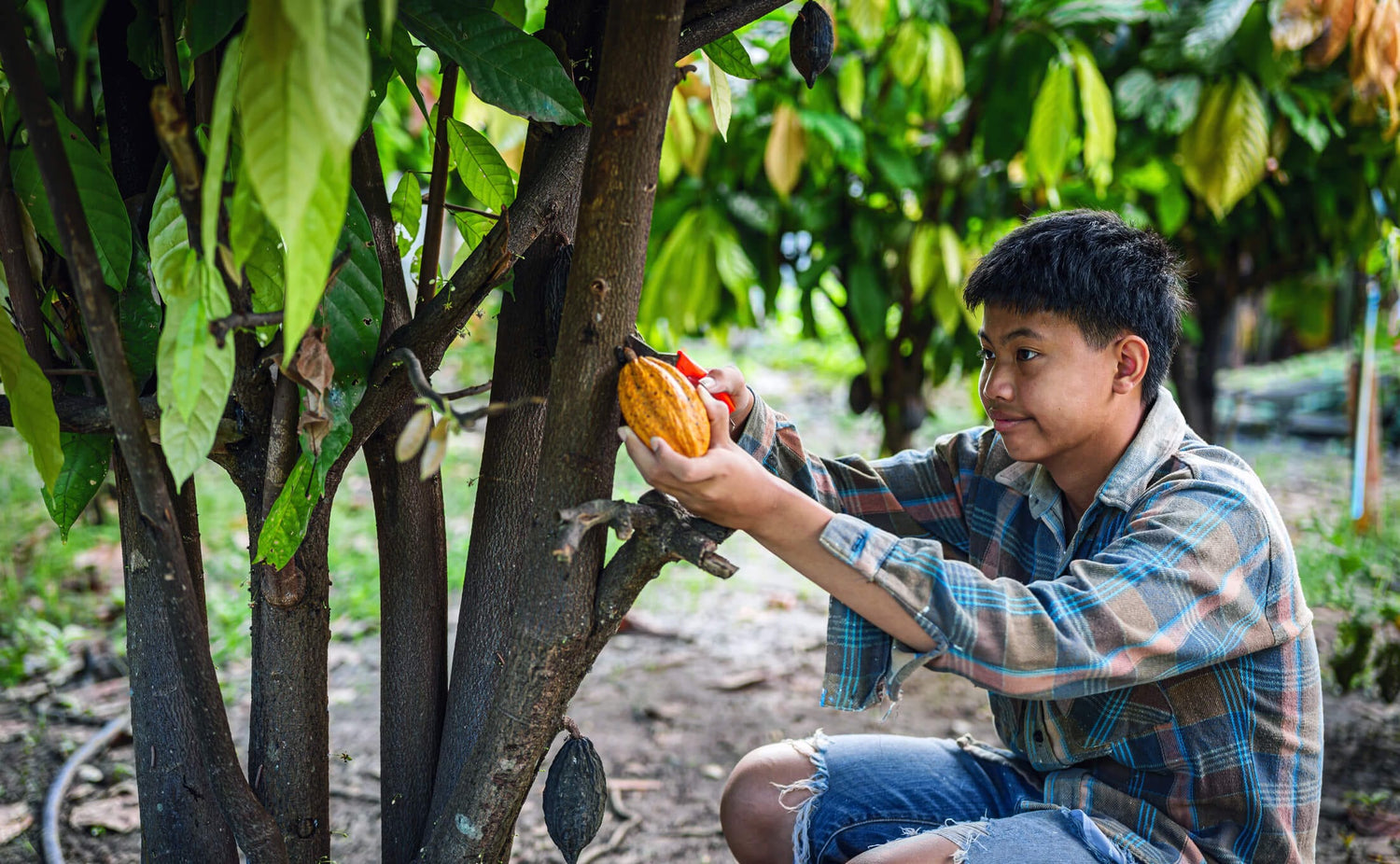
Cacao’s journey does not end at harvest. Fresh cacao beans must be fermented and dried well to develop the building blocks of chocolate flavor. These steps are often managed by farmers, cooperatives, or local post-harvest centers, and they deserve attention in any honest origin story.
A thoughtful maker can often tell you how fermentation and drying are managed, even if every technical detail is not printed on the wrapper. This is valuable because poor drying can create musty or smoky notes, while careful fermentation can bring out fruit, spice, nuts, or gentle acidity.
Then consider who makes the chocolate. Many products marketed as Belgian chocolate are created from purchased industrial couverture, then melted, molded, or filled elsewhere. There is nothing inherently wrong with couverture, but it is different from bean-to-bar craftsmanship. A bean-to-bar maker roasts, cracks, winnows, grinds, refines, and conches cacao in-house. That control creates a more direct connection between the beans selected and the flavor in your hand.
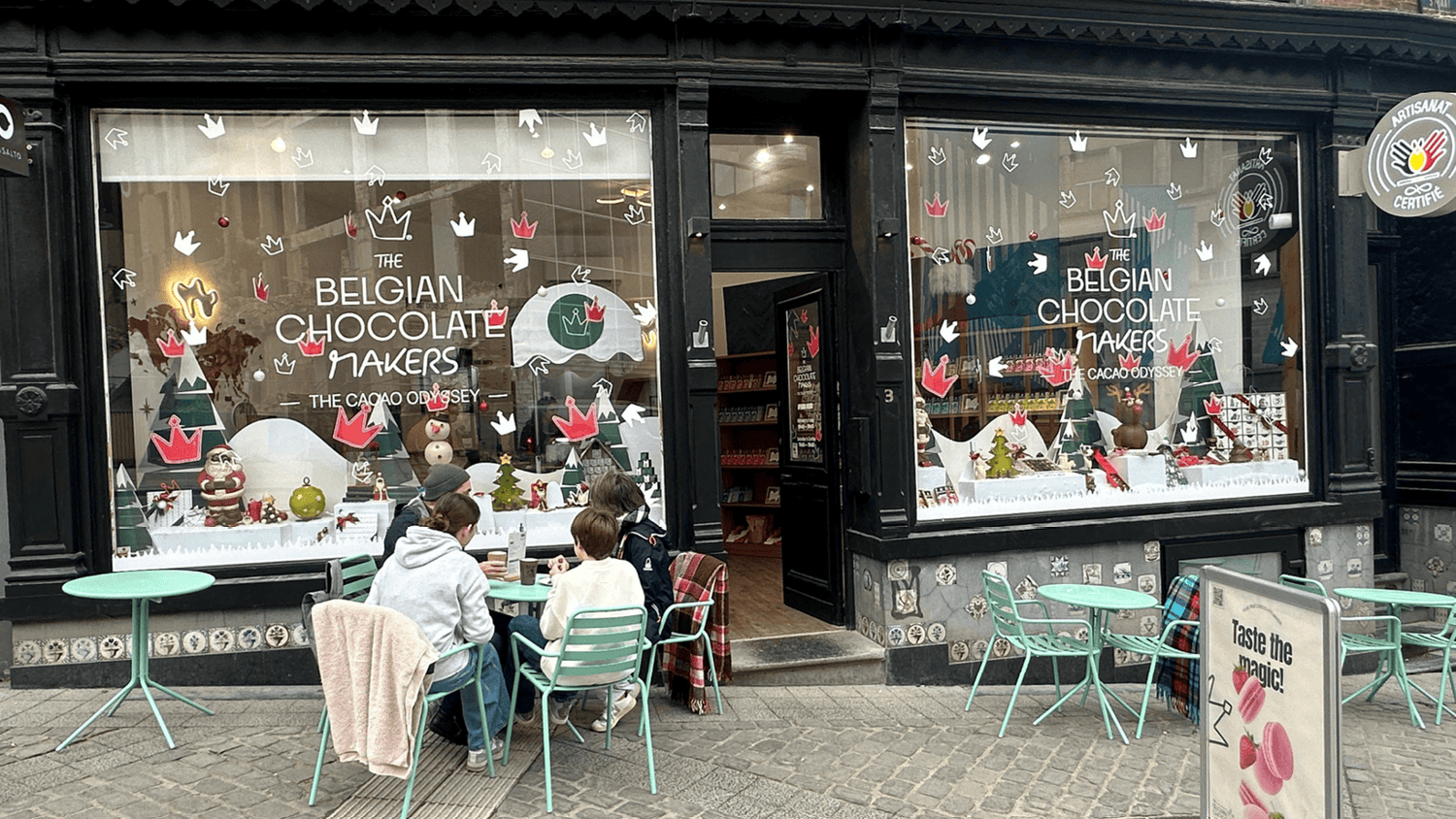
At The Belgian Chocolate Makers, this work takes place in the central Brussels workshop, where carefully sourced beans are transformed into chocolate from roast to finished bar. For buyers, the point is not simply a production claim. It is accountability: the people presenting the chocolate understand the material, the process, and the choices that shaped it.
Read ethical claims with care
Certifications can be meaningful tools. They may set requirements around environmental practices, labor standards, premiums, or supply-chain documentation. They can be particularly useful when buying from brands with complex sourcing networks. But certification alone cannot tell the whole story of a bar.
Look for supporting detail. Does the maker explain what its certification covers? Does it identify its supplier or cooperative? Does it discuss pricing, long-term purchasing, farmer support, or quality development? The strongest ethical claims are concrete enough to examine.
It also helps to distinguish between traceability and impact. Traceability tells you where cacao came from and how it moved. Impact asks what that trade relationship changes for the people who grow it. A brand may trace beans to a region yet provide no information about compensation or farming conditions. Another may work closely with a cooperative and share how premiums or multi-year commitments support its members.
No buyer can audit every supply chain from a store shelf. The practical aim is to favor companies that make a real effort to show their work, acknowledge complexity, and avoid suggesting that a single logo resolves every challenge in cacao farming.
Let flavor confirm the care
Traceability should lead to a more interesting tasting experience, not a lecture at the dessert table. Once you know the origin, taste with attention. Break off a small piece and let it melt rather than chewing immediately. Notice the first impression, the middle notes, and the finish.
Well-made craft chocolate should feel clean and purposeful. Depending on the bean and recipe, you may find dried fruit, roasted nuts, honey, coffee, citrus, or warm spice. A little bitterness is natural in dark chocolate, but harshness, burnt flavors, or a chalky texture are not proof of authenticity. They may indicate a roast or refinement that did not flatter the cacao.
Cacao percentage deserves context as well. A higher percentage means more cacao solids relative to sugar, but it does not automatically mean better quality, more ethical sourcing, or more intense flavor. A balanced 70% bar can be remarkably expressive, while an 85% bar may suit people who prefer a more direct, less sweet tasting experience. Choose based on taste and the maker’s transparency, not numbers alone.
Buy traceable chocolate for the occasion
For personal tasting, a selection of single-origin bars is often the clearest way to compare places and processes. Try two bars with a similar cacao percentage from different origins, then note how their flavor changes. It is a simple way to turn an everyday treat into a memorable tasting.
For a gift, choose a presentation that gives the recipient enough context to enjoy what makes it special. A refined assortment of bars, pralines, or truffles can still carry an origin story, especially when the maker explains its sourcing and production with clarity. The best gifts feel generous without becoming impersonal.
Freshness also matters. Buy chocolate from a maker or retailer that stores it away from heat, humidity, and strong odors. At home, keep it in a cool, dry cupboard rather than the refrigerator whenever possible. Good sourcing deserves good handling all the way to the last square.
Questions worth asking before you buy
When a label leaves you uncertain, ask a few direct questions: Where were these beans grown? Can you name the cooperative, region, or supplier? Is the chocolate made from the bean or from purchased couverture? What does your ethical sourcing claim mean in practice? A confident maker should welcome those questions, even when the answer includes limits or trade-offs.
Traceability is ultimately an invitation to buy with curiosity. Choose chocolate that tells you enough to understand its origin, then take the time to taste what that origin has made possible. The next bar you share can carry more than a beautiful finish. It can carry a connection worth savoring.