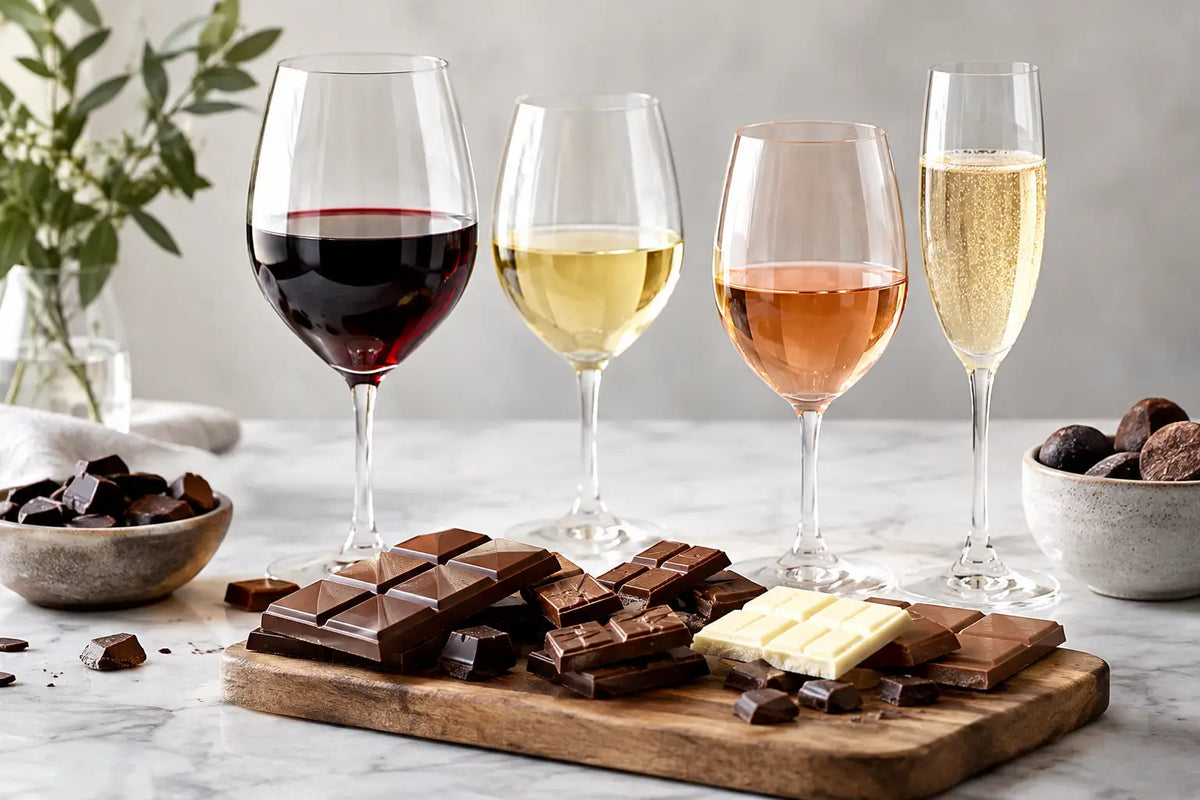
A square of chocolate can make a well-chosen wine seem deeper, fruitier, and more complete. It can also make a fine bottle taste thin, sour, or overly alcoholic. The best chocolate bars for wine are not necessarily the darkest or most expensive ones. They are the bars whose sweetness, cacao character, texture, and origin meet the wine on balanced terms.
Wine and chocolate both carry remarkable complexity, but they bring different forms of intensity to the table. Tannins, acidity, alcohol, residual sugar, roast, fruit, and bitterness all matter. Start with a thoughtful bar made from recognizable ingredients and carefully worked cacao, then match it to the wine's weight and sweetness rather than relying on a single rule about cacao percentage.
What Makes a Chocolate Bar Work With Wine?
The most reliable principle is simple: the wine should be at least as sweet as the chocolate. A dry red served with a sweet milk chocolate bar can suddenly seem bitter and austere. Conversely, a luscious dessert wine can overwhelm a delicately flavored bar if it is excessively rich or alcoholic.
Cacao percentage is useful, but it does not tell the entire story. A 70% bar from one origin may be bright with red fruit and citrus, while another at the same percentage may be earthy, nutty, and deeply roasted. The first can shine with a fragrant sweet wine; the second may feel more at home with a fortified red. Bean-to-bar chocolate makes this distinction especially clear because the character of the cacao is allowed to remain present rather than being covered by heavy vanilla or generic flavoring.
Texture has a role as well. A smooth, well-refined bar melts gradually and gives the wine time to develop on the palate. Bars with inclusions such as toasted nuts, sea salt, candied citrus, or spices introduce another pairing element. They can be excellent with wine, but they ask for a little more precision.
Best Chocolate Bars for Wine, Matched by Style
Creamy milk chocolate with tawny Port
Milk chocolate is often overlooked in serious tastings, yet it is one of the most agreeable styles to pair. Its dairy richness softens bitterness, while its caramel and biscuit notes find an easy partner in a 10- or 20-year tawny Port. Look for a finely made milk chocolate bar with real cacao presence rather than an overly sweet confectionery bar.
The wine's dried fig, toasted walnut, and toffee notes echo the chocolate's creamy profile. This is a generous pairing for after dinner, and it also makes an approachable gift for someone new to chocolate and wine tasting. If the Port feels too sweet for your preference, choose a smaller pour and let the chocolate lead.
Dark milk chocolate with Pinot Noir
Dark milk chocolate, typically made with a higher proportion of cacao than classic milk chocolate, offers a useful middle ground. It has enough creaminess for a supple red wine, but enough cacao depth to feel sophisticated. A fruit-forward Pinot Noir with modest oak is a particularly graceful choice.
Seek a bar that suggests caramel, red berries, or gentle roasted nuts. The Pinot's cherry and raspberry character lifts these notes without turning the pairing heavy. Avoid very tannic Pinot Noir or chocolate with aggressive bitterness. The goal is softness and perfume, not a contest of intensity.
Fruity 60% to 70% dark chocolate with late-harvest wine
A dark bar in the 60% to 70% range can be ideal for a first exploration of origin-led chocolate. Many bars at this level retain clear flavors of berry, plum, citrus, or honey alongside a satisfying cocoa finish. Pair them with a late-harvest Riesling, Sauternes-style wine, or a sweet Chenin Blanc.
The wine's acidity is essential. It refreshes the palate after the chocolate melts, while its sweetness keeps the cacao from tasting sharp. This is an especially good match for cacao with naturally bright fruit notes. If the bar tastes distinctly lemony or floral, choose a lighter, fresher late-harvest wine rather than a dense, oak-forward dessert wine.
Nutty, roasted dark chocolate with ruby Port
Ruby Port is a natural partner for dark chocolate with notes of roasted nuts, brownie, coffee, or dark berries. Choose a bar around 70% cacao that is full rather than severely bitter. The wine's black cherry and plum fruit brings life to the chocolate, while its sweetness rounds off the dry cocoa finish.
This pairing is more dramatic than milk chocolate and tawny Port, but it should still feel balanced. A bar above 80% cacao can make young ruby Port taste hot and simple. For very high-cacao chocolate, a richer vintage Port or a sweeter fortified wine is usually the more convincing choice.
High-cacao bars with vintage Port or Banyuls
A well-made 75% to 85% dark chocolate bar can be extraordinary with wine, provided the wine has sufficient sweetness and depth. Vintage Port is the classic choice, especially when the bar offers black fruit, cocoa nib, tobacco, or warm spice notes. Banyuls, a French fortified red made near the Mediterranean, is another beautiful option with chocolate because it often carries flavors of blackberry, dried herbs, and cocoa.
Do not assume that darker is always better. Some high-cacao bars are intensely tannic, and pairing tannic chocolate with a tannic, dry red can create an astringent finish. Taste the chocolate first. If it leaves your mouth dry, choose a sweeter, more rounded wine.
Citrus or spice chocolate with aromatic sweet wines
Chocolate bars with orange, lemon, cardamom, ginger, or subtle chili can bring real excitement to a tasting, although the inclusion should support the cacao rather than disguise it. Orange dark chocolate is particularly successful with a sweet Muscat or aromatic late-harvest Riesling. Ginger works well with a lightly chilled sweet wine that has lively acidity.
Chili deserves restraint. A warm, gentle chili bar may suit a fruity Banyuls or ruby Port, but a fiery bar can make many wines taste alcoholic. In this case, the best pairing may be a small glass of sweeter fortified wine served cool enough to calm the heat.
Why Dry Red Wine Is Often a Difficult Match
Cabernet Sauvignon, Barolo, Syrah, and other structured dry reds can be magnificent at dinner, but they are rarely the easiest answer for chocolate. Both red wine and dark chocolate contain tannins. Together, they may amplify bitterness, dryness, and oak flavors rather than soften each other.
There are exceptions. A ripe, low-tannin red with generous fruit can work with a less-sweet dark milk chocolate or a bar containing toasted hazelnuts. But if a favorite dry red is the centerpiece, serve chocolate after the wine rather than forcing a pairing that does neither one justice. Pairing is not about making every bottle fit. It is about preserving what each ingredient does well.
How to Build a Chocolate and Wine Tasting at Home
A tasting becomes more revealing when it is kept focused. Choose three bars and three small pours rather than placing too many flavors on the table. Begin with the lightest chocolate and wine, then move toward darker, richer expressions. A sensible progression might begin with milk chocolate and tawny Port, continue with a fruit-led 65% dark bar and late-harvest Riesling, and finish with a 75% dark bar and vintage Port.
Serve chocolate at room temperature, not chilled. Cold chocolate does not melt properly and conceals aroma. Pour sweet wines slightly cool, while fortified reds can be served just below room temperature. Keep plain water available, and use unsalted bread or neutral crackers only if you need to reset your palate.
Take a small bite of chocolate first, let it melt, then sip the wine. Try the reverse order as well. The best combinations change over a few seconds: perhaps the wine first brings out berry notes, while the chocolate first reveals caramel or spice. Write down those small observations. They are more useful than chasing a perfect score.
Choose Chocolate With Character, Not Just a Percentage
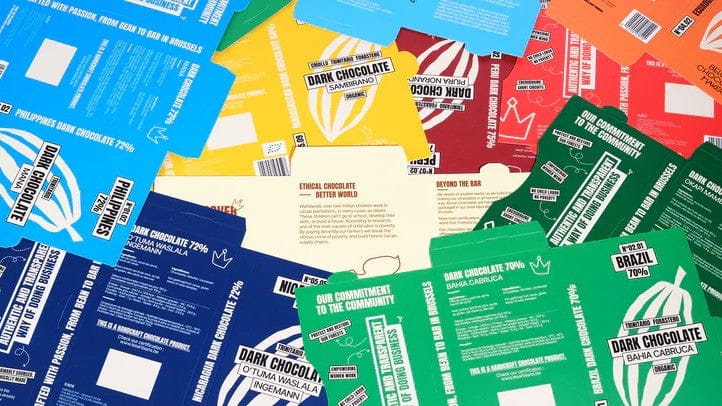
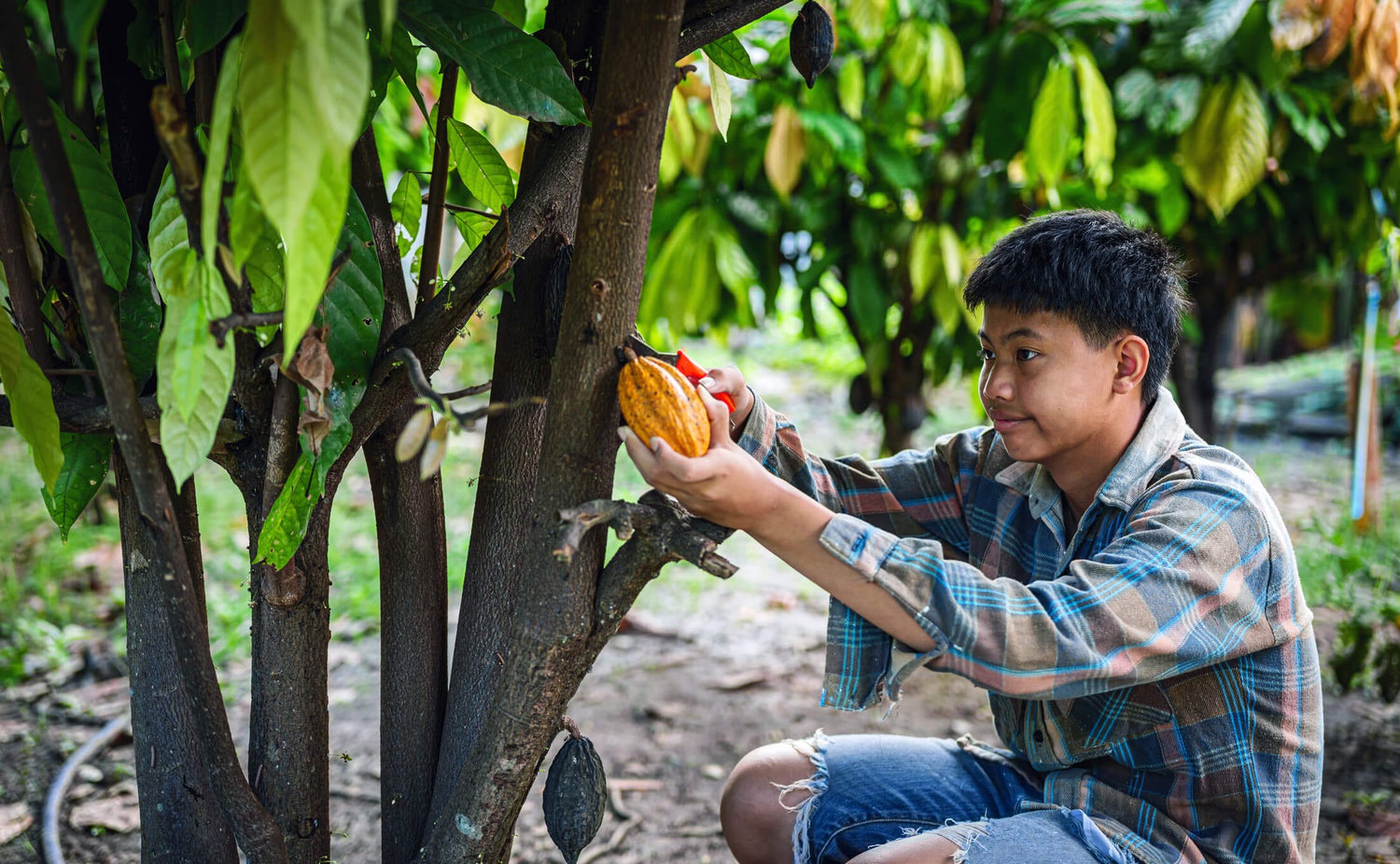
For wine pairing, ingredient integrity matters. A bar made with carefully sourced cacao, cocoa butter, and restrained sweetness gives the wine something clear to answer. Transparent origin information is valuable because it helps explain why one cacao tastes of red fruit and another of roasted nuts, molasses, or gentle earth.
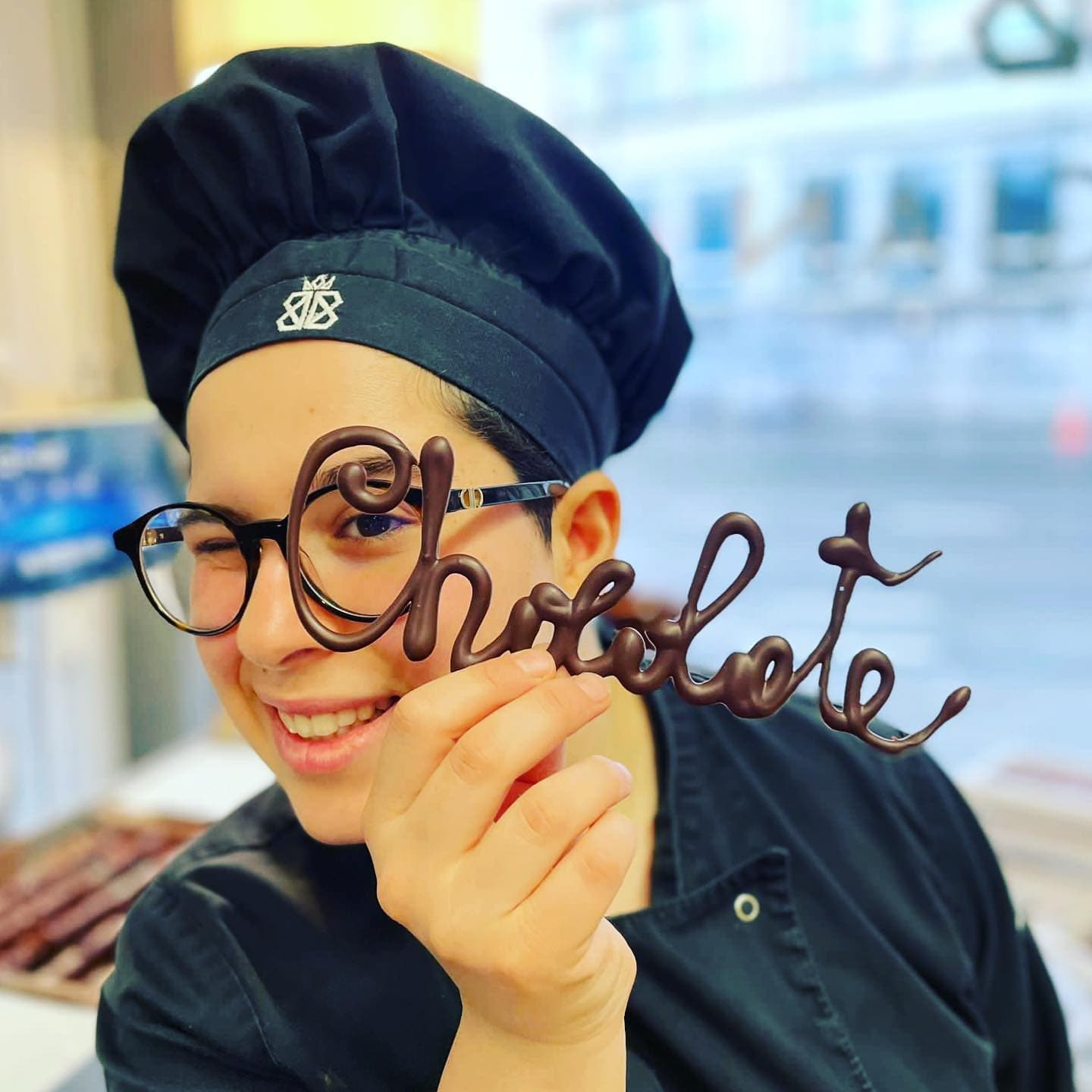
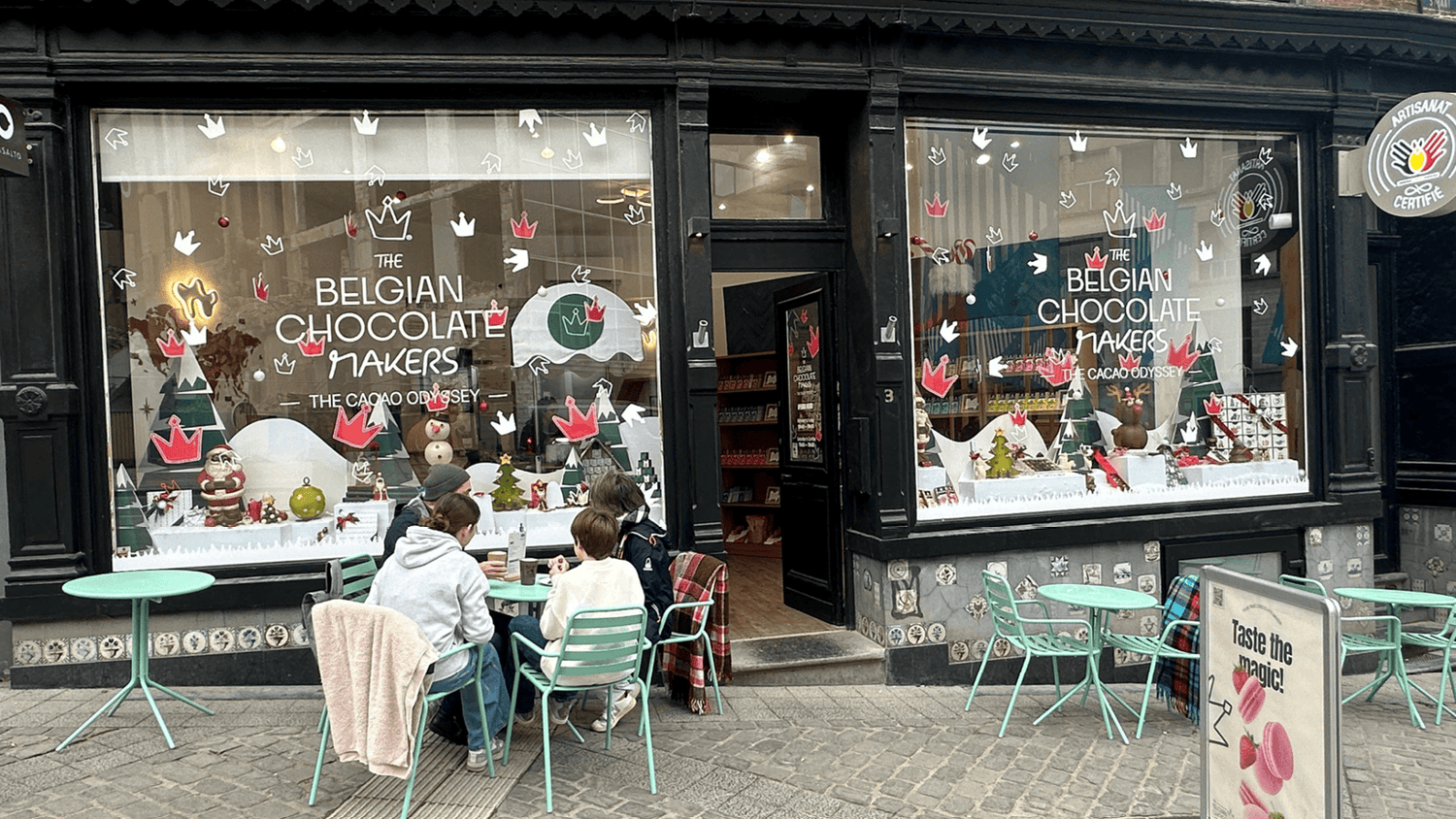
At The Belgian Chocolate Makers, bean-to-bar production in the Brussels workshop allows cacao origin and careful roasting to remain central to the finished bar. That attention to the full making process is precisely what makes artisan chocolate rewarding at the table: its flavors have definition, and defined flavors are easier to pair well.
The most memorable pairing may be the one that surprises you. Open a bottle you already enjoy, choose a bar with an honest cacao profile, and give both the time to speak before deciding what belongs in your next tasting.