A vegan praline should feel like a considered pleasure, not a compromise hidden behind a label. Knowing how to select vegan pralines means looking beyond the word “vegan” to the chocolate itself, the filling, the maker’s process, and the care taken with every ingredient. The best choices offer a clean, expressive cacao profile and a filling with genuine character, whether you are choosing a box for yourself or a gift that deserves to feel exceptional.
In Belgian chocolate, a praline is a filled chocolate confection. That distinction matters. A dark chocolate shell may be naturally free from dairy, yet its ganache, caramel, gianduja, or biscuit filling may not be. A thoughtful selection starts with a full view of what is inside.
How to select vegan pralines by reading the ingredients
The ingredient list is the most reliable place to begin. A truly vegan praline contains no dairy, eggs, honey, gelatin, or other animal-derived ingredients. This sounds straightforward, but classic fillings often rely on milk powder, cream, butter, or milk chocolate for their familiar softness.
Look carefully for milk, butter, cream, whey, casein, lactose, and milk solids. Honey can appear in nougat, caramel, or flavored centers, while gelatin may be used in fruit jellies or soft confectionery fillings. A product labeled “dark chocolate” is not automatically vegan, particularly when it is made in facilities where milk chocolate is produced or when the recipe includes a small amount of milk fat.
A short, understandable ingredient list is often a good sign. Cacao mass, cacao butter, sugar, nuts, fruit, spices, and plant-based ingredients can create beautiful pralines without unnecessary additives. Still, simplicity should not be confused with sameness. A refined recipe may include coconut cream, oat-based ingredients, almond paste, hazelnut praline, or fruit purée to achieve a balanced texture.
Understand the difference between vegan and dairy-free
“Dairy-free” can be useful language, but it is not always identical to vegan. A dairy-free product could, in some cases, contain honey or another non-vegan ingredient. Conversely, a vegan recipe may carry an advisory statement such as “may contain milk” because it is produced in a shared workshop.
For many gift buyers and casual vegan chocolate lovers, that advisory statement is a matter of personal preference. For someone with a severe milk allergy, it may be essential. Ask whether the maker uses dedicated equipment, separate production runs, or clear cleaning protocols. Transparent answers are more meaningful than vague assurances.
Start with chocolate made for flavor, not just a label
Vegan pralines are at their best when the chocolate was chosen for its own quality. Cacao butter gives fine chocolate its clean melt and elegant finish. When a maker relies on well-crafted dark chocolate rather than substituting its character with excess sugar or heavy flavorings, the result feels complete rather than restrictive.
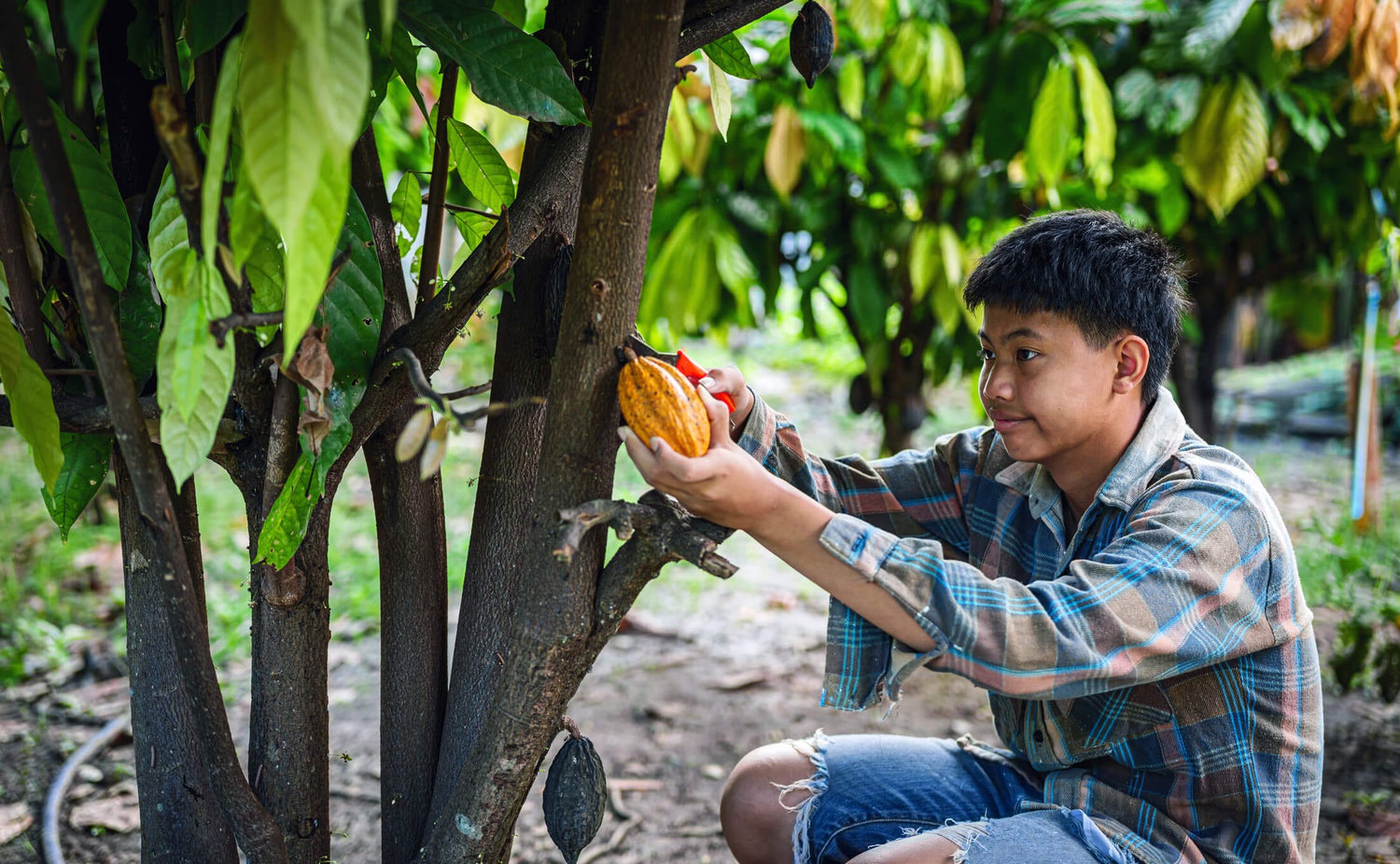
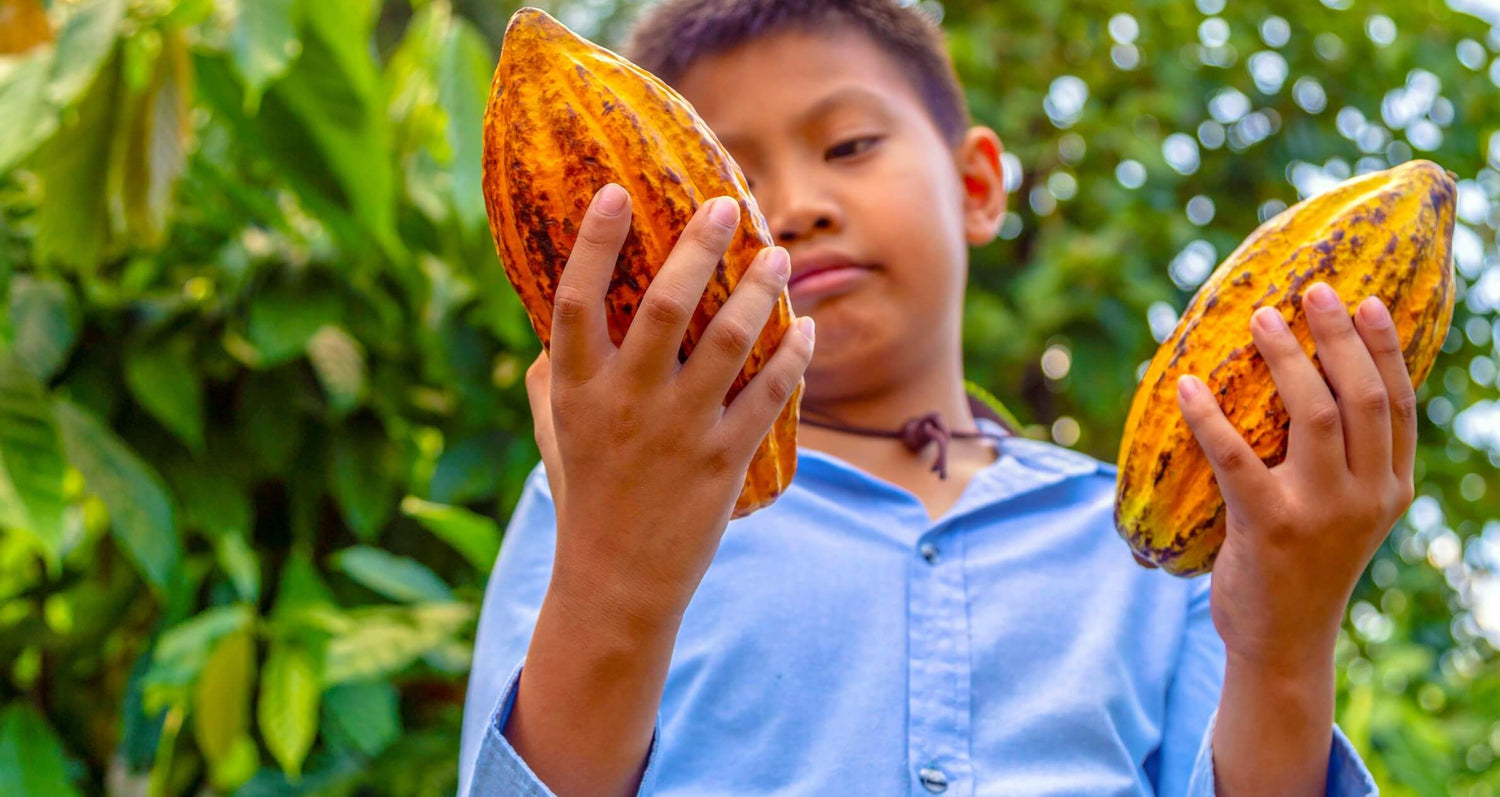
Bean-to-bar production offers a particularly valuable quality cue. When chocolate is made from carefully selected cacao beans in the same workshop where it is molded and filled, the chocolatier has direct control over roasting, refining, and texture. That control can reveal the natural distinctions between cacao origins: red-fruit brightness, toasted nut notes, gentle spice, or deep cocoa richness.
A praline filling should work with those notes, not cover them. Raspberry may lift a lively, fruit-forward cacao. Hazelnut can bring warmth to a rounded chocolate with roasted undertones. Coffee can be compelling, but only when it adds depth rather than making every piece taste the same.
Look for a filling with real texture and balance
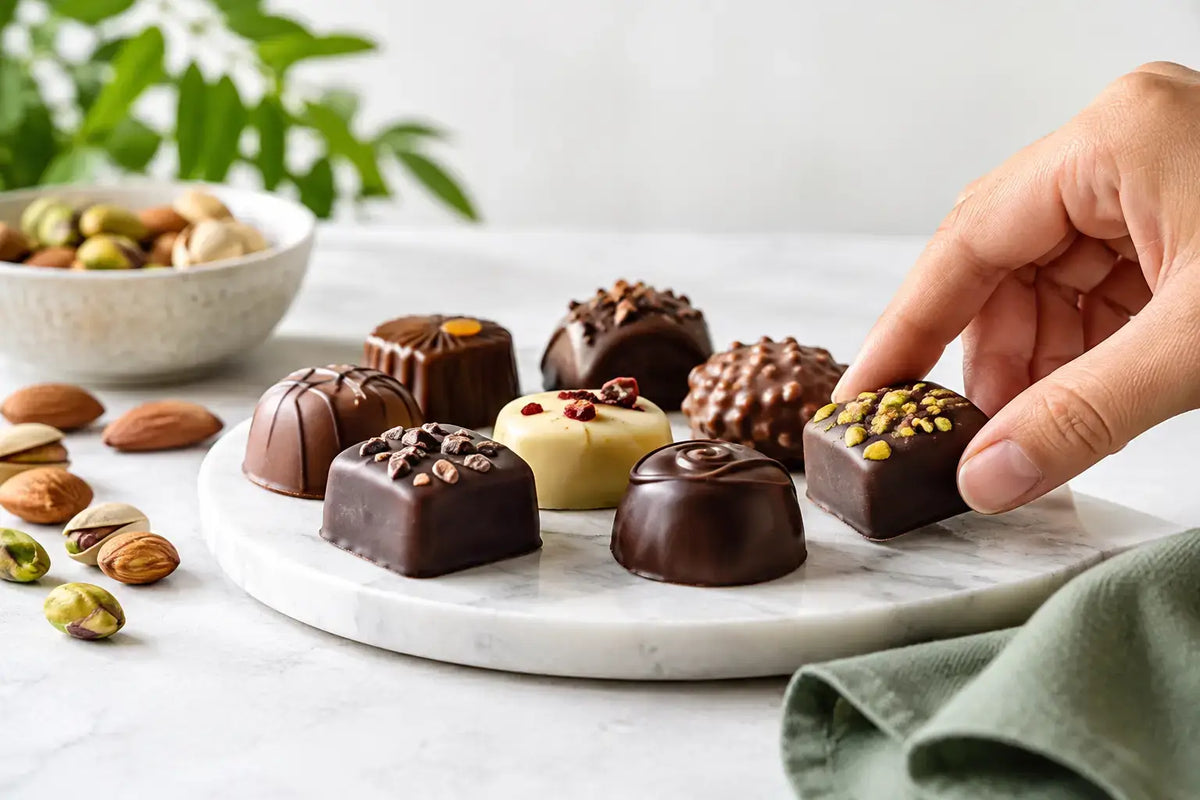
The absence of dairy changes how a filling is built, but it does not limit what a praline can be. In fact, plant-based recipes can make room for distinctive textures: crisp nut pralines, silky almond paste, intense fruit ganaches, and caramelized seeds.
Pay attention to the relationship between shell and center. A thin shell with a fluid fruit filling offers a different experience from a substantial dark chocolate shell around a crunchy hazelnut praline. Neither is inherently better. It depends on whether you prefer contrast, richness, brightness, or a longer chocolate finish.
Nut-based fillings deserve special attention because they can be excellent in vegan pralines. They naturally contribute creaminess and body, while their roasted character pairs beautifully with cacao. However, a nut filling should taste freshly roasted and clean, not oily or overly sweet. If a product is intended for a recipient with allergies, remember that many vegan pralines contain nuts or are made in workshops that handle them.
Fruit fillings should taste recognizably like fruit. A good passion fruit, cherry, citrus, or berry center brings acidity that prevents dark chocolate from becoming heavy. Artificially perfumed fillings can be pleasant, but they rarely offer the same clarity as real purées, zest, or carefully prepared extracts.
Consider cacao percentage, but do not treat it as a score
High cacao percentage is not a guarantee of better chocolate. It tells you how much of the recipe comes from cacao ingredients, but not the origin of the beans, the quality of fermentation, the roast, or the skill of the maker. An 85% shell can be magnificent for someone who enjoys a bold, less sweet profile, yet it may overwhelm a delicate floral filling.
For an approachable assortment, dark chocolate in the 60% to 75% range often gives the chocolatier room to retain cacao depth while allowing fillings to speak. Higher percentages can be striking with assertive pairings such as espresso, toasted nuts, orange peel, or sea salt. If you are buying for a group, variety is often wiser than choosing only the darkest option.
Also consider sweetness across the whole praline. A dark shell does not automatically make the final piece low in sugar if the center is a sweet caramel or fondant. The goal is not to avoid sweetness entirely, but to find balance: enough sweetness to round the cacao, enough bitterness to provide structure, and enough acidity or texture to keep the finish lively.
Choose transparency over vague luxury claims
Premium presentation matters, especially when pralines are a gift, but the box should not be the only evidence of quality. Seek makers that can explain where their cacao comes from, how their chocolate is produced, and what makes each filling vegan. Specific origin information and a clear approach to sourcing signal a more accountable kind of craftsmanship.
Ethical sourcing is also more credible when it is described with substance. Terms such as “responsibly sourced” can be a useful starting point, but details about cacao origin, direct relationships, traceability, and production practices give the claim greater meaning. For food-conscious buyers, this information connects enjoyment with the people and places behind the beans.
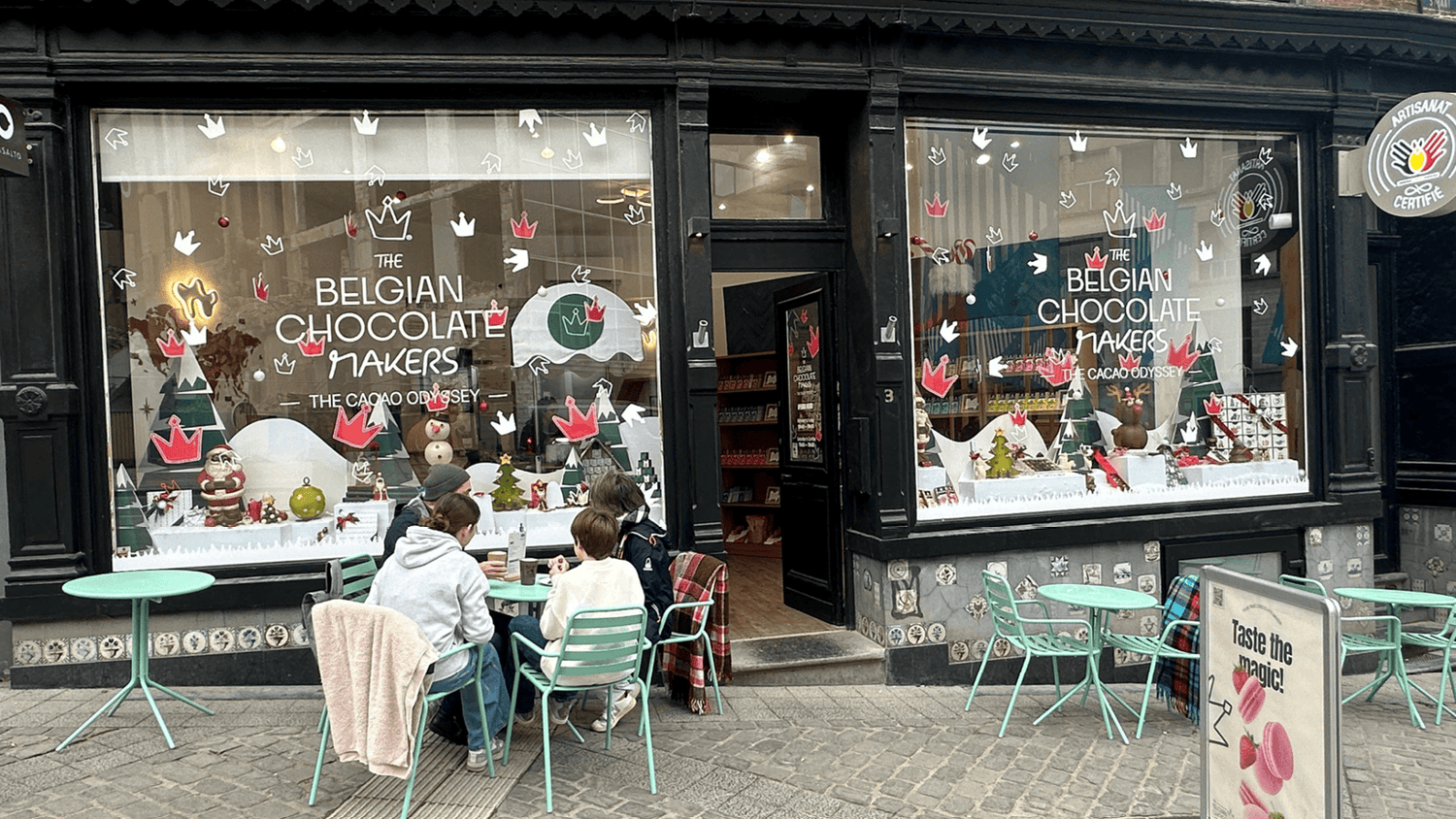
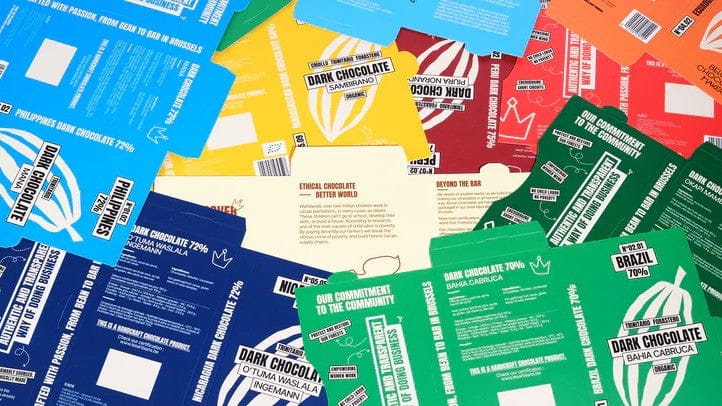
At The Belgian Chocolate Makers, bean-to-bar craftsmanship begins with cacao beans and continues through roasting, refining, molding, and finishing in the Brussels workshop. That closeness to the process is valuable because fine vegan chocolate depends on precision at every stage, not merely on removing dairy from a conventional recipe.
Select vegan pralines for the occasion
For a personal tasting, choose a small assortment with contrast. Combine one nut-forward praline, one fruit center, one classic dark chocolate piece, and one more adventurous flavor such as spice, coffee, or sesame. Tasting several styles makes it easier to identify the profiles you return to most often.
For a gift, think first about the recipient rather than choosing the most unusual flavor. A polished selection of dark chocolate, hazelnut, almond, and fruit pralines is likely to feel generous and accessible. If you know they enjoy specialty foods, add bolder pieces with single-origin chocolate, citrus, chili, or distinctive nut combinations.
Presentation should protect the chocolates as well as impress the recipient. Pralines are sensitive to heat, humidity, and strong odors. A quality box should keep pieces separated and arrive with ingredients and allergen information that is easy to review. If you are shipping or traveling with a gift, consider the weather and choose a format designed to preserve the chocolates in transit.
Freshness is part of the experience
Pralines are not pantry decorations. Fresh fillings, especially those made with fruit purée or plant-based cream, have a more limited ideal eating window than solid chocolate bars. Check the best-before date and buy from a source with good product turnover.
Store pralines in a cool, dry place, ideally around 60 to 68 degrees Fahrenheit. Avoid the refrigerator unless conditions make it necessary, since condensation can affect the chocolate’s finish and texture. Let chilled chocolates return to room temperature before opening the box.
The most memorable vegan pralines are chosen with curiosity: read the label, ask how they are made, and trust your own palate. A well-made piece should leave you with the distinct taste of fine cacao and a reason to reach for the next one.