A fine praline is a small promise with very little room for error. The shell must snap cleanly, the filling must be fresh and balanced, and the chocolate must carry a flavor worth lingering over. Understanding how artisan pralines are made explains why a handcrafted box feels so different from a standard assortment; and why the quality of the chocolate itself matters as much as the recipe inside.
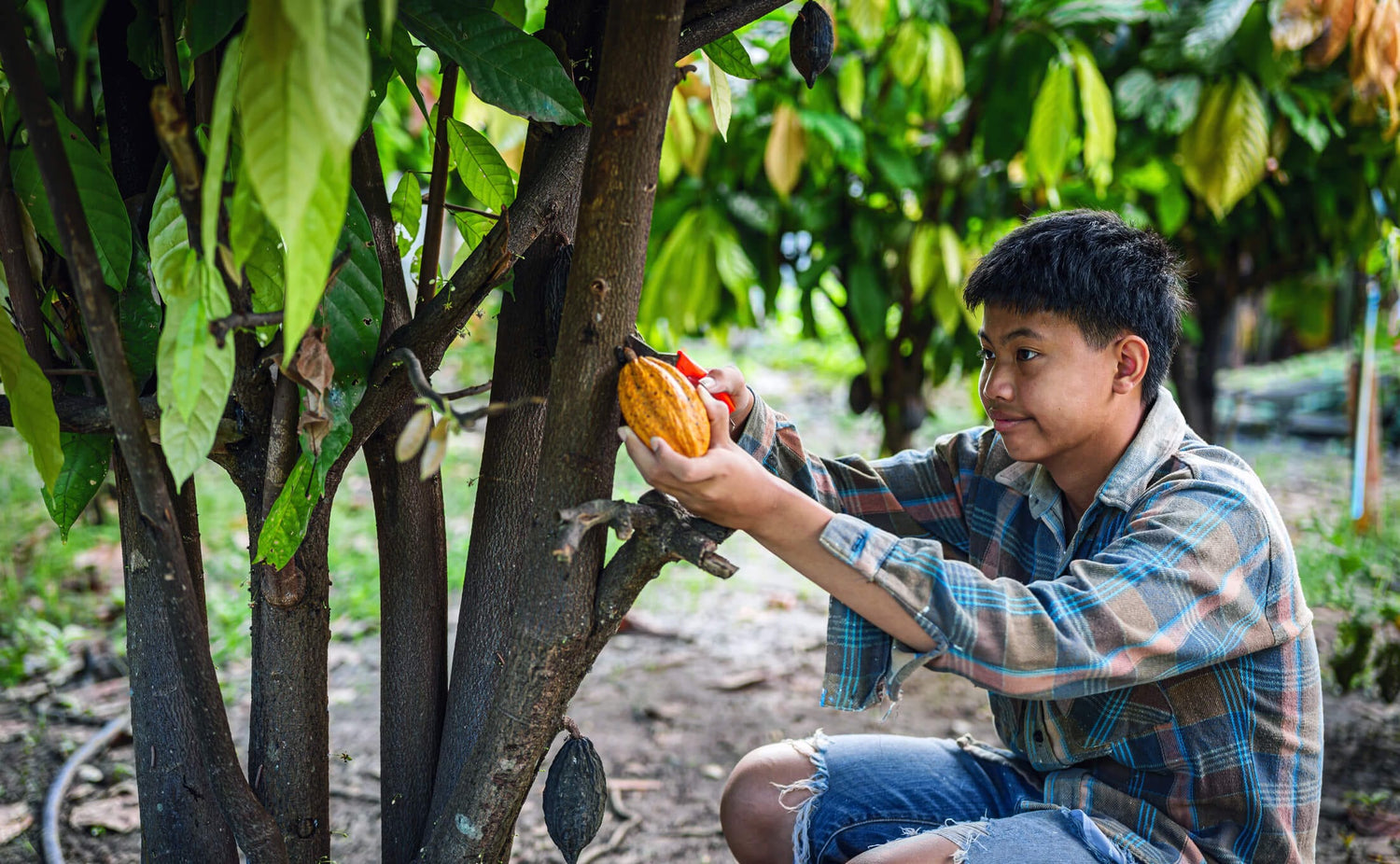
For a true bean-to-bar chocolatier, a praline begins long before a mold is filled. It begins with cacao selection, careful roasting, and the slow work of making chocolate with character.
How artisan pralines are made starts with the cacao
In Belgium, the word praline generally refers to a chocolate shell enclosing a filling: ganache, praliné, caramel, fruit, marzipan, or another carefully composed center. This is different from the pecan-based confection often called a praline in parts of the United States. Belgian pralines are defined by contrast: a delicate chocolate exterior and a filling that unfolds in texture and flavor.
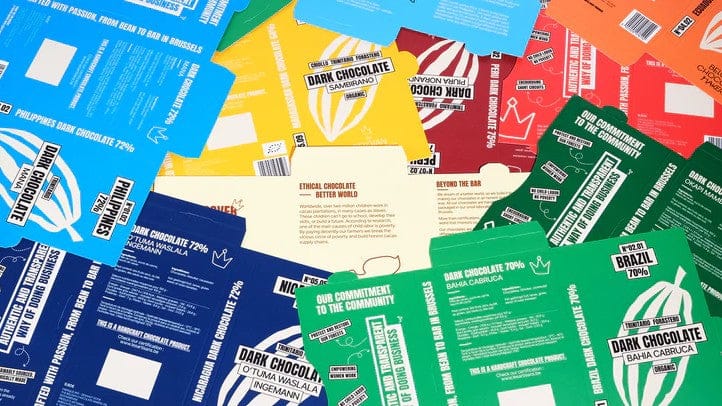
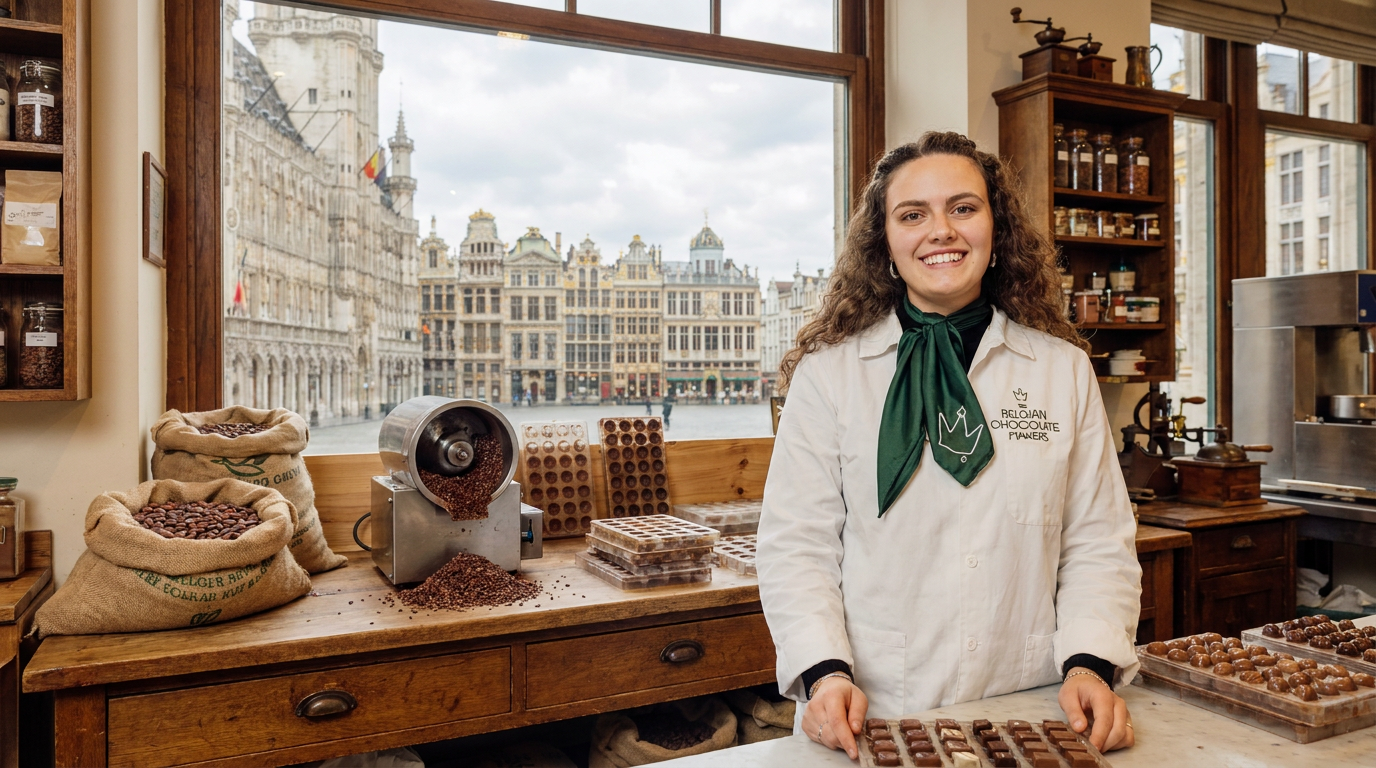
At The Belgian Chocolate Makers, chocolate is made in-house from carefully sourced cacao beans rather than purchased as ready-made industrial couverture. That distinction changes the foundation of every praline. Cacao origins can bring notes of red fruit, roasted nuts, citrus, spice, or deep cocoa, and those characteristics influence which filling will feel harmonious rather than overpowering.
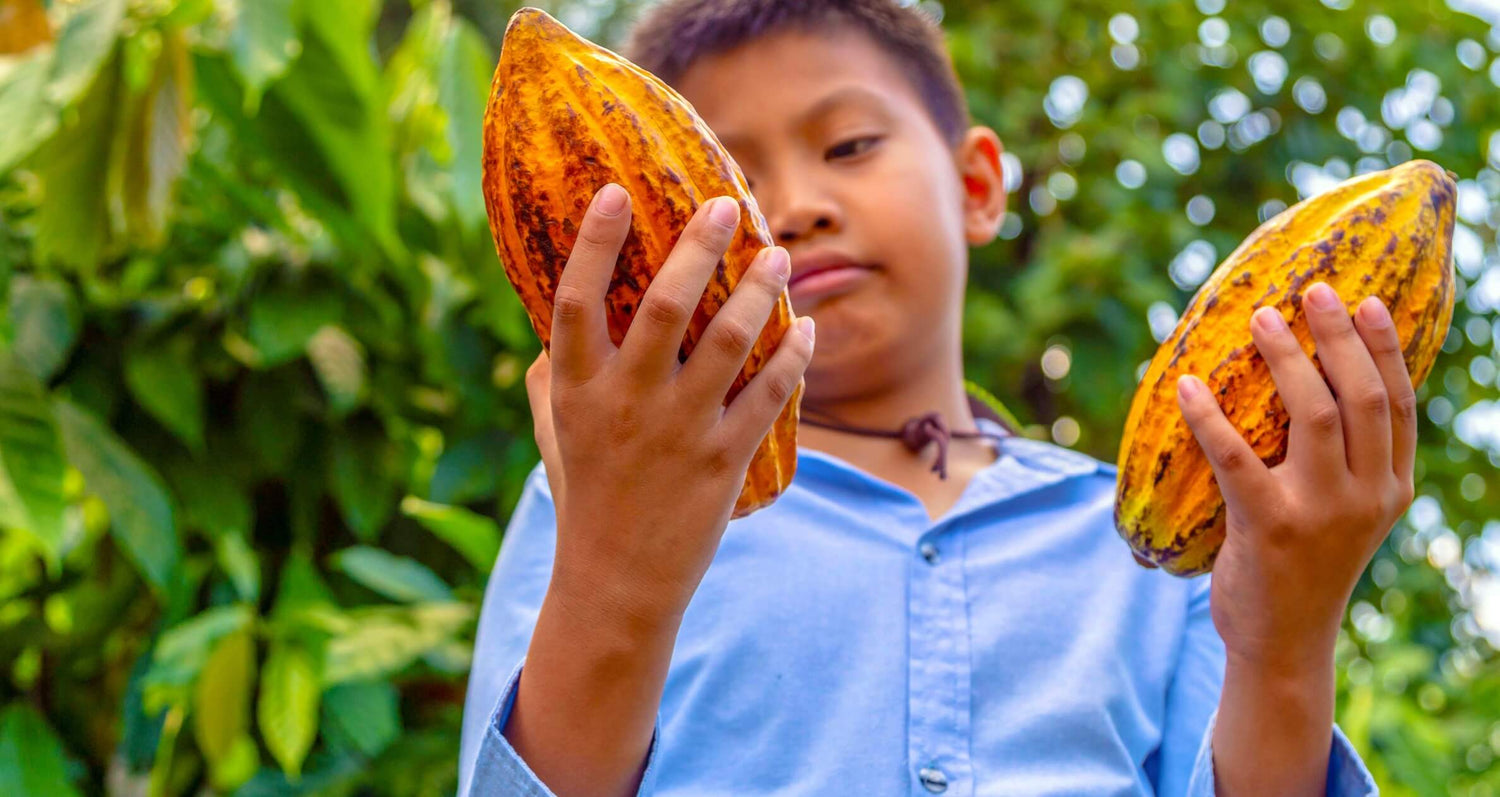
The beans are sorted and roasted in small batches. Roasting develops the familiar aroma of chocolate while reducing excess moisture and loosening the shells from the nibs. There is no universal roasting profile. A delicate, fruit-forward cacao may need a gentler approach than a more robust bean with naturally earthy or nutty notes. The aim is not to impose one flavor on every origin, but to reveal what is already present.
After roasting, the cacao is cracked and winnowed to separate the light husks from the cacao nibs. The nibs are ground, usually with sugar and, depending on the recipe, cocoa butter and milk powder. Refining reduces particles to a silky texture, while conching works the chocolate over time to smooth its flavor and mouthfeel. Patience here is not decorative craftsmanship. It is what prevents a finished praline from tasting gritty, harsh, or flat.
Tempering creates the praline's signature snap
Before chocolate can become a glossy praline shell, it must be tempered. Cocoa butter can solidify in several crystal forms, but only one stable structure delivers the clean shine, firm snap, and pleasing melt expected of fine chocolate.
Tempering means carefully heating, cooling, and bringing the chocolate back to a precise working temperature. The exact range differs for dark, milk, and white chocolate because their formulas behave differently. Even a small deviation can lead to a dull surface, soft shell, streaks, or bloom, the pale haze that can appear when cocoa butter crystals are unstable.
A well-tempered shell is more than an aesthetic detail. It protects the filling, releases neatly from the mold, and creates the first sensory moment when a praline is bitten. For molded pralines, tempered chocolate is deposited into clean polycarbonate molds, then tapped or vibrated to remove air bubbles. The mold is inverted so excess chocolate drains away, leaving a thin, even layer against each cavity.
Shell thickness requires judgment. Too thin, and the shell can crack during handling or fail to contain a soft filling. Too thick, and it overwhelms the center. The ideal is often a shell that yields with a distinct snap, then gives way quickly to the filling.
Molds, hand finishing, and visual precision
The mold may be decorated before shelling with colored cocoa butter, a fine pattern, or a contrasting chocolate detail. These elements are not simply ornament. They help signal the flavor within and make a praline box feel considered before the first piece is tasted.
Once the shells have set, each cavity is inspected. Artisan work depends on repeatable standards, but it also depends on trained eyes and hands. A blemished shell, an air bubble, or uneven coating may not change the ingredient list, yet it changes the experience of receiving a premium gift.
The filling is where balance matters most
While shells set, fillings are prepared. Ganache, one of the most beloved praline centers, is made by emulsifying chocolate with cream or another liquid. Depending on the desired flavor and texture, it may include butter, fruit purée, coffee, spices, tea, nut paste, liqueur, or a pinch of salt.
The key is a stable emulsion. If the fat and liquid do not combine properly, a ganache can split, become grainy, or develop an unpleasant texture over time. Temperature, order of mixing, and ratios all matter. A dark chocolate ganache may call for a different balance than a milk chocolate ganache because each chocolate brings its own cocoa butter, sugar, and milk solids.
Praliné fillings are another classic. Nuts such as hazelnuts or almonds are roasted to deepen their aroma, then caramelized with sugar and ground into a smooth paste. The result can be creamy, fluid, or lightly crunchy depending on the recipe. In a well-made praline, the roasted nut flavor should remain recognizable rather than disappear beneath sweetness.
Caramels demand their own discipline. Sugar must reach the right stage for depth without bitterness, and cream or butter must be incorporated safely and evenly. A caramel intended for a molded praline needs to stay soft enough to be pleasurable but stable enough not to leak or compromise the shell.
Freshness shapes every decision. Fillings with cream, fruit, or high water content generally have a shorter ideal shelf life than firmer nut-based centers. That is one of the trade-offs of genuine artisan pralines: generous, expressive fillings are often best enjoyed sooner. A chocolatier may use precise formulations, controlled temperatures, and protective packaging to preserve quality, but freshness cannot be replaced by a long list of preservatives.
Depositing, closing and resting the praline
When the shells are ready, the filling is piped or deposited into each cavity. A small gap is left at the top. This headspace allows the filling to settle and gives the chocolatier room to close the praline with a final layer of tempered chocolate.
Before closing, the centers must crystallize or set properly. If a filling is capped too soon, it can migrate into the chocolate or create structural problems. If it sits too long under poor conditions, its surface may dry or lose the ideal bond with the shell. Temperature and humidity are managed carefully throughout the workshop because chocolate is sensitive to both.
The closing chocolate is spread over the mold, creating the base of each praline. After final crystallization, the mold is turned out. This is a satisfying moment in production: properly tempered pralines release cleanly, revealing their shine and decoration.
Quality control happens one piece at a time
A praline is assessed by sight, feel, aroma, and taste. Its surface should be glossy and free from bloom. Its shape should be clean. Its shell should sound crisp when broken, while the filling should be smooth, fresh, and true to its stated flavor.
The most revealing test is the cut or bite. Is the shell proportionate to the center? Does the ganache melt evenly? Does the cacao origin complement the filling? A bright single-origin dark chocolate may make a raspberry ganache feel more vivid, while a rounder milk chocolate can be an excellent partner for hazelnut praliné. There is no single best combination. It depends on the desired experience and on the character of the chocolate.
From our workshop to the gift box
Finished pralines are handled with care because fingerprints, heat, and humidity can quickly affect their appearance. They are arranged in trays or gift boxes to protect their forms and present a varied tasting journey: perhaps a crisp nut praliné beside a soft caramel, a fruit ganache beside a more intense dark chocolate center.
Packaging is also part of product integrity. It shields delicate pieces from light and temperature changes while giving clear attention to ingredients and allergens. For gift buyers, presentation matters, but it should never distract from what is inside: chocolate made with transparent origins, precise technique, and respect for the people who grow cacao.
The next time you select a praline, look beyond the decoration. Choose one with a clean finish, a clear flavor idea, and chocolate you would be happy to taste on its own. That is often where the most memorable praline begins.