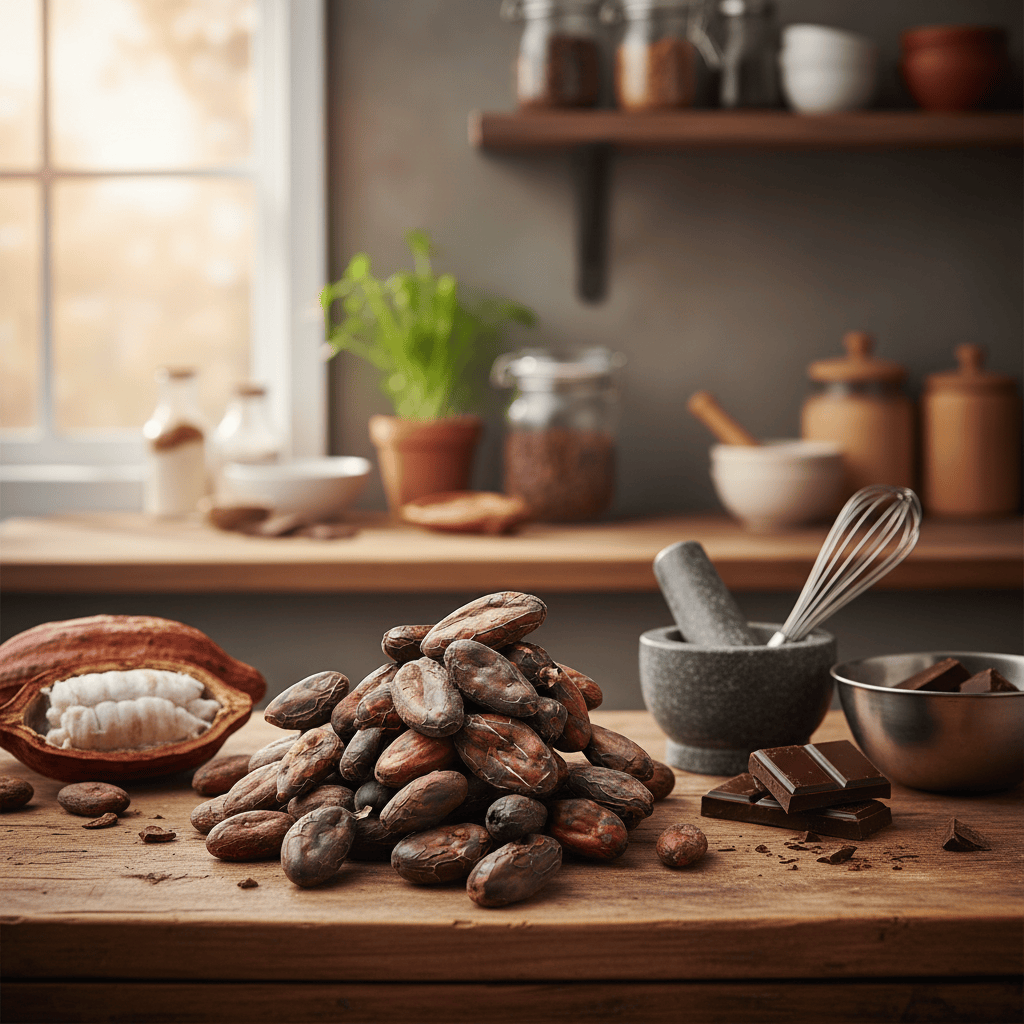
Als je ervan droomt om zelf chocolade te maken, is de eerste stap het vinden van cacaobonen. De reis van de cacaoboom naar je afgewerkte reep begint met zorgvuldige teelt, ethische inkoop en een precieze behandeling van de vers geoogste bonen. Wanneer je een zak verse cacaobonen, Je hebt hier het pure potentieel in handen van een chocolade die getuigt van oorsprong, terroir en traditie.
Inzicht in Theobroma cacao en wat deze bonen nu eigenlijk zijn.
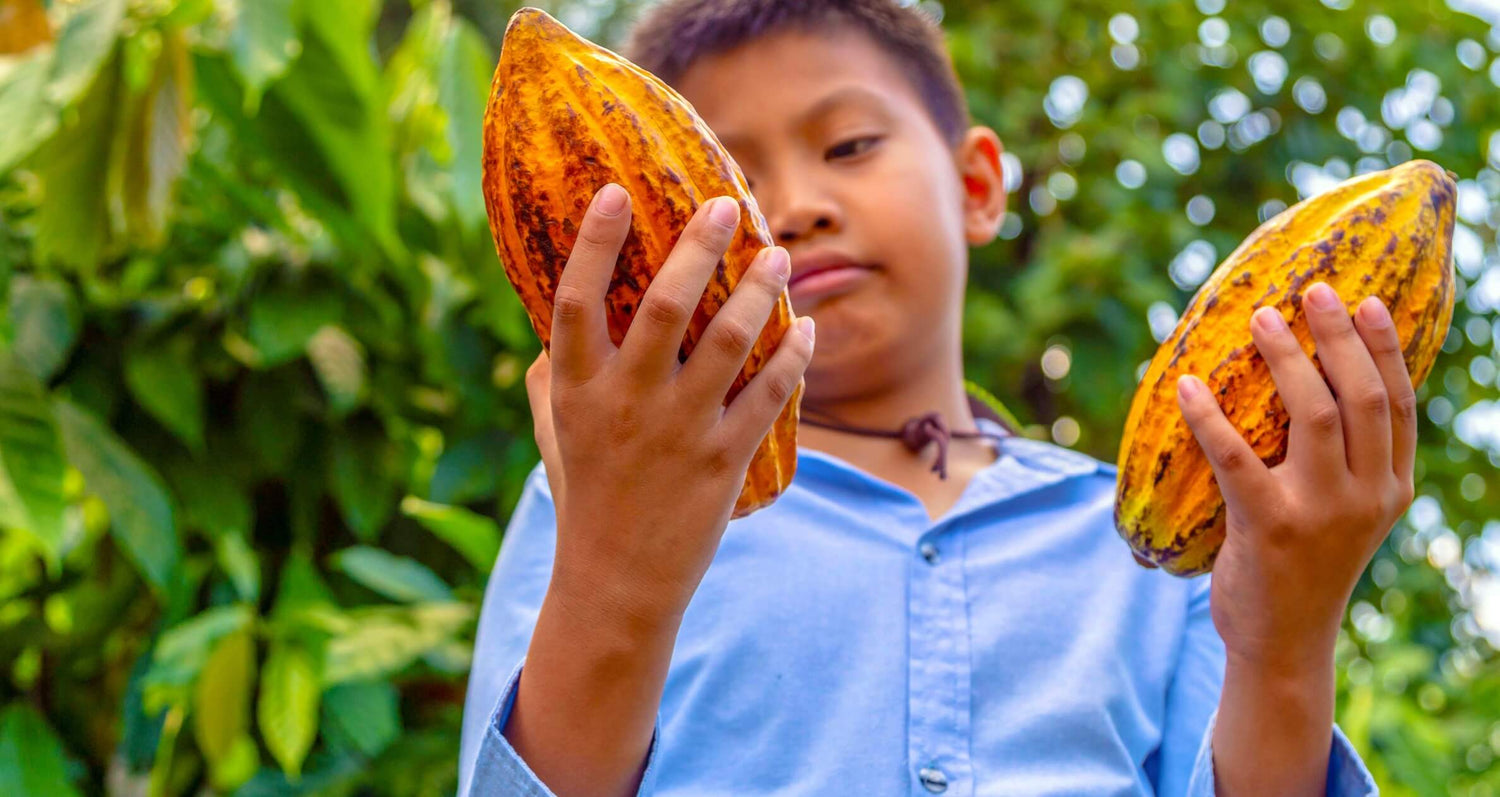
De wetenschappelijke naam voor de cacaoboom is Theobroma cacao. Deze elegante naam herinnert ons eraan dat cacaobonen de zaden zijn van de vrucht die wordt geproduceerd door bomen die van nature voorkomen in tropische gebieden. In de keuken of het atelier vormen cacaobonen het uitgangspunt voor smaak, textuur en aroma. Naarmate je meer ervaring opdoet met het maken van chocolade, zul je merken dat de kwaliteit van de bonen direct van invloed is op het uiteindelijke karakter van je product.
In de populaire cultuur en zelfs in games zoals Minecraft horen spelers vaak de term cacaobonen. Echte cacaobonen komen van de cacaopeulen van de cacaoboom (Theobroma cacao) en hebben een veel dieper en genuanceerder smaakprofiel dan de termen cacaopoeder of cacaonibs doen vermoeden. Dit is een van de redenen waarom verse bonen zo aantrekkelijk zijn voor zowel koffiebranders als chocolatiers.
Wat maakt verse cacaobonen zo bijzonder? The Belgian Chocolate Makers speciaal?
Ons zak verse cacaobonen Deze bonen zijn ongeroosterd, ethisch verantwoord geproduceerd en zitten boordevol natuurlijke aroma's die je van begin tot eind in je chocolade kunt verwerken. Ongeroosterde bonen behouden hun delicate aroma's en geven je de controle over het roosteren en malen, zodat je chocolade jouw eigen vakmanschap weerspiegelt. Voor chocolademakers, branders of cacaoliefhebbers biedt het gebruik van verse, ethisch verantwoorde bonen een schone lei om de smaken van de oorsprong en de fermentatietonen te ontdekken.
Verse bonen vormen een heel ander uitgangspunt dan voorgebrande chips of poeders. Je kunt de fermentatie en het droogproces zelf bepalen, een profiel kiezen dat bij je recept past en het brandproces afstemmen om specifieke fruit-, noot- of bloemige aroma's naar voren te brengen. Deze mate van controle is van onschatbare waarde voor makers van pure chocolade, single-origin repen of couverture op maat. Het is ook een genot voor thuisbranders die willen experimenteren met brandcurves en malingsgraden om de natuurlijke aroma's van de bonen te onthullen.
Van de oogst tot in uw cacaokeuken: de reis van cacaobonen
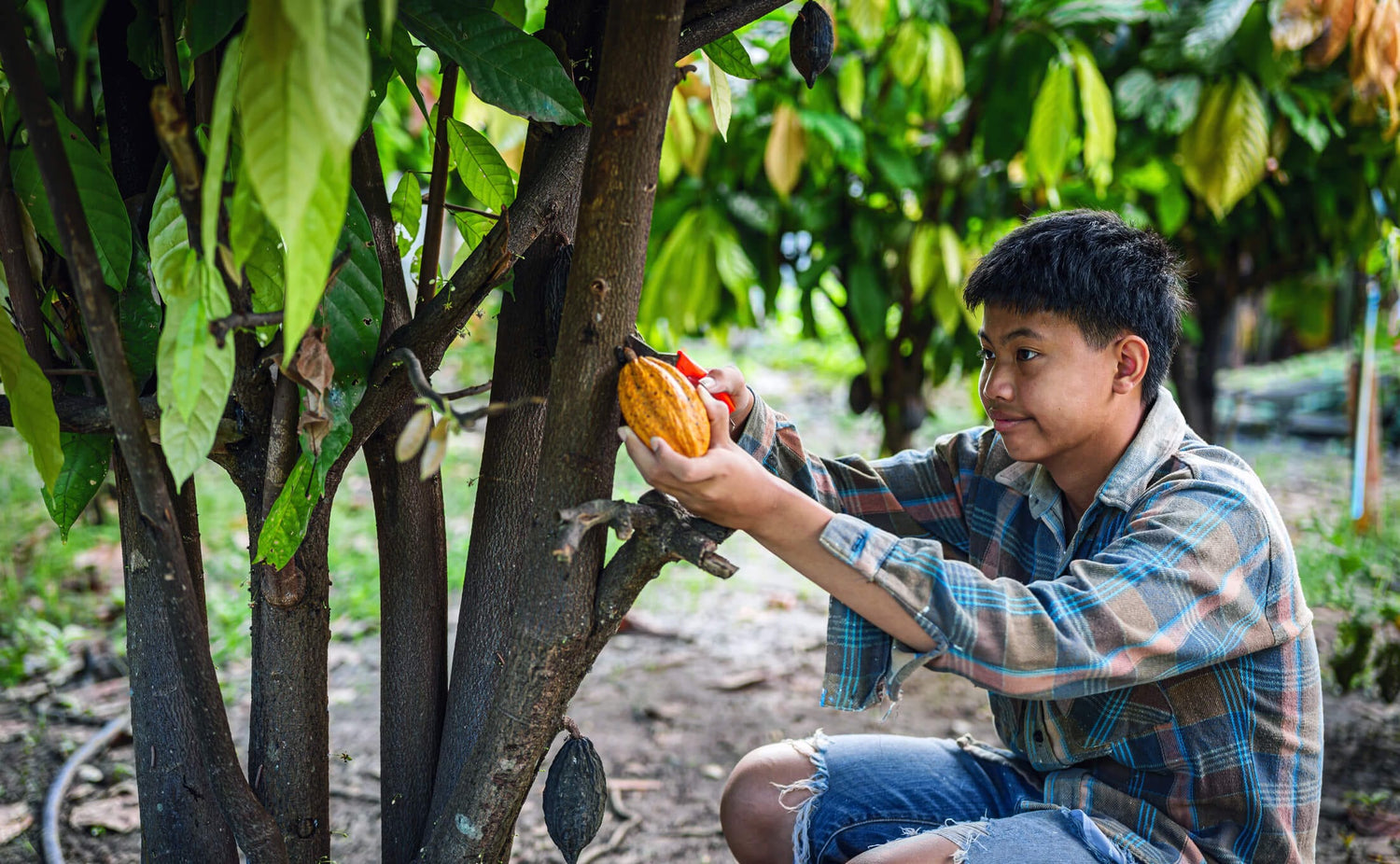
Inzicht in de levenscyclus van de oogst tot een zak in je voorraadkast helpt te begrijpen waarom smaak zo belangrijk is. Cacaopeulen worden geoogst en de bonen erin worden gefermenteerd en gedroogd voordat ze worden verzonden. Deze fermentatiefase is cruciaal: het ontwikkelt zuurgraad, vermindert bitterheid en legt de basis voor de smaak die je verder kunt verfijnen met roosteren en malen. Zelfs zonder te roosteren hebben verse cacaobonen een levendig smaakprofiel dat je kunt vormgeven door zachte hitte en zorgvuldig malen.
Als je de basisprincipes van cacaoproductie kent, kun je de kwaliteit van verschillende bronnen beoordelen. Kwalitatief hoogwaardige cacaobonen komen van boerderijen die duurzame landbouwmethoden hanteren, eerlijke prijzen betalen en transparante traceerbaarheid garanderen. Door te kiezen voor een zak cacao met het label 'ethisch geproduceerd' steun je gemeenschappen en ecosystemen, omdat chocolademakers streven naar consistentie en integriteit in elke batch.
Interessante weetjes over cacaobonen die je wilt weten tijdens het experimenteren.
Feit: cacaobonen zijn de zaden van de cacaovrucht. In rauwe vorm zijn ze relatief zoet en licht wrang; eenmaal geroosterd, komen er meer ontwikkelde smaken naar voren. Een enkele cacaopeul kan tientallen bonen bevatten, en de verhouding tussen vet en vaste stoffen in de boon beïnvloedt hoe je roostert en maalt. Deze nuances in smaak zijn een van de redenen waarom producenten kiezen voor verse, ongeroosterde bonen, omdat ze zo in de keuken precieze controle hebben.
Feit: cacaobestanddelen zijn het vetvrije gedeelte dat voor een groot deel verantwoordelijk is voor de smaak van chocolade.Wanneer je cacaobonen roostert en maalt, verander je die vaste stoffen in een rijke pasta of poeder die de basis vormt van de meeste chocoladeproducten. Met verse bonen kun je de verhouding tussen cacaomassa en cacaoboter aanpassen om unieke texturen en mondgevoelens in je uiteindelijke repen te creëren.
Feit: de cacaoproductie omvat nauwgezette stappen van oogst tot fermentatie, drogen, verzending en uiteindelijke verwerking. Elke stap beïnvloedt het aroma, de zuurgraad en de smaak. Door bonen van een gerenommeerde leverancier te kiezen, zorgt u ervoor dat u begint met de best mogelijke basis voor uw creatieve proces.
Hoe je thuis of in een kleine workshop met verse cacaobonen kunt werken
Door te beginnen met verse cacaobonen heb je controle over elke fase van het proces om van bonen chocolade te maken. Begin met een zacht roosterproces om de aroma's van de bonen te activeren zonder de delicate tonen te overheersen. De exacte roostergraad hangt af van de herkomst van de bonen en je gewenste smaakprofiel. Na het roosteren kraak je de bonen en zeef je ze om de schillen te verwijderen. Vervolgens maal je de cacaonibs tot een pasta die je kunt temperen tot een reep of kunt vormen tot snoepgoed.
Ook de bewaring is belangrijk. Bewaar de bonen in een luchtdichte verpakking op een koele, droge plaats, uit de buurt van sterke geuren. Verse bonen behouden hun aroma beter als ze binnen een redelijke tijd na ontvangst worden gebruikt, en een goede bewaring helpt om hun subtiele smaken te behouden terwijl je experimenteert met recepten en texturen.
Voor thuischocolatiers en kleine studio's bieden verse cacaobonen een toegangspoort tot personalisatie. Je kunt experimenteren met roostercurves, malingsgraden en tempertemperaturen om tonen van bosfruit, chocoladesmaak of bloemige nuances te onthullen die de herkomst van de bonen weerspiegelen. Het is zowel wetenschap als ambacht, en het begint met de juiste basis: verse, ethisch verantwoorde cacaobonen zoals die in deze zak.
Ethische inkoop en herkomst: waarom dit belangrijk is voor elke chocolademaker.
Ethisch verantwoorde inkoop is meer dan een modewoord. Het draagt bij aan eerlijke betaling van boerengemeenschappen, bescherming van de biodiversiteit en traceerbaarheid van de toeleveringsketens. Wanneer u kiest voor bonen van
De herkomst speelt een grote rol in de smaakontwikkeling. Bonen uit verschillende regio's hebben elk een eigen smaakprofiel: sommige zijn helder en fruitig, andere diep en aards. Door te beginnen met verse cacaobonen kun je deze profielen verkennen en zelf bepalen hoeveel smaak je uit elke regio wilt halen, waardoor je je eigen stijl in elke reep kunt verwerken.
Cacaoproductie in vogelvlucht en wat dit betekent voor uw keuze aan cacaobonen.
Inzicht in de cacaoproductie helpt je bij het beoordelen van de bonen die je koopt. Van fermentatie tot drogen, elke stap bepaalt de uiteindelijke smaak. Wanneer je verse, ongeroosterde cacaobonen koopt, koop je in feite de grondstof, het canvas, voor je chocoladebereiding. Je kunt elke stap, van de mate van roosteren tot de maling, aanpassen om precies de gewenste textuur en aroma voor je productlijn te bereiken.
Conclusie: haal het maximale uit verse cacaobonen in je chocoladeavontuur.
Of je nu een professionele chocolatier bent of een toegewijde thuisbakker, verse cacaobonen bieden een niveau van controle en authenticiteit dat kant-en-klare chocolade niet kan evenaren. Door de oorsprong van Theobroma cacao te begrijpen, te erkennen hoe fermentatie en drogen de smaak beïnvloeden en zorgvuldig te roosteren en te malen, creëer je chocolade die jouw vakmanschap echt weerspiegelt. En met ethisch verantwoorde bonen draag je bij aan een gezonder en duurzamer chocolade-ecosysteem.