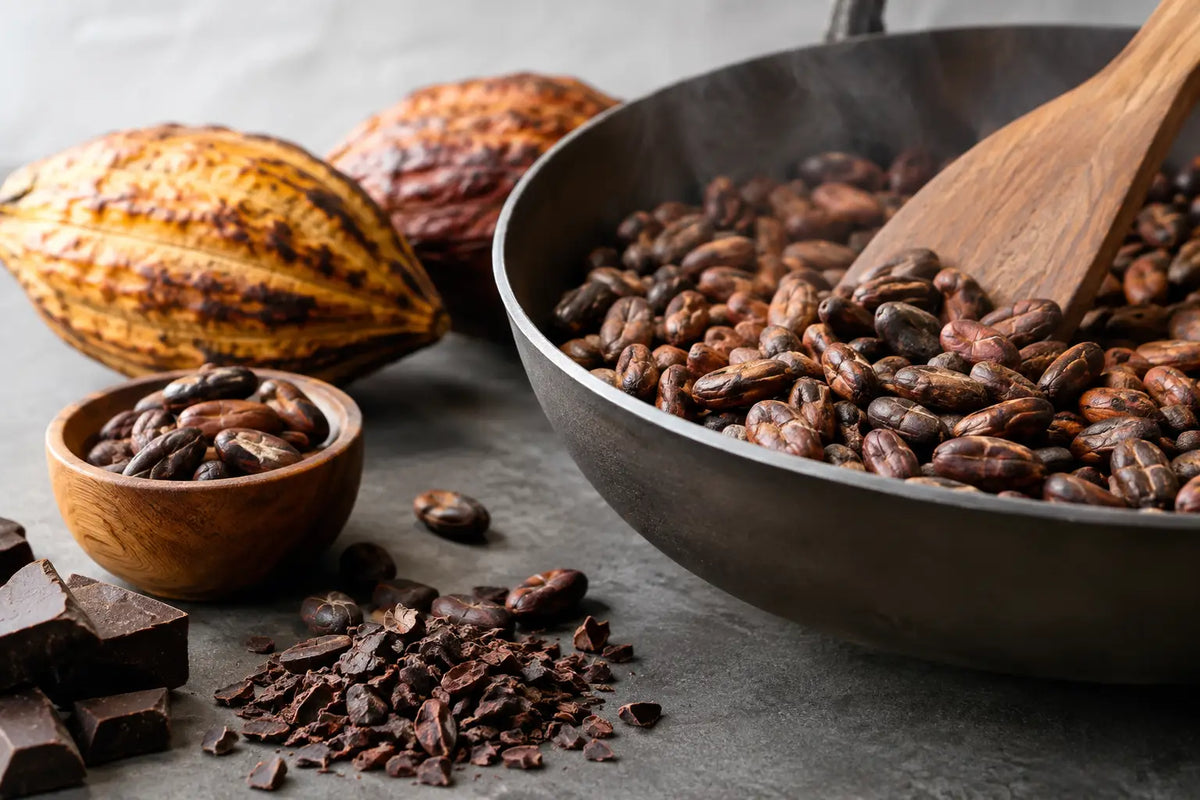
A cacao bean can arrive at the workshop with notes of red fruit, citrus, honey, nuts, or warm spice already present. The cacao roasting flavor impact determines how much of that origin character remains visible in the finished chocolate - and how much is transformed into familiar cocoa depth, toast, and caramel.
For bean-to-bar makers, roasting is not a background step. It is one of the most consequential decisions in the entire chocolate-making process. A few degrees, a few minutes, or a different approach to airflow can shift a bar from lively and fruit-forward to dark, rounded, and deeply roasted. Neither direction is automatically better. The right roast respects the bean, the desired style of chocolate, and the experience the maker wants to offer.
Why Cacao Roasting Flavor Impact Matters
Roasting develops flavor through heat. Inside the bean, sugars and amino acids react to create the aromas people often associate with chocolate: cocoa, malt, toasted nuts, biscuit, coffee, and caramel. Heat also reduces moisture, makes the shell easier to remove, and helps prepare the nibs for refining.
Yet cacao is not a blank canvas. Its flavor has been shaped long before it reaches a chocolate workshop. Variety, terroir, fermentation, drying, storage, and transport all leave their mark. Fine cacao from a carefully fermented lot may carry delicate floral or fruit notes that deserve a restrained roast. Another lot may benefit from more heat to soften astringency, round out acidity, and build a richer cocoa profile.
This is why origin transparency matters. Knowing where beans come from gives the maker useful context, but tasting and testing each lot remains essential. Two harvests from the same region can behave differently. Craftsmanship means responding to the actual beans in hand rather than applying one fixed roast to every batch.
What Heat Brings Forward - and What It Can Hide
A lighter roast usually preserves more of a cacao's distinctive origin character. In a well-made dark chocolate, this might mean bright berry, citrus, grape, floral, or honeyed notes. The texture of the flavor can feel more delicate and the finish more expressive. Light roasting can be especially compelling for single-origin bars, where the point is to taste a place through cacao.
The trade-off is that lighter roasting leaves less room for error. If fermentation was uneven or drying was poorly managed, sharp acidity, green flavors, or a raw bean quality may remain too apparent. A light roast cannot invent quality that was not present in the cacao.
A medium roast often creates the broadest balance. It can retain a sense of origin while adding roundness, gentle caramel, toasted almond, and a more familiar chocolate aroma. This is often a beautiful direction for bars intended to satisfy both curious chocolate lovers and people seeking an elegant everyday indulgence.
A deeper roast emphasizes the flavors created by heat. Cocoa, coffee, toast, molasses, and roasted nuts become more pronounced as fruit and floral notes recede. Used thoughtfully, this can give chocolate a luxurious, warming character and help integrate a more assertive bean. Used too aggressively, it can flatten the distinctions between origins, create bitterness, or introduce smoky, burnt notes that overpower the cacao itself.
The goal is not to make every bean taste intense. It is to find the point at which each bean tastes most complete.
Acidity Is Not the Enemy
Acidity is frequently misunderstood in chocolate. A clean, fruit-like acidity can make a bar feel vivid and refined, much like brightness in a fine coffee or wine. It can lift flavors that might otherwise seem heavy or one-dimensional.
Roasting tends to soften acidity, but it should not erase it by default. The question is whether the acidity is balanced and appealing. A well-fermented cacao with hints of raspberry or citrus may need only a gentle roast. A harsh, vinegary, or unripe edge calls for careful assessment because more roasting may mask it, but cannot fully correct poor post-harvest handling.
Time, Temperature, and Airflow Work Together
It is tempting to talk about roast temperature as if it tells the whole story. It does not. Roasting is a relationship between time, temperature, bean size, moisture content, batch size, equipment, and airflow.
A shorter roast at a higher temperature may develop the outer layers quickly while leaving the center less evenly treated. A longer roast at a lower temperature may offer a gentler, more gradual development. Neither method is universally superior. The equipment and the cacao both matter.
Airflow is equally significant. It carries away moisture and volatile compounds, influencing how cleanly flavors develop. Bean size also changes the calculation. Larger beans may require a different approach than smaller ones, while a high-moisture lot may need more time before its flavor can develop evenly.
In a small-batch workshop, makers can adjust these variables with precision and evaluate the results through repeated tasting. That attention is one reason bean-to-bar chocolate can express a cacao origin with greater clarity than chocolate made from standardized industrial couverture.
Roasting Before or After Shell Removal
Cacao can be roasted whole, in the shell, or as nibs after winnowing. Whole-bean roasting may provide a gentler buffer against direct heat, while nib roasting gives the maker more immediate control over the cacao itself. Each method affects heat transfer and, in turn, the flavor profile.
There is no single correct choice. A maker may select a method based on the bean's physical characteristics and the expression sought in the final bar. The value lies in making that choice intentionally, rather than treating roasting as a purely mechanical step.
Tasting the Roast Beyond the First Bite
A roast profile should be judged in finished chocolate, not only by the aroma of warm nibs. Refining, conching, sugar level, cocoa percentage, and resting time all influence how roasted flavors appear on the palate.
A promising nib may taste nutty and sweet immediately after roasting, then become too bitter once ground into a high-cacao bar. Conversely, a bright roast that seems restrained on its own may reveal remarkable fruit after the chocolate has rested and its flavors have had time to settle.
Professional tasting pays attention to more than the opening note. Consider how the chocolate melts, where the flavor develops, whether the finish stays clean, and how long it lingers. Does the roast support the origin or cover it? Does the sweetness feel integrated? Does a darker profile create satisfying depth, or does it leave a dry, charred finish?
For gift buyers, these details become part of the pleasure. A thoughtfully made bar offers more than a percentage on the label. It offers a progression of flavors that makes the act of tasting feel considered and memorable.
How Roasting Shapes Different Chocolate Styles
Single-origin chocolate often benefits from a roast designed to preserve its identity. If a cacao is known for tropical fruit and floral tones, excessive heat would make it harder to distinguish from a more conventional dark chocolate. The roast should allow the origin to speak clearly, even when the resulting profile is subtle rather than dramatic.
For pralines, truffles, spreads, and other filled creations, the desired result may be different. A deeper, more rounded chocolate can pair beautifully with hazelnut, coffee, vanilla, spice, or caramel. It can provide structure without competing with the filling. That does not mean using lesser cacao or hiding behind roast. It means choosing a flavor profile suited to the composition.
Milk chocolate also deserves careful roasting. Because milk and sugar bring their own caramelized, creamy notes, cacao needs enough presence to remain recognizable. A roast that is too light can become lost; one that is too dark can feel heavy beside dairy richness. Balance remains the standard.
A Craft Decision Worth Tasting
At The Belgian Chocolate Makers, roasting is part of the conversation between origin and craft. Working directly from cacao beans makes it possible to assess each lot, refine its profile, and create chocolate with a clear sense of intention from bean to finished piece.
The next time you taste a bar, pause before reading only the cocoa percentage. Notice whether its first impression is fruity, nutty, floral, caramel-like, or deeply cocoa-driven. Those notes tell a story not just about where the cacao grew, but about how carefully someone chose to roast it. The most rewarding chocolate leaves room for that story to unfold slowly.