🏝️ Hainan, where Chinese cacao was born
From botanical research to the culture of taste

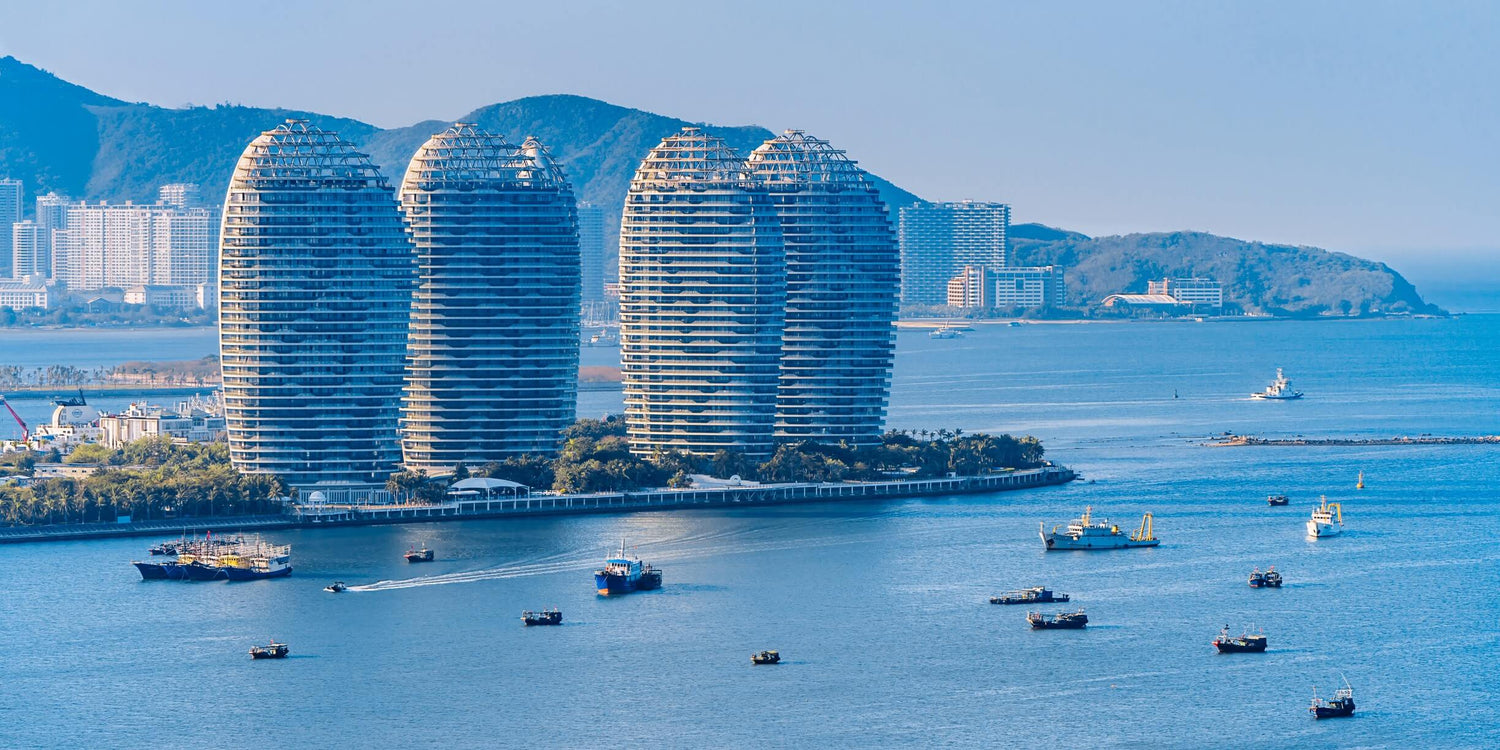
In southern China, between turquoise seas and emerald mountains, lies Hainan, a lush tropical island bathed in sunlight and fragrance all year long. Surrounded by coral reefs and swaying coconut trees, it is a land where the rhythm of the monsoon shapes both nature and life.
Often called “the Chinese Hawaii”, Hainan is a crossroads of cultures, flavors, and landscapes, a place where science, agriculture, and gastronomy intertwine. Its fertile volcanic soils and humid climate offer an unexpected gift: the perfect conditions for growing Theobroma cacao, the sacred tree once thought to thrive only in equatorial America.
But Hainan is more than a tourist paradise. It’s a living laboratory, a symbol of China’s tropical ambition, and today, the birthplace of Chinese cacao, where researchers, farmers, and artisans work hand in hand to reinvent what chocolate can be. Here, under the tropical sun, the story of cacao is not just told; it is reborn, carrying the promise of a new origin, a new flavor, and a new chapter in the global bean-to-bar movement.
🥥 A tropical island with a chocolate destiny
Known for its coconuts, coffee, and pepper, Hainan has long been celebrated for the abundance of its tropical terroir. But beyond the plantations and markets, the island hides an unexpected treasure: cacao, quietly growing in the shade of the rainforest.
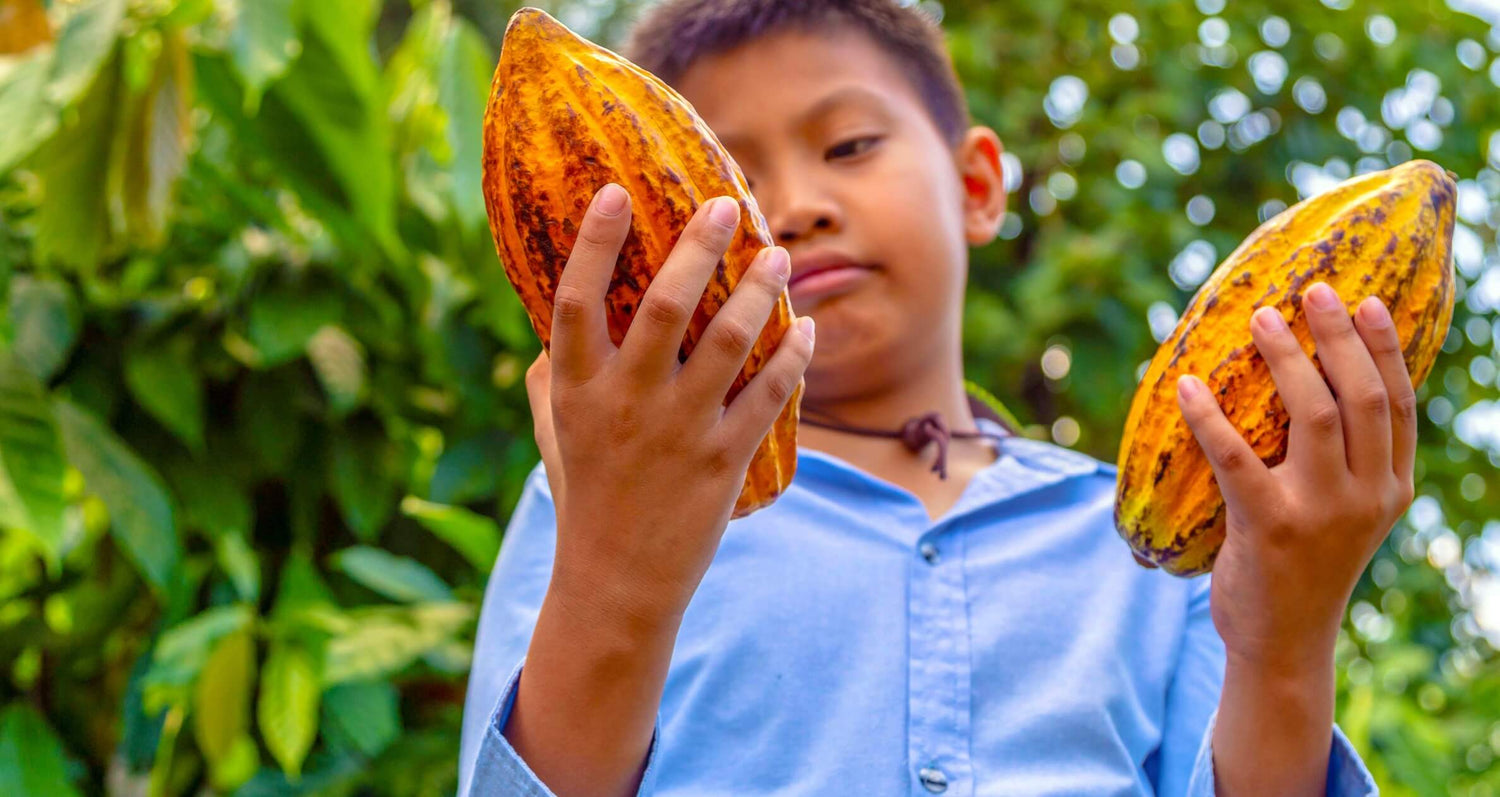
Here, under the high canopies of mango and banana trees, cacao pods shimmer in tones of gold, crimson, and deep burgundy, nourished by fertile volcanic soil and the warm embrace of the South China Sea. The island’s hot, humid climate, with generous rains and soft ocean winds, creates a natural greenhouse where cacao trees flourish all year round.
In Hainan, the seasons are gentle and the sun rarely rests; the air is filled with the scent of ripe fruit, spices, and wet earth. It is an environment that feels almost designed for cacao: a living ecosystem where the balance between shade, moisture, and biodiversity allows each tree to express its character. And from these conditions, equal parts wild and cultivated, is born a distinctly Chinese cacao, delicate yet powerful, carrying whispers of the island’s tropical soul.
🌱 Origins, when science planted the first bean
In the 1950s, at a time when China was exploring the limits of its tropical frontier, a handful of visionary scientists began an experiment that would quietly reshape the island of Hainan. With the support of the Chinese Academy of Sciences, they brought to the island the first cacao seedlings from Southeast Asia, fragile, exotic plants that had never before been cultivated on Chinese soil.
Their open-air laboratory was the Xinglong Tropical Botanical Garden, a vast expanse of fertile land nestled among rolling hills and steaming monsoon forests. Founded in 1957, this botanical sanctuary became a living museum of tropical biodiversity, home to rubber trees, coffee, vanilla, spices, and hundreds of rare plant species. Amid this tropical symphony, cacao found a new home.
It wasn’t easy. The early years were filled with uncertainty: typhoons, pests, soil challenges, and the delicate temperament of the cacao tree itself. But the researchers persisted, studying leaf patterns, cross-pollinating varieties, and adapting each plant to Hainan’s microclimates. Slowly, season after season, the trees began to flower, the pods to ripen, and the dream to take root.
By the end of the decade, Hainan had become the first and only region in China capable of growing cacao successfully. Hidden away in research plots and experimental gardens, these early plantations were small, almost secret, yet profoundly symbolic. Because here, in the quiet shade of the Xinglong forests, Chinese cacao was born, not as an industry, but as an idea: the belief that a new origin of chocolate could emerge where science, nature, and patience meet.
🧬 From research to revival
For decades, cacao in Hainan remained little more than a scientific curiosity, a few rows of trees tended by botanists, admired by visiting scholars, and quietly observed by students of tropical agriculture. The experiments continued in small greenhouses and shaded test plots, but the dream of a true Chinese cacao seemed distant, perhaps even forgotten.
Then came the early 2000s, and with them, a new generation. The island itself was changing: tourism was booming, research funding was returning, and the world was beginning to talk about sustainability, traceability, and origin. Hainan’s young agronomists and researchers, inspired by both heritage and global innovation, began to look again at the cacao trees that had survived the decades, twisted, weathered, but still alive.
They studied the genetics of these old plants, compared their flavor profiles, and crossbred them with carefully selected varieties from Southeast Asia and South America. Slowly, they developed new Hainan lines of cacao, more aromatic, more resistant to disease, and deeply adapted to the island’s specific microclimates. The plantations around Wanning and Xinglong started to awaken: first in research fields, then in pilot farms, and finally in small-scale local cooperatives.
By the mid-2010s, the rebirth was visible. Farmers, scientists, and chocolatiers began working hand in hand, transforming what was once an academic experiment into a sustainable and traceable supply chain. Training programs emerged, school projects took root, and international collaborations were launched, connecting Hainan’s fertile soils with the global bean-to-bar movement.
Today, cacao is no longer a curiosity here, it is a symbol of education, sustainability, and renewal. It represents a bridge between science and craft, between local tradition and international vision. And as Hainan continues to grow as a tropical agricultural hub, its cacao tells a story of persistence, the story of a tree that waited half a century to finally bear the fruit of a new beginning.
🍫 Xinglong Chocolate Town, turning a dream into reality
At the heart of this revival stands Xinglong Chocolate Town, a bold and visionary project that redefines what a “Chocolate City” can be. Nestled among tropical gardens and gently rolling hills, this vast complex is the first destination in China entirely devoted to cacao and chocolate, blending education, science, craftsmanship, and tourism in a single immersive experience.
What began as a local initiative has grown into a living tribute to cacao’s journey, from the soil to the senses. Here, visitors don’t just learn about chocolate; they step inside its world.
🌿 Educational cacao plantations and training centers
Walk through shaded groves where young cacao trees grow alongside pepper vines and banana plants. Guides explain how pods ripen under filtered sunlight, and visitors can see, and touch, the living process behind every bar of chocolate. These plantations also serve as training grounds for students and future agronomists, teaching sustainable agroforestry and ethical sourcing practices that connect local farmers to global standards.
🏛️ A museum dedicated to cacao and its history
Inside, the aroma of roasted beans fills the air. Exhibits trace cacao’s ancient origins, its global voyages, and its arrival in Hainan, told through interactive displays, vintage tools, and rare photographs from the early experimental farms of Xinglong. The museum isn’t just a place of memory; it’s a dialogue between science and culture, honoring both the plant and the people who nurture it.
🍽️ Themed restaurants and artisan boutiques
Cacao finds its way into every flavor here, from delicate pastries to savory dishes that blend tropical fruits, spices, and fine chocolate. Artisan boutiques showcase hand-crafted bars, pralines, and confections made from local beans, allowing visitors to taste the unique aromatic signature of Hainan’s terroir: fruity, floral, and softly roasted.
🏰 A spectacular “Royal Chocolate Castle”
At the center of the complex rises a dreamlike structure, part museum, part chocolate atelier, part architectural statement. Behind its ornate façade, chocolatiers and pastry chefs work before an audience, tempering, molding, and sculpting chocolate with meticulous precision. Workshops invite guests to create their own bars and truffles, guided by skilled artisans, a hands-on journey that transforms curiosity into creation.
Everything in Xinglong Chocolate Town is designed to celebrate the bean-to-bar journey, to remind each visitor that chocolate is not born in factories, but in forests, farms, and human hands. It is a place where education meets emotion, where families, students, and professionals can all discover that behind every bite lies a story, of soil, sun, and shared passion.
This is not just a tourist attraction; it’s a statement, China’s first true homage to cacao, and a promise that the future of chocolate will be as rich and diverse as the island itself.
🌏 Hainan, a new face of Chinese cacao
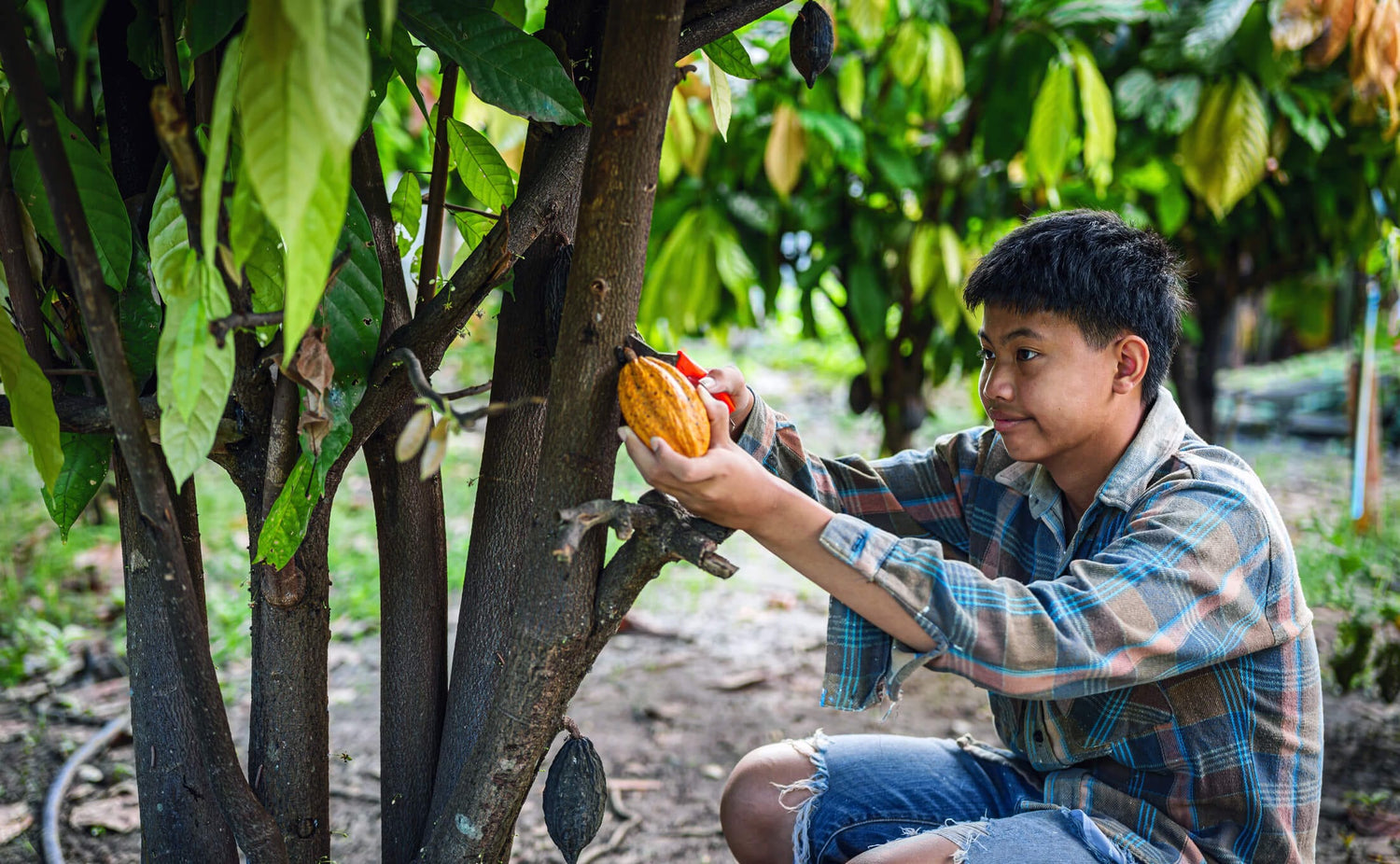
Though still modest in volume, only a few hundred tons harvested each year, Hainan’s cacao is entirely local, traceable, and deeply personal. Every bean tells a story, not of mass production, but of craft and commitment. Each pod is cut by hand, each fermentation box watched closely, each drying mat turned under the island sun by people who know that the beauty of chocolate begins in patience.
These are small farms nestled in the hills of Wanning, Xinglong, and Baisha, where cacao trees grow alongside coconuts, bananas, and pepper vines. Farmers here often work on family plots, guided by agricultural researchers and supported by local cooperatives. Their approach is slow, deliberate, and proudly sustainable, a harmony between traditional tropical agriculture and modern scientific insight.
Traceability isn’t a marketing term in Hainan; it’s a lived reality. From soil to fermentary, every stage of production is mapped, recorded, and studied, ensuring not only quality but respect for the land and the people who care for it. When the beans are finally dried and packed, they carry the signature of the island’s microclimate: gentle acidity, floral notes, and a smooth, buttery depth that reflects both its geography and its philosophy.
Supported by the Haikou Free Trade Port, the province’s growing cacao industry stands at the crossroads of research, culture, and global connection. Here, government initiatives, universities, and international partners collaborate to turn Hainan into a new benchmark for sustainable cacao in Asia. Innovation meets ecology; technology meets tradition.
But beyond logistics and trade routes, the true vision is cultural: to make cacao part of the island’s identity, a source of pride, education, and shared prosperity. With its blend of science, artistry, and tourism, Hainan is shaping a new model for tropical agriculture, one that respects nature, uplifts communities, and celebrates the deep human story behind every bar of chocolate.
And as the world looks increasingly toward ethical and traceable origins, this small island in southern China stands ready to show that great chocolate doesn’t just come from the past, it grows in the promise of the future.
🚀 The Belgian Chocolate Makers is expanding to Hainan in 2026
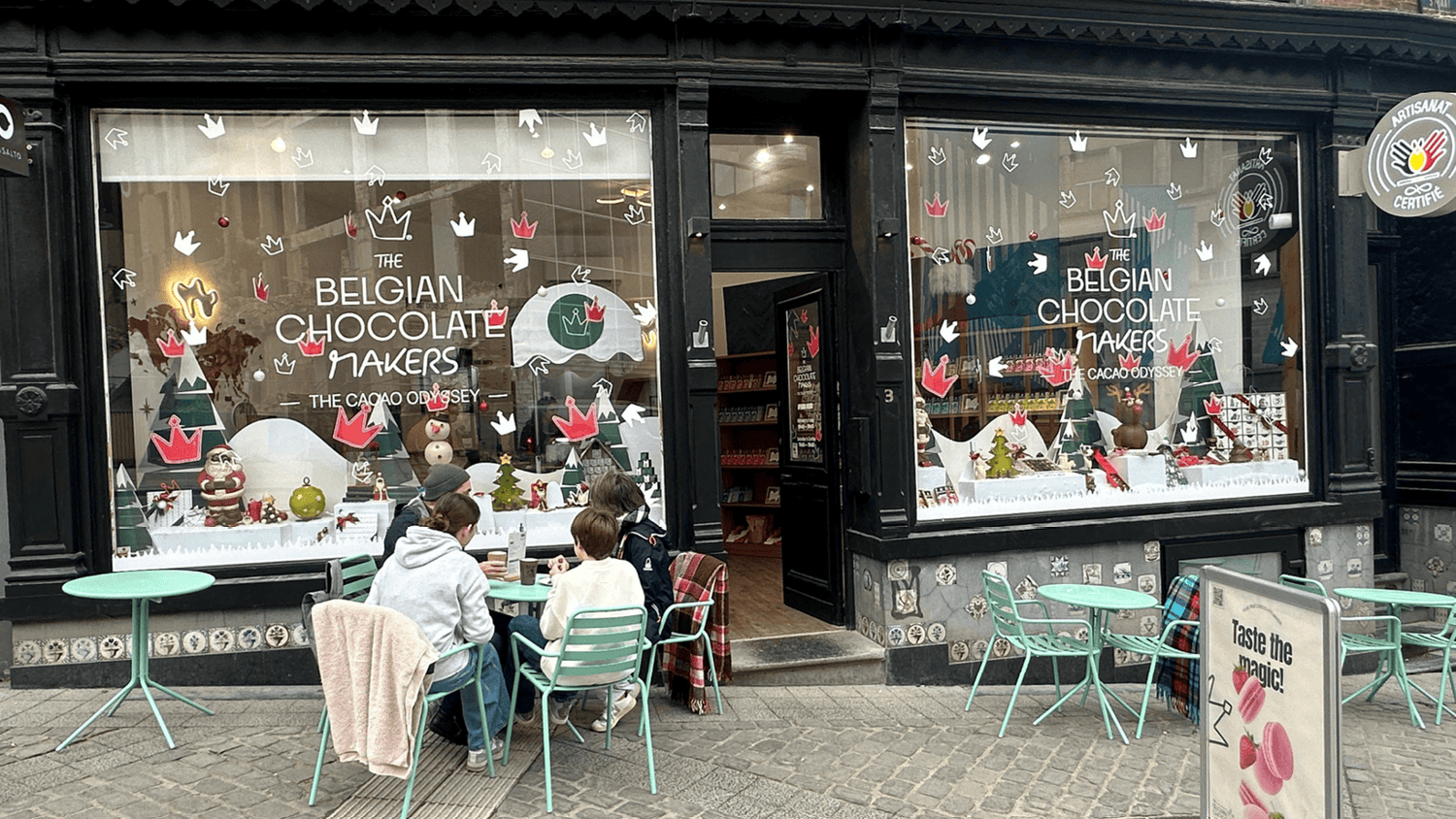
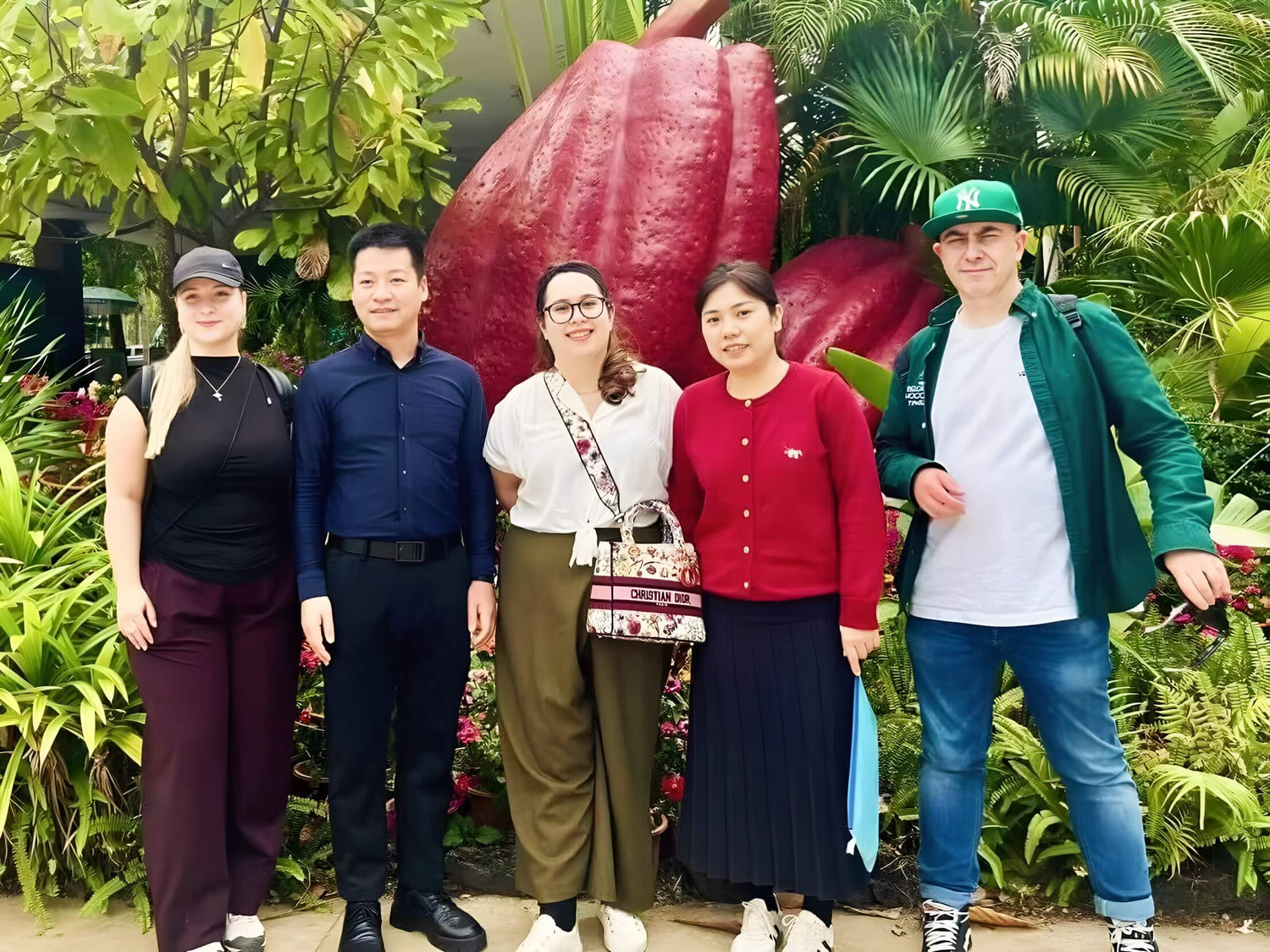
As part of this thrilling evolution, The Belgian Chocolate Makers is preparing to expand to Hainan in 2026, marking the beginning of a new chapter in our journey from bean to bar. In collaboration with local partners, researchers, and institutions, we will open a dedicated Chocolate Centre, a space that unites education, production, and cultural exchange at the very heart of the tropics.
This ambitious project will be more than a factory or an atelier, it will be a living bridge between continents, where Belgian craftsmanship meets tropical origin. Built just a few kilometers from the historic Xinglong Botanical Garden, the Centre will serve as both a working chocolate workshop and a hub for training, innovation, and research.
Inside, visitors will experience every stage of chocolate creation, from the fresh cacao pod to the finished bar, guided by our chocolatiers and local apprentices. There will be hands-on workshops for travelers and professionals, sensory tasting experiences that reveal the aromatic depth of Hainan’s cacao, and professional courses designed to train a new generation of bean-to-bar artisans in Asia.
Beyond education, the Centre will also host a small-scale production facility, transforming locally fermented cacao into chocolate using authentic Belgian techniques, a blend of precision, patience, and emotion. Every bar crafted there will carry a dual signature: the soul of Hainan’s tropical terroir, and the artistry of Belgian chocolate making.
The project embodies our deepest convictions: that great chocolate begins with great relationships, between people, origins, and values. Through this initiative, we aim to create not only exceptional chocolate but also sustainable impact: supporting farmers, promoting traceability, and empowering communities through knowledge and fair collaboration.
This new hub will connect Hainan’s plantations to Brussels’ ateliers, creating an open dialogue between growers and makers, between science and emotion, between the land where cacao is born and the place where it becomes art. A bridge between two worlds, from Brussels to Hainan, from cacao to chocolate, from dream to reality.
✨ A shared passion, from Hainan to Brussels
At The Belgian Chocolate Makers, we look at this journey with deep admiration. Nine thousand kilometers away, under another sun, passionate makers and researchers share the same conviction: chocolate always begins with a human story, one of soil, patience, and transformation.
From Hainan to Betulia, from Idukki to Brussels, the spirit remains the same: to craft chocolate that is honest, traceable, and full of meaning. Each origin tells its own tale, of farmers nurturing rare varieties, of fermentation masters perfecting their art, and of chocolatiers bringing these flavors to life, bean by bean.
What unites us across continents is a shared respect for nature, people, and purpose. Because true chocolate is not just made, it is cultivated, with ethics, with passion, and with heart.
📍 Places to discover in Hainan
- Xinglong Tropical Botanical Garden, historic scientific center for Chinese cacao
- Xinglong Chocolate Town, a cultural, touristic, and artisanal complex
- Haikou Free Trade Port, the gateway for Chinese cacao to the world
🍫 One passion, one dream — The Belgian Chocolate Makers 🌍