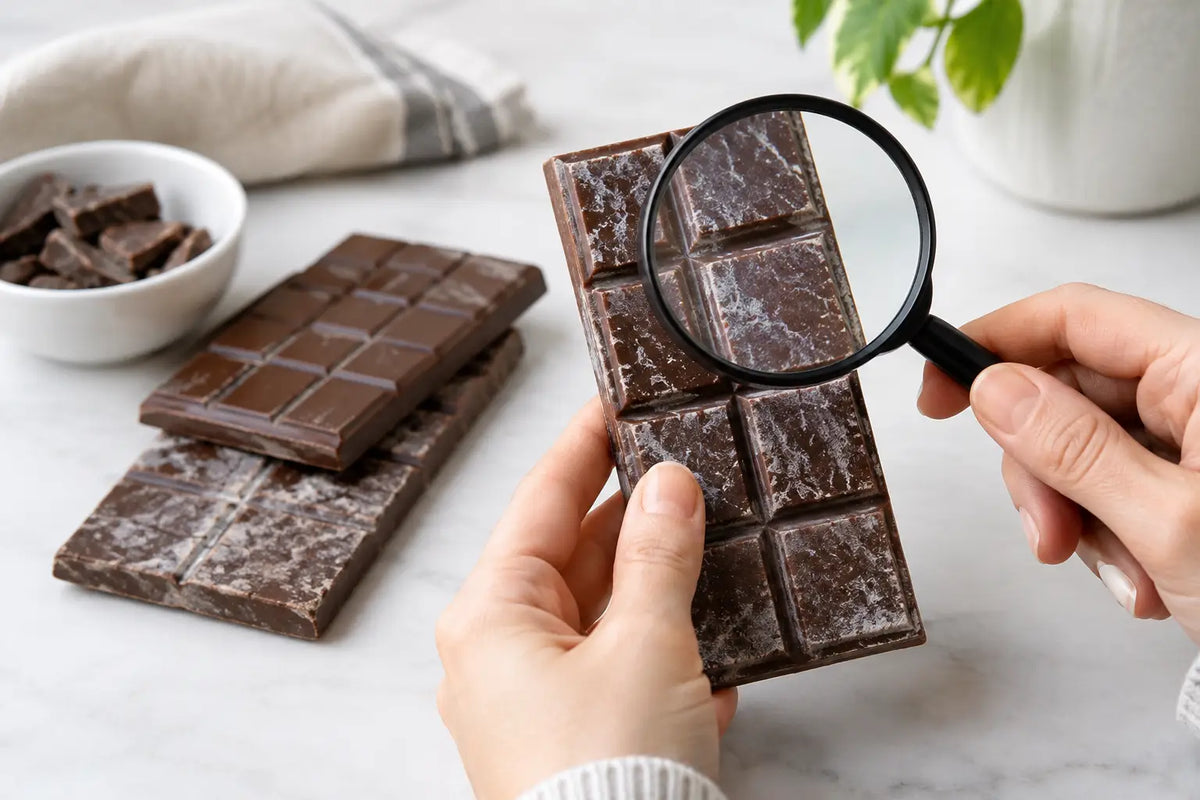
A pale haze on a favorite chocolate bar can look alarming, especially when it was chosen as a gift or saved for a special occasion. Learning to identify chocolate bloom causes helps separate a cosmetic change from a genuine quality issue. In most cases, bloom does not mean the chocolate is unsafe. It does, however, reveal that temperature, humidity, or the chocolate’s crystalline structure has changed.
For bean-to-bar chocolate, appearance is part of the experience. A well-tempered bar should have an even surface, a clean snap, and a finish that reflects careful work from roasting through molding. Bloom can soften that visual polish and alter texture, but knowing what caused it makes it easier to judge whether the chocolate is still enjoyable and how to care for the next bar.
Identify Chocolate Bloom Causes by Looking Closely
Chocolate bloom appears in two main forms: fat bloom and sugar bloom. They can occur separately or together, and both leave a whitish or grayish cast on the surface. The difference matters because each points to a different storage problem.
Fat bloom looks smooth and cloudy
Fat bloom occurs when cocoa butter moves through the chocolate and recrystallizes on the surface. It often looks like a soft gray film, pale streaks, or gently marbled patches. Run a clean, dry finger lightly over it: fat bloom tends to feel smooth or faintly waxy rather than gritty.
This is usually a temperature story. Chocolate may have become too warm, cooled again, or moved repeatedly between temperatures. Even if it never fully melted, enough warmth can disturb the stable cocoa butter crystals created during tempering. Once those crystals reorganize, the surface may lose its gloss.
A bar left near a sunny window, in a warm car, or beside a kitchen appliance is at risk. So is chocolate carried from a cold delivery box into a heated room and then returned to a refrigerator. The problem is not simply heat. It is fluctuation.
Sugar bloom feels rough or grainy
Sugar bloom develops when moisture reaches the chocolate’s surface. The water dissolves a small amount of sugar. When that moisture evaporates, the sugar remains behind as tiny, rough crystals, creating a dusty white coating.
Unlike fat bloom, sugar bloom often feels gritty on the tongue and looks more powdery or speckled. It commonly follows refrigeration without proper wrapping, condensation after a cold bar is opened in a warm room, or storage in a humid pantry. A damp utensil, an imperfectly sealed container, or a box kept near steam can also contribute.
If you are unsure, let the chocolate come to room temperature in its closed packaging before examining it. Condensation created during handling can make a minor issue look more dramatic than it is.
Why Fine Chocolate Can Bloom
Bloom is not necessarily evidence of poor chocolate. It can happen to carefully made chocolate precisely because cocoa butter is a complex natural fat. In a properly tempered bar, cocoa butter is arranged in a stable crystal form that gives chocolate its shine, snap, and pleasing melt. Heat, cold, humidity, and time can disrupt that arrangement.
The exact recipe also matters. Dark chocolate, milk chocolate, white chocolate, filled pralines, and truffles do not all behave the same way. Milk solids and additional fats in milk chocolate can affect texture and stability. Nut pastes, caramel centers, and ganaches introduce their own moisture and fat migration considerations. A filled chocolate may look perfect on the outside while changes are occurring inside the center over time.
At an artisan workshop, tempering is controlled with precision, but chocolate begins a new journey once it leaves the mold. Shipping conditions, seasonal weather, and home storage all influence its final appearance. A beautifully made bar cannot remain immune to a hot doorstep in July or repeated trips in and out of a refrigerator.
The Most Common Causes of Chocolate Bloom
Temperature swings are the leading cause of fat bloom. Chocolate is happiest in a consistently cool environment, rather than in conditions that alternate between warmth and chill. A storage space that feels comfortable to you may still be too warm if it regularly rises above the low 70s Fahrenheit.
Humidity is the usual cause of sugar bloom. Refrigerators are particularly complicated: they can protect chocolate during extreme heat, but they also expose it to moisture and food odors if packaging is not airtight. Refrigeration is a practical compromise, not an ideal default.
The most frequent causes are:
- Storage near heat, sunlight, radiators, ovens, or warm appliances
- Repeated movement between a refrigerator and room temperature
- Humid air entering partially opened packaging
- Condensation on chocolate removed from cold storage too quickly
- Long storage periods, especially for filled chocolates
- Pressure or warmth during shipping and delivery
Is Bloomed Chocolate Safe to Eat?
Plain chocolate with fat or sugar bloom is generally safe to eat if it has been stored reasonably, the package is intact, and there are no signs of mold, pests, unusual odors, or spoilage. Bloom changes appearance and can affect the snap, melt, and texture. It is not the same as mold.
Still, use more care with filled products. Pralines, truffles, and chocolate with cream, fruit, or other soft centers have a shorter best-by window and more complex storage needs. If a filled piece smells sour, fermented, rancid, or otherwise unfamiliar, do not rely on bloom alone to explain it. When in doubt, follow the product’s storage guidance and best-by date.
A useful distinction is this: bloom sits on the surface or reflects changes in the fat structure. Mold is biological growth and may look fuzzy, uneven, or colored. Chocolate’s low water content makes mold uncommon on solid bars, but moisture-rich fillings deserve closer attention.
How to Prevent Chocolate Bloom at Home
The best storage approach is simple: keep chocolate cool, dry, dark, and stable. For most fine chocolate, an interior cabinet away from direct light and heat is better than a refrigerator. Aim for a consistent temperature around 60 to 68 degrees Fahrenheit when possible.
Keep bars in their original wrapper until ready to enjoy. Once opened, wrap the remaining chocolate tightly and place it in an airtight container. This protects it from humidity and from strong aromas. Cocoa butter readily absorbs surrounding odors, so chocolate stored beside coffee, spices, onions, or fragrant cheeses may pick up flavors that do not belong there.
When the weather is very hot or your home is consistently warm, refrigeration can be the better choice. Seal the chocolate carefully in an airtight container or bag. Before opening it, let the sealed package warm gradually to room temperature. This step prevents condensation from forming directly on the chocolate.
Avoid freezing unless there is a specific reason to preserve chocolate for a longer period. Freezing can work when packaging is truly moisture-proof and thawing is slow, but it introduces more opportunities for condensation and texture changes. For a bar intended to be enjoyed within a few months, steady cabinet storage is usually the more elegant solution.
Can You Restore Bloomed Chocolate?
You cannot polish bloom away, but you can often use bloomed chocolate beautifully in the kitchen. Chop it into cookies, grate it over a dessert, melt it into hot chocolate, or use it in ganache. Once melted and properly tempered again, fat bloom can often be corrected because the cocoa butter crystals are reset.
That said, remelting requires care. Overheating can damage flavor and create new tempering problems. Sugar bloom is more difficult to reverse because moisture has already dissolved and recrystallized sugar on the surface. It may still melt into baking recipes perfectly well, but a smooth bar-like finish is harder to recover.
For a special single-origin bar, taste it before repurposing it. Bloom may have changed the texture while leaving the origin character intact: fruit notes, roasted nuts, caramel, or gentle acidity can still be present. Chocolate should be judged with the senses, not by appearance alone.
A little bloom is a reminder that fine chocolate is a living expression of cacao, cocoa butter, and craft rather than an indestructible confection. Store it with the same care you would give a good bottle of wine or a thoughtfully chosen gift, and it will reward you with the shine, snap, and flavor its maker intended.