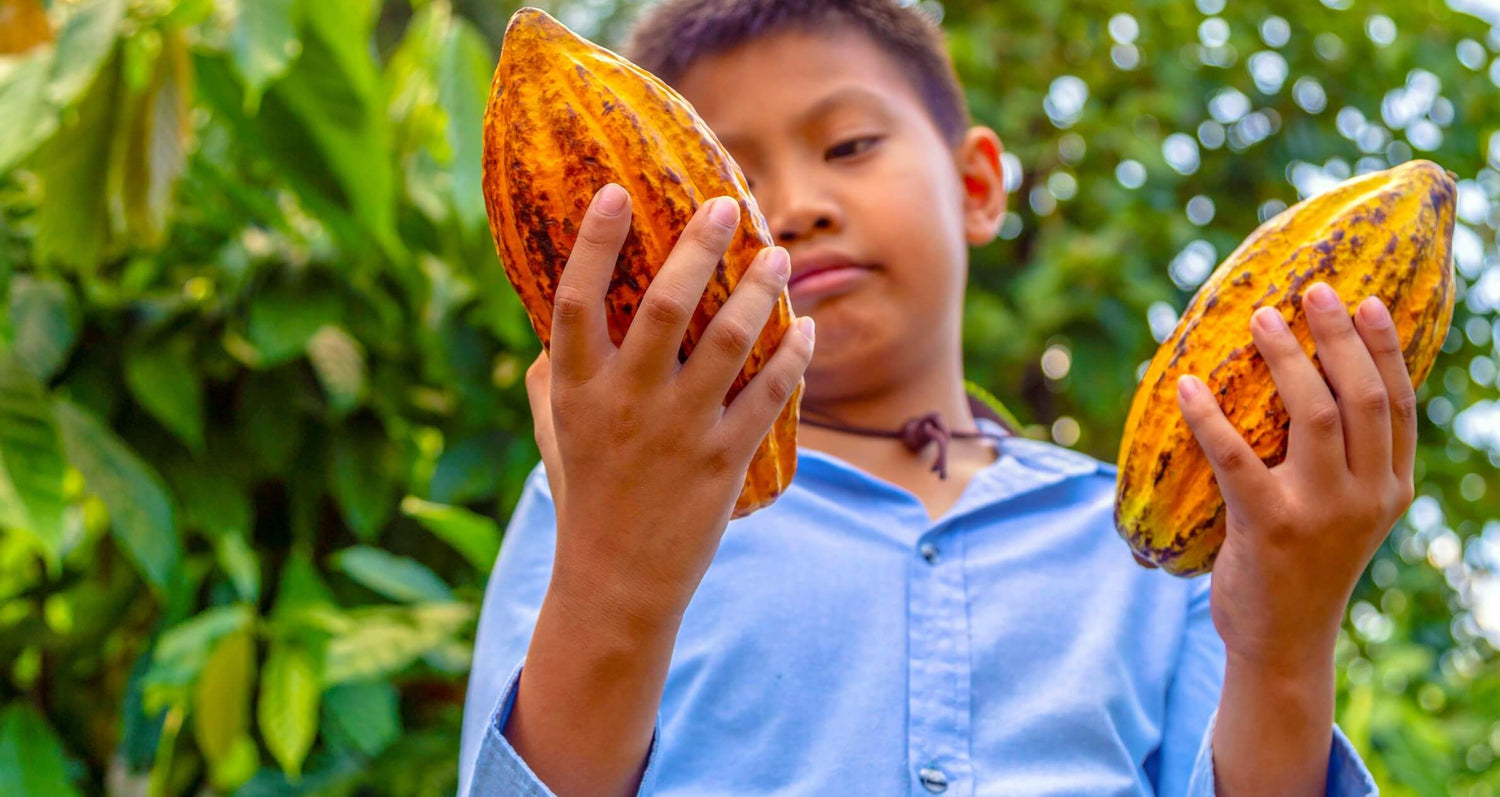
A beautifully made chocolate bar can carry the character of its cacao long after it leaves the workshop: a bright fruit note from one origin, a deeper roasted profile from another, or the clean snap created by careful tempering. Knowing how to store artisan chocolate protects those details. It is less about keeping chocolate cold than keeping it stable, dry, and away from competing aromas.
For bean-to-bar chocolate, storage is part of the tasting experience. Fine cacao, fresh inclusions, delicate fillings, and precise finishing all respond to heat, moisture, and time. Give chocolate the right conditions, and it will remain as the maker intended: glossy, aromatic, and satisfying from the first break to the final melt.
How to Store Artisan Chocolate: The Ideal Conditions
The best place for most artisan chocolate is a cool, dry, dark cabinet or pantry. Aim for a consistent temperature between 60 and 68°F. This range preserves the structure of tempered cocoa butter without dulling the chocolate’s aroma. A small change over a day is normal, but repeated swings between a warm kitchen and a cool room are harder on chocolate than a steady, slightly warmer space.
Humidity matters as much as temperature. Chocolate is sensitive to moisture, which can create a grainy surface and encourage sugar bloom. A relative humidity below 55 percent is a useful goal. In practical terms, avoid storing chocolate near a kettle, dishwasher, stovetop, sink, or window that gathers condensation.
Darkness is the final essential. Direct light, including strong kitchen lighting over long periods, can gradually affect flavor and appearance. Keep bars in their original sleeve, box, or foil whenever possible, then place them in a closed cupboard away from sunlight.
Keep chocolate away from strong smells
Cocoa butter readily absorbs surrounding odors. A bar stored beside coffee, spices, onions, scented candles, or a fragranced cleaning product can take on those aromas surprisingly quickly. This is especially noticeable in milk chocolate and white chocolate, whose creamy profiles are more easily overshadowed.
If you have opened the original wrapping, seal the remaining chocolate in an airtight container or food-safe bag. This protects both its aroma and its texture. It also prevents a carefully chosen single-origin bar from tasting more like the contents of your pantry than the cacao behind it.
Why the Refrigerator Is Usually Not the Answer
Many people instinctively refrigerate premium chocolate, particularly during a warm summer. The refrigerator is not automatically wrong, but it is rarely ideal. Cold temperatures mute aroma, and the humid environment can lead to condensation when chocolate is brought back to room temperature. That moisture may dissolve sugar on the surface; when it dries, a pale, rough-looking layer can appear.
Refrigeration also creates a risk of odor transfer. Even well-wrapped chocolate can pick up traces of savory food over time. For a fine dark bar with nuanced notes of red fruit, nuts, or warm spice, that is a needless compromise.
Use the refrigerator only when your home regularly stays above about 72°F and you do not have a cool, dry cupboard. In that case, wrap the chocolate tightly in its original packaging, place it in an airtight container, and keep it away from foods with strong aromas. Before opening it, let the container sit unopened at room temperature for several hours. This gradual warming limits condensation on the chocolate itself.
Store Each Type of Chocolate According to Its Ingredients
Not all chocolate has the same needs. A plain dark chocolate bar is comparatively stable because it contains little moisture. A filled praline or fresh truffle, on the other hand, may contain cream, butter, fruit purée, or other perishable ingredients. The more complex the filling, the shorter and more specific its storage window may be.
Bars, tablets, and mendiants
Solid bars are the easiest to keep well. Store them cool and dry in their original packaging, ideally lying flat so inclusions remain intact. Mendiants deserve a little extra care: nuts, candied fruit, and other toppings are more exposed to air and can lose their crispness sooner than a plain bar.
For the fullest flavor, enjoy artisan bars within the period indicated by the maker. They may remain safe and pleasant beyond that date when stored properly, but the brightest aromas and cleanest texture are generally at their best earlier.
Pralines and filled chocolates
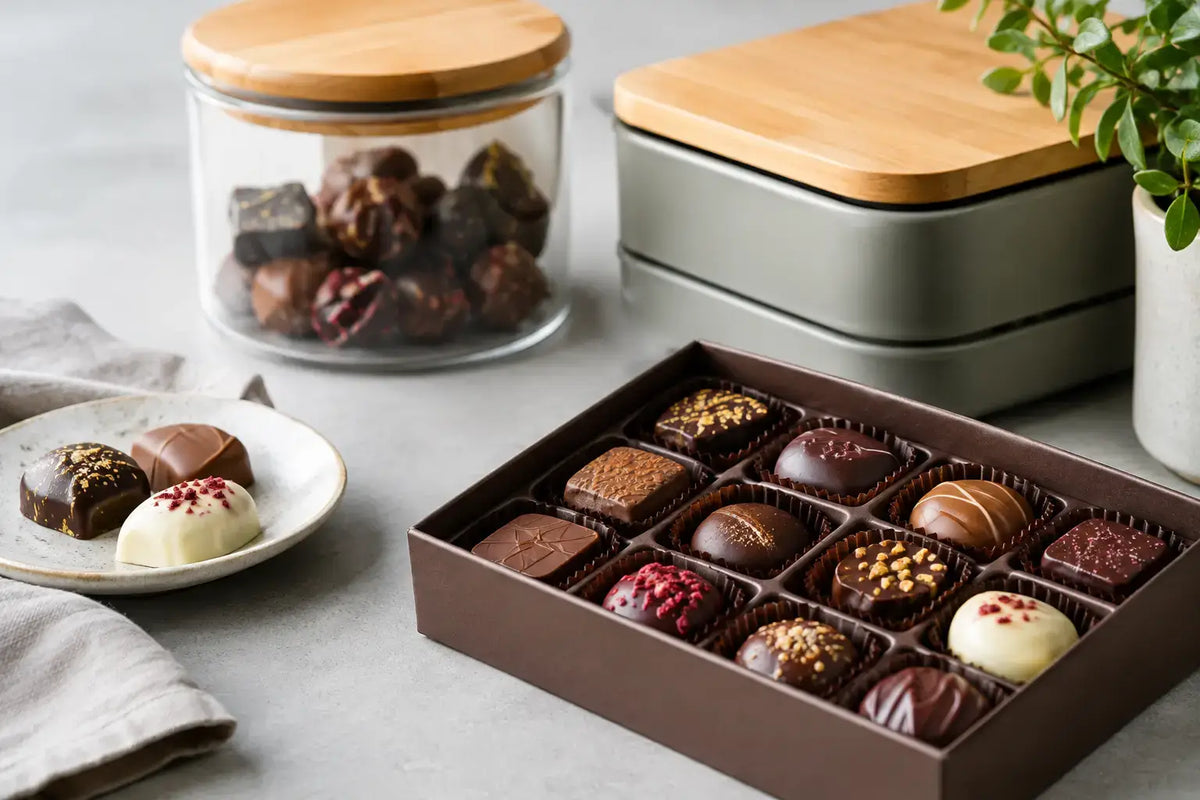
Pralines should be treated as fresh confections, not pantry staples. Keep them in their box in a cool, dry place and follow the use-by guidance provided. Avoid transferring them unnecessarily, as handling can mark the shells and expose delicate decorations to humidity.
If a gift box includes several fillings, begin with the fruit-forward, cream-based, or caramel-filled pieces, then enjoy the more stable gianduja or solid chocolate pieces afterward. This is not a rigid rule, but it is a sensible way to appreciate the box while its most delicate fillings are at their peak.
Truffles and spreads
Fresh truffles often have the shortest shelf life because ganache contains cream. They should be enjoyed promptly and stored according to the label, which may recommend refrigeration. If chilled, allow truffles to rest briefly before serving so the ganache softens and its flavor opens.
Chocolate spreads are different again. Keep an unopened jar in a cool cupboard. Once opened, close it tightly and use a clean, dry spoon. Refrigeration can make a spread overly firm and may change its texture, unless the product instructions specifically call for it.
Understanding Chocolate Bloom
A whitish or grayish film on chocolate can be disappointing, especially on a polished gift or a carefully molded bar. In most cases, it is bloom, not mold. Chocolate’s low water content makes mold unusual when the product has been stored appropriately.
Fat bloom occurs when cocoa butter migrates to the surface, often after heat exposure or temperature fluctuations. It creates a pale, sometimes streaky appearance and can soften the snap. Sugar bloom results from moisture: sugar dissolves on the surface and dries into tiny crystals, leaving a rougher, dusty look.
Bloom does not usually make chocolate unsafe to eat, but it does alter texture and visual appeal. In a plain bar, it can still be very enjoyable when melted into hot chocolate, shaved over dessert, or used in baking. For a gift, however, stable storage is the best way to preserve the elegant finish that makes artisan chocolate feel special before it is even tasted.
Serving Temperature Matters Too
Storage and serving are connected. Chocolate straight from a cold space may feel hard, taste quieter, and release less aroma. Let bars and pralines come to room temperature before tasting, ideally around 65 to 70°F. This gives cocoa butter enough softness to melt smoothly on the palate without becoming greasy.
Break a bar only when you are ready to enjoy it. The clean snap is not merely satisfying; it is a sign that tempering has been well preserved. Then let a small piece melt slowly rather than chewing immediately. Fine chocolate is built in layers, and a little patience reveals more of the cacao’s origin and craft.
Can You Freeze Artisan Chocolate?
Freezing is best reserved for situations where you need to keep unopened chocolate for an extended period and have no better option. It is not the preferred method for a carefully selected bar, and it is generally unsuitable for fresh pralines or truffles unless the maker explicitly advises it.
If freezing is necessary, use multiple protective layers: keep the chocolate in its original packaging, seal it in an airtight bag or container, and protect it from odor and moisture. Defrost it slowly, first in the refrigerator and then at room temperature, while keeping the container closed. The goal is to prevent condensation from settling directly on the chocolate.
A well-kept piece of artisan chocolate is a small record of careful work, from the cacao’s origin to the final molding. Store it with the same consideration, then share it at its best: unhurried, at room temperature, and ready to be remembered.