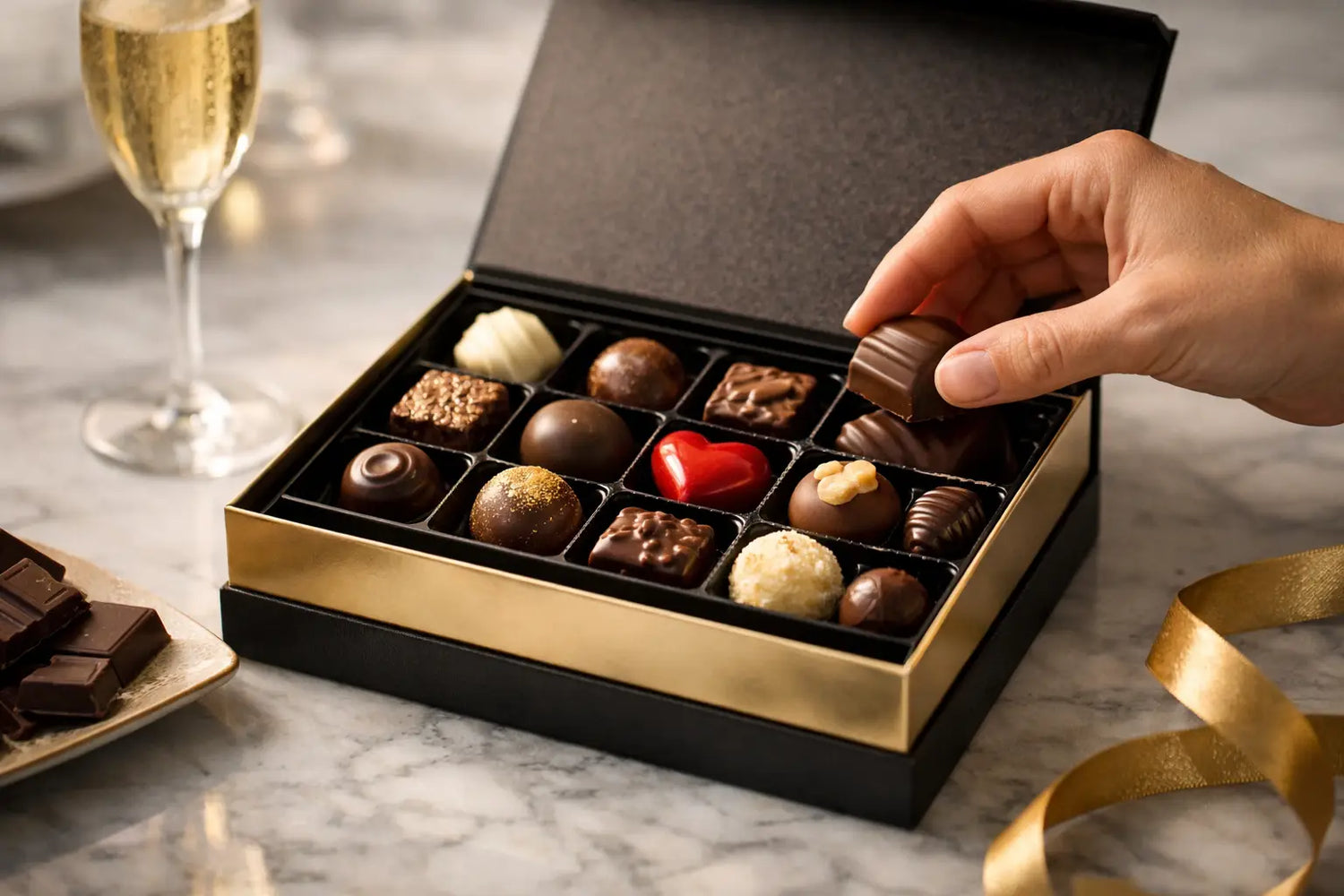
A gift box can look impressive long before it proves anything about the chocolate inside. Silk ribbon, gold foil, and polished packaging often do their job well. The real question is whether the chocolate earns that presentation. When you are choosing a luxury chocolate gift assortment, the difference lies in what is made, how it is made, and whether the assortment offers genuine variety rather than decorative excess.
For many buyers, luxury still gets reduced to appearance. That is understandable. Gifting is visual, and first impressions matter. But fine chocolate has its own standards of quality, and they begin well before wrapping, inserts, and finishing touches. If you want a box that feels generous and tastes memorable, it helps to know what separates a truly crafted assortment from one that simply borrows the language of premium food.
What makes a luxury chocolate gift assortment worth giving
A strong assortment should do more than gather a random selection of sweets in one box. It should feel curated. That means the pieces belong together, yet each contributes something distinct, whether through texture, cacao origin, filling style, or intensity.
The first marker is chocolate quality itself. Many brands sell gift boxes made with purchased industrial couverture, then build luxury around decoration and brand image. There is nothing inherently wrong with couverture, but it does create a different product. When chocolate is made bean to bar in-house, the maker controls roasting, refining, conching, and flavor development from the start. That level of control is not a marketing detail. It directly shapes aroma, balance, finish, and the way each filling sits within the shell.
The second marker is freshness. Pralines, truffles, mendiants, and filled chocolates each have different ideal shelf lives. A well-made assortment respects those differences. It does not rely on heavy sweetness or excessive stabilizers to flatten time. Instead, it aims for a box that tastes alive when opened, with fillings that retain clarity and shells that still have snap.
Presentation matters too, but in the right order. Elegant packaging should protect the chocolates, preserve structure, and make gifting feel considered. It should not be asked to distract from a predictable assortment inside.
A closer look at assortment quality
Not every mixed box offers real range. Some simply repeat one chocolate base across slightly different shapes. Others overload on sugary fillings that mask the cacao. A better luxury chocolate gift assortment creates variation with purpose.
Variety should include flavor, not just shape
A square praline, a dome truffle, and a heart-shaped piece may look different while tasting nearly identical. True assortment value comes from flavor architecture. You want contrast between dark and milk chocolate, between clean ganaches and nut-based pralines, between soft textures and crisp inclusions.
That contrast should still feel coherent. A box with twenty unrelated flavors can become confusing rather than refined. The best assortments show restraint. They offer enough diversity to keep the experience engaging without turning it into novelty for its own sake.
Origin matters more than most gift buyers realize
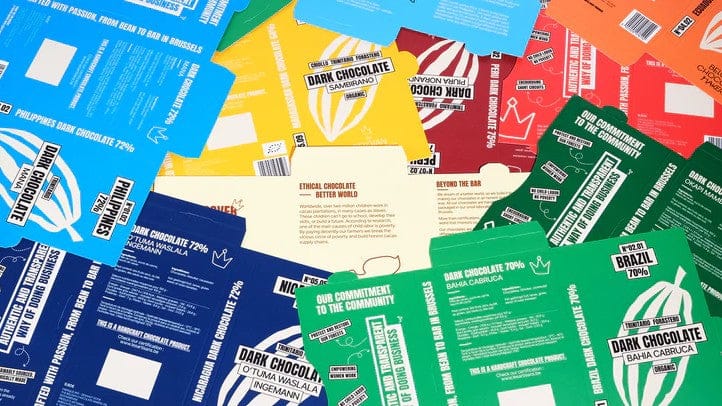
Cacao origin changes flavor in noticeable ways. One origin may bring red fruit and citrus brightness, another toasted nuts, deep cocoa, or warm spice notes. In a premium assortment, origin is not background information for the back of the box. It is part of the tasting experience.
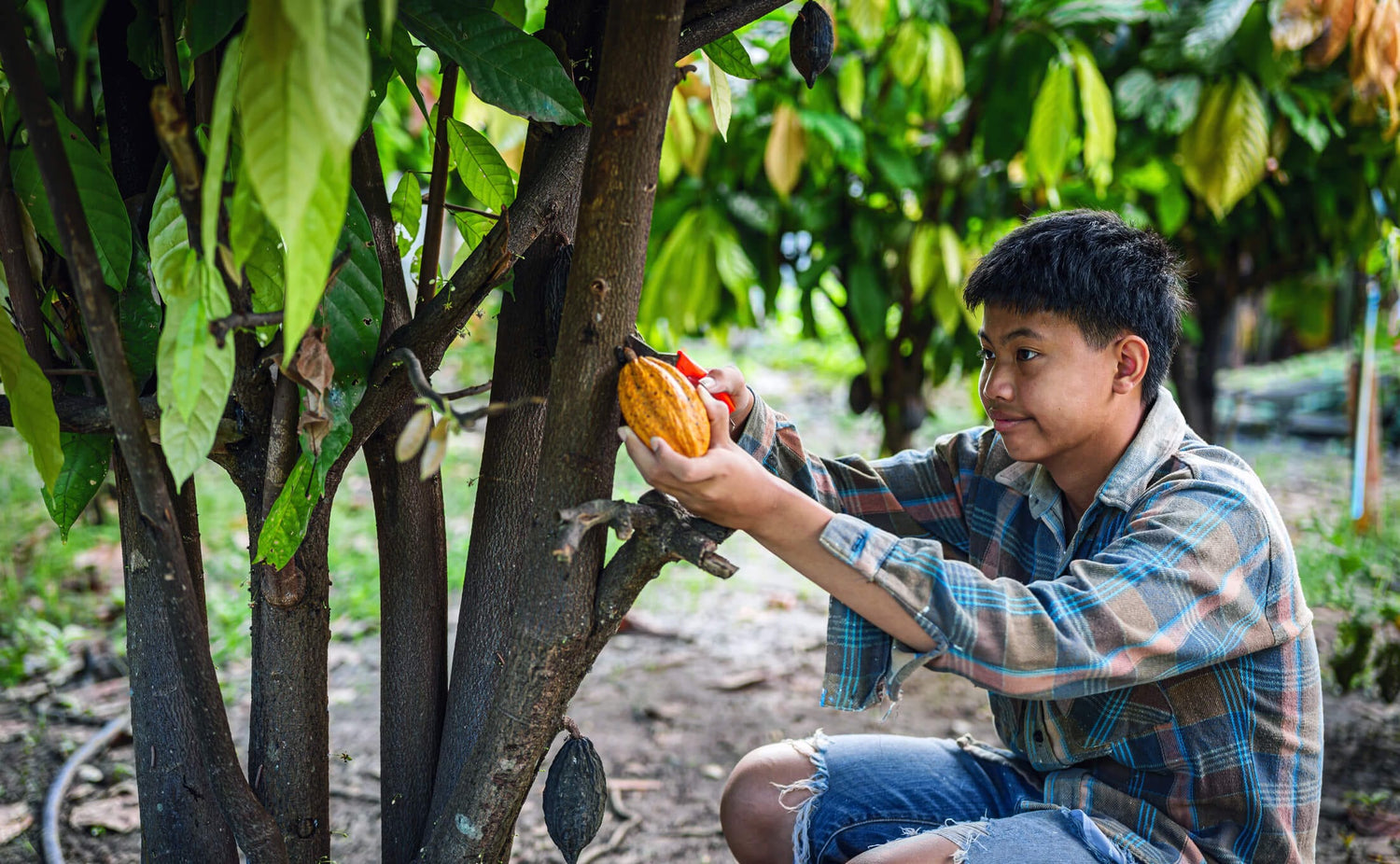
This is especially important for buyers who want a gift with substance. Traceable cacao signals more than quality control. It reflects transparency, sourcing standards, and a closer relationship between maker and ingredient. For ethically minded shoppers, that matters. For flavor-focused shoppers, it matters just as much.
Texture is part of luxury
Luxury in chocolate is not only about richness. It is also about precision. Shells should be thin enough to break cleanly without dominating the filling. Ganaches should be smooth, not greasy. Nut pralines should taste freshly roasted and finely ground rather than overly sweet or pasty.
A well-built assortment often includes a few textural shifts such as crisp caramelized inclusions, tender truffle centers, and classic pralines with depth from nuts rather than sugar alone. These details are subtle, but they are usually what people remember after the box is finished.
How to choose the right assortment for the occasion
The best gift box depends on who is receiving it and why. A corporate thank-you, a holiday gift, and a personal gesture do not all call for the same kind of assortment.
For formal gifting, balance is usually the safest route. A selection that includes dark, milk, and a few approachable fillings tends to satisfy a wider range of preferences. Extremely experimental flavors can be exciting, but they are not always ideal when the audience is unknown.
For personal gifting, specificity can be more meaningful. If the recipient already appreciates fine food, a box with single-origin pieces, classic Belgian pralines made with greater cacao character, or bean-to-bar signatures will likely feel more thoughtful than a broad crowd-pleaser.
Season also plays a role. Cooler months invite richer textures, deeper roast notes, and comforting flavors like hazelnut, caramel, coffee, or spice. In warmer periods, fruit-forward ganaches, bright dark chocolate profiles, and lighter assortments often feel more appropriate. There is no rigid rule here, but the most satisfying gifts often feel in tune with the moment.
Signs of craftsmanship to look for
If you are shopping online or buying from a brand you do not know well, a few quality signals can tell you a great deal.
Look first for clarity about production. Does the maker explain where the chocolate comes from and how it is made? Do they make the chocolate themselves, or only the finished confections? The distinction matters. A chocolatier can be skilled at fillings and presentation, but bean-to-bar production adds another level of authorship.
Next, check whether the assortment seems designed around real product strengths. A serious maker usually describes shells, fillings, origins, or textures with confidence and precision. Vague luxury language without product detail often suggests the emphasis is elsewhere.
Finally, consider the composition of the box. Is there evidence of curation, or simply quantity? More pieces do not always mean better value. A smaller assortment made with careful ingredients and exacting technique often gives a stronger impression than a large box built around repetition.
Why bean-to-bar changes the gift experience
When a chocolatier works from finished couverture, the expressive range starts from an ingredient already defined by someone else. When the chocolate is made in-house from cacao beans, the flavor story begins at origin and continues through roasting, refining, and molding. That approach gives a gift assortment a different kind of credibility.
You can taste it in the chocolate itself, but you can also feel it in the coherence of the collection. The shells, bars, mendiants, spreads, pralines, and truffles all come from the same philosophy of making. For a gift buyer, that creates confidence. The assortment does not just look premium. It has a reason for being premium.
This is one reason craft-minded Belgian makers continue to stand apart. Belgian chocolate heritage carries weight, but heritage alone is not enough for modern buyers. People increasingly want proof of process, transparency of sourcing, and a product that feels made rather than assembled. In that context, a carefully built assortment offers both tradition and accountability.
When luxury can go wrong
There are a few common pitfalls. One is over-decoration. If every piece is heavily sweetened, painted, filled, and topped, the box may look lavish but taste exhausting. Another is false variety, where many pieces differ only superficially. The last is poor alignment between product and recipient. A high-cacao assortment for someone who prefers softer milk chocolate styles may miss the mark, even if the chocolate is excellent.
That is why the best gift choice is not always the most expensive one. It is the one with clear craftsmanship, honest ingredients, and a composition that suits the occasion.
A good chocolate gift is finished when the last piece is eaten. A great one starts a conversation before that happens - about flavor, origin, texture, and the pleasure of receiving something made with real care.