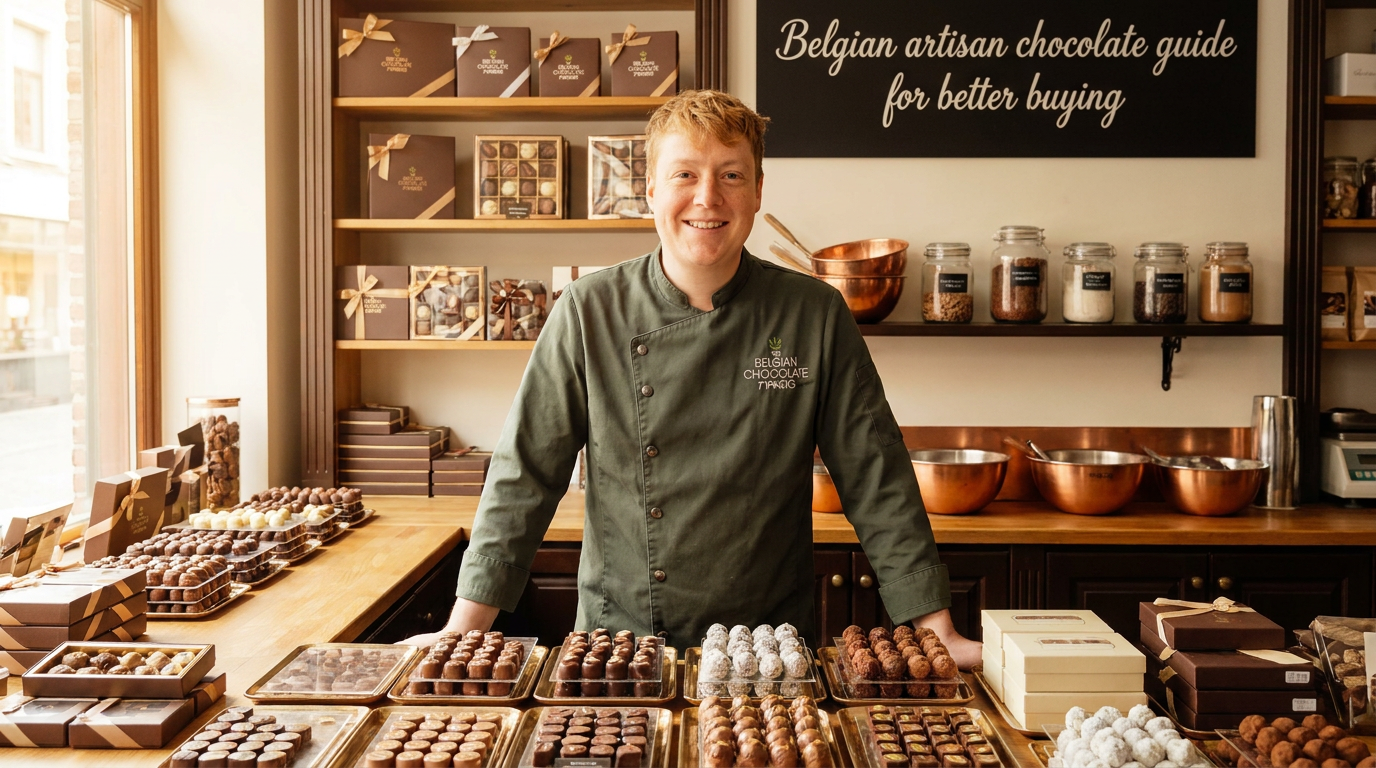
A proper Belgian artisan chocolate guide begins before the first bite. Belgium is rightly known for pralines, truffles, and elegant gift boxes, but the most revealing question is simpler: who actually made the chocolate? When a maker works directly from cacao beans, the flavor, sourcing, and craft behind each bar or bonbon become part of the experience rather than a hidden detail.
For a personal treat or a meaningful gift, artisan chocolate offers more than a polished box. It offers a connection to cacao origin, a carefully managed process, and the Belgian tradition of making chocolate feel generous, precise, and celebratory.
What makes Belgian chocolate truly artisan?
Not every chocolate made or sold in Belgium is made in the same way. Many respected chocolatiers create beautiful pralines using purchased couverture, professionally made chocolate that is melted, tempered, molded, and paired with fillings. This can produce excellent confectionery, especially when the fillings are fresh and the finishing is skilled.
Bean-to-bar makers take on an earlier and more demanding stage of the work. They source cacao beans, roast them, remove the shells, refine the nibs with sugar and other ingredients, develop texture through conching, temper the finished chocolate, and finally mold or enrobe it. Each decision affects the final result.
Roasting may bring out notes of toasted nuts, red fruit, honey, or warm spice. Refining determines whether chocolate feels silky or gritty. Conching rounds sharp edges and builds texture, but too much can soften the distinctive character of a remarkable bean. Small-batch production gives makers more control, though it also means less room to hide inconsistent ingredients or imprecise technique.
That distinction matters when comparing labels. “Belgian chocolate” can describe a place of production, a tradition, or even a style. “Bean-to-bar” describes a fuller act of making. The two can belong together, but they are not interchangeable.
A Belgian artisan chocolate guide to flavor and origin
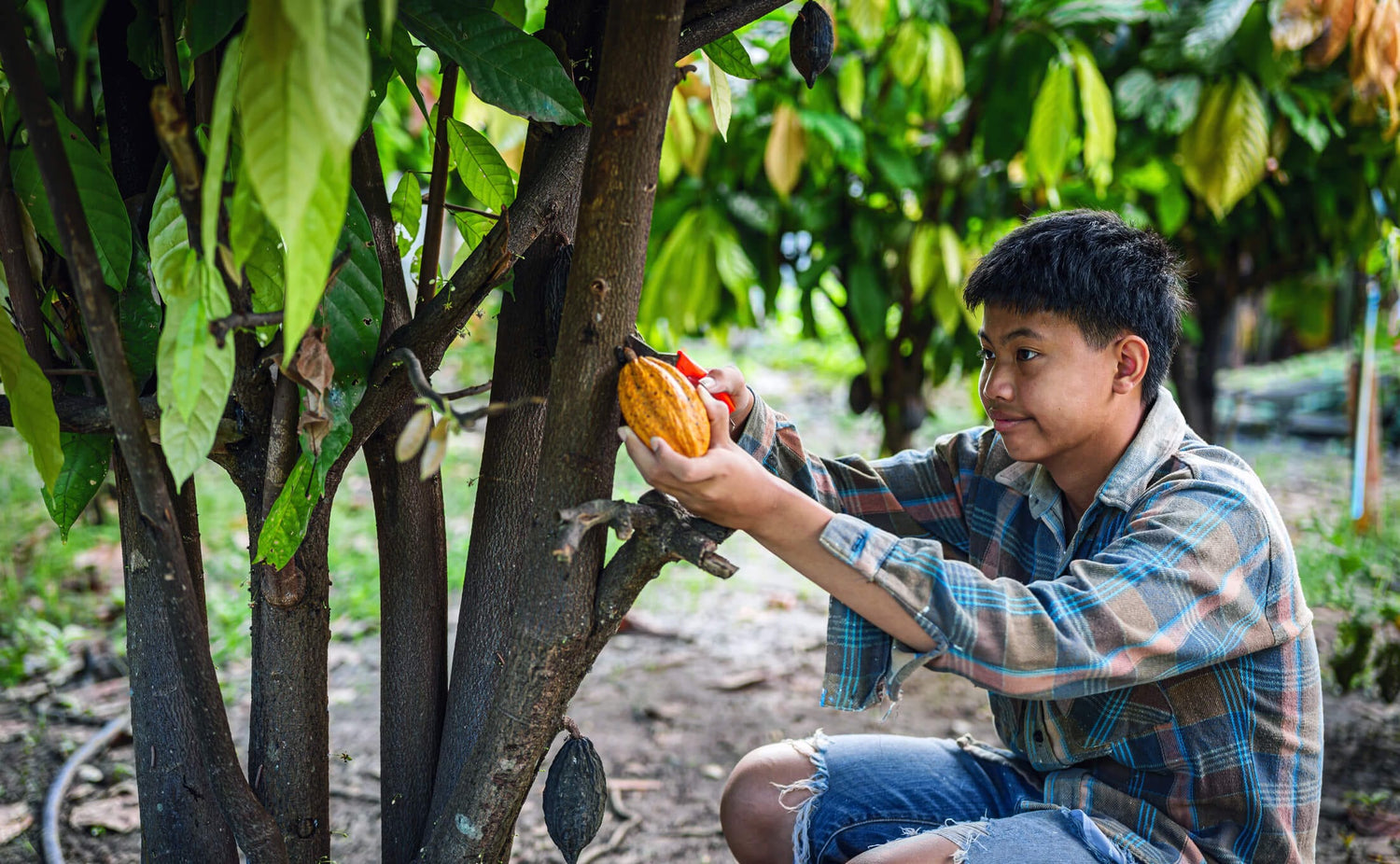
Cacao is an agricultural product, and its flavor changes with variety, climate, fermentation, drying, and harvest practices. A bar made with cacao from Madagascar may show lively red-fruit acidity. A Dominican Republic cacao can lean toward caramel, roasted nuts, or dried fruit. Beans from Ecuador may offer floral, earthy, or deep cocoa notes depending on their genetics and post-harvest handling.
Origin does not automatically make chocolate better. A single-origin bar is most rewarding when the maker has treated that cacao with care and explained it clearly. Look for a named country at minimum, and ideally a region, cooperative, farm, or sourcing partner. Specific information does not guarantee perfection, but it is a meaningful sign that the maker understands the material rather than treating cacao as a generic commodity.
Percent cacao is useful, yet it is not a scorecard. A 70% bar can be bright and delicate, while an 85% bar can be rich and smooth. Higher percentages generally mean less sugar and a more concentrated cacao presence, but they can also emphasize bitterness, acidity, or astringency if the beans or recipe are not well balanced. For many people, 60% to 75% is a generous starting range for tasting origin character without sacrificing approachability.
Milk chocolate deserves the same attention. Fine milk chocolate can carry biscuit, malt, caramel, and creamy notes while still allowing cacao personality to appear. The best examples feel balanced rather than merely sweet. White chocolate, made from cocoa butter rather than cocoa solids, can also be compelling when it has real cocoa butter, restrained sweetness, and thoughtful additions such as vanilla, citrus, or nuts.
How to read a chocolate label with confidence
A well-made bar does not need a crowded ingredient list. For dark chocolate, the essentials are usually cacao beans or cacao mass, cocoa butter, and sugar. Vanilla may be used sparingly. Lecithin can improve flow during production and is not inherently a mark of poor quality, although many small makers choose to work without it.
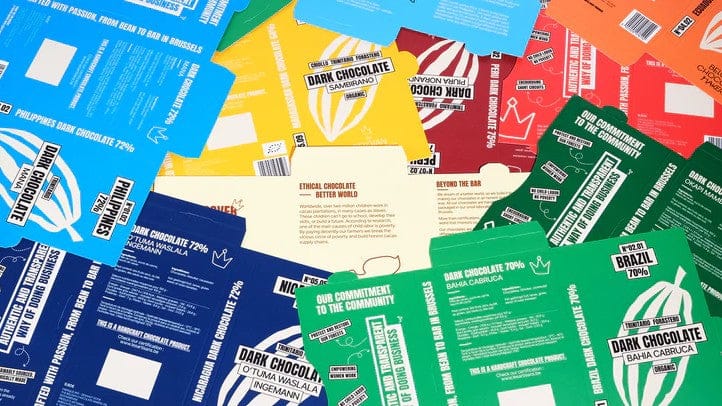
The more useful question is whether the label tells a coherent story. Does it identify the cacao origin? Does it state the cacao percentage? Are flavor inclusions presented as a complement to the chocolate rather than a distraction? Is there information about the maker’s own process or sourcing standards?
For filled chocolates, ingredient lists naturally become longer. Fresh cream, butter, fruit purée, nuts, spices, and liqueurs all have a place in fine pralines and truffles. Here, freshness is especially important. A box intended for immediate enjoyment may offer more delicate fillings than one designed to travel or sit on a shelf for months. Neither approach is automatically superior, but the product should be transparent about its character and storage needs.
Choosing bars, pralines and gifts
The right format depends on the occasion and the person receiving it. A single-origin bar is an excellent choice for someone who enjoys coffee, wine, specialty foods, or the quiet pleasure of tasting. It invites attention and makes origin differences easy to understand.
Pralines are ideal when variety is part of the pleasure. They combine chocolate shells with ganache, praliné, caramel, fruit, or liqueur centers, creating a more festive and immediately giftable experience. Traditional Belgian technique shines here, particularly when a maker pairs precise shell work with chocolate made in-house.
Truffles offer a softer, more indulgent profile, often centered on ganache and a delicate coating. Mendiants bring texture through nuts and fruit, while spreads make a thoughtful choice for hosts, families, or anyone who prefers their chocolate on toast, pastries, or warm crêpes.
When choosing a gift, presentation matters, but it should support the quality inside. A refined assortment with clear flavor descriptions is more useful than an oversized box of anonymous pieces. Consider the recipient’s preferences: dark or milk chocolate, nut-free needs, alcohol-free choices, adventurous flavors, or familiar classics. For corporate or holiday gifting, a curated collection that combines bars and pralines can feel personal without requiring the recipient to be a chocolate expert.
Why freshness and storage matter
Chocolate is more stable than many foods, but it is not immune to its environment. Heat, strong odors, humidity, and direct sunlight can all diminish its quality. Store chocolate in a cool, dry place, ideally around 60 to 68°F, away from spices, coffee, and perfumed products. The refrigerator is usually a last resort because condensation can affect texture and appearance when chocolate returns to room temperature.
A grayish white film on a bar is often bloom, caused by cocoa butter or sugar moving to the surface. It may be less attractive, but it does not necessarily mean the chocolate is unsafe to eat. The snap may be softer and the texture less elegant, however, which is why careful storage still matters.
Before tasting, let chocolate rest at room temperature. Notice the gloss and listen for a clean snap in a tempered bar. Smell it before biting. Then let a small piece melt rather than chewing quickly. Fine chocolate often changes across a few seconds, moving from an opening note of fruit or roast to a longer finish of cream, spice, wood, or cocoa.
The value of traceable craft
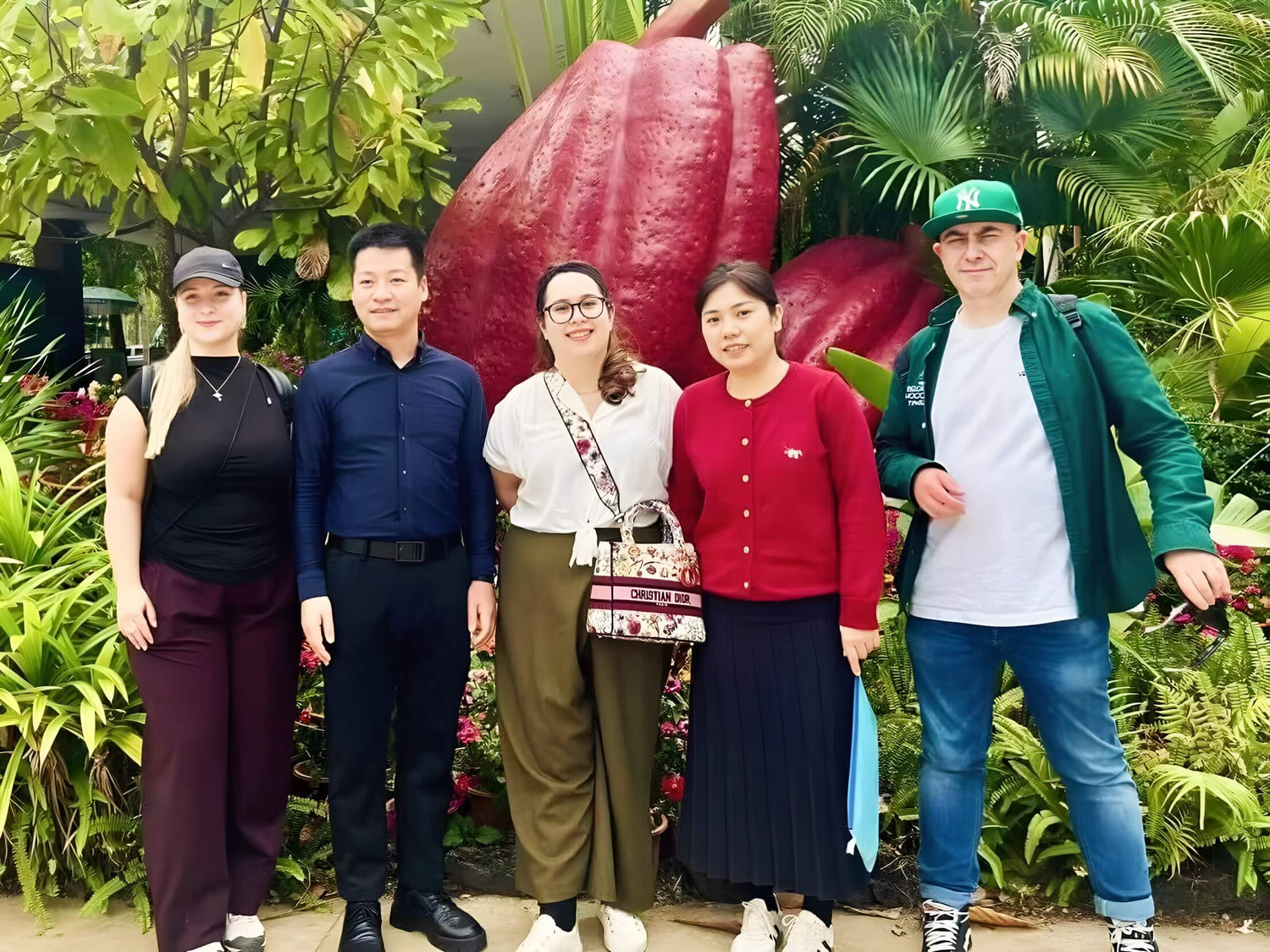
Ethical sourcing is not a decorative claim. Cacao farming involves real people, long supply chains, and agricultural risks that cannot be solved by a single label or a charming package. Still, chocolate makers can make more responsible choices by seeking direct relationships where possible, paying attention to traceability, and sharing meaningful information about where their beans come from.
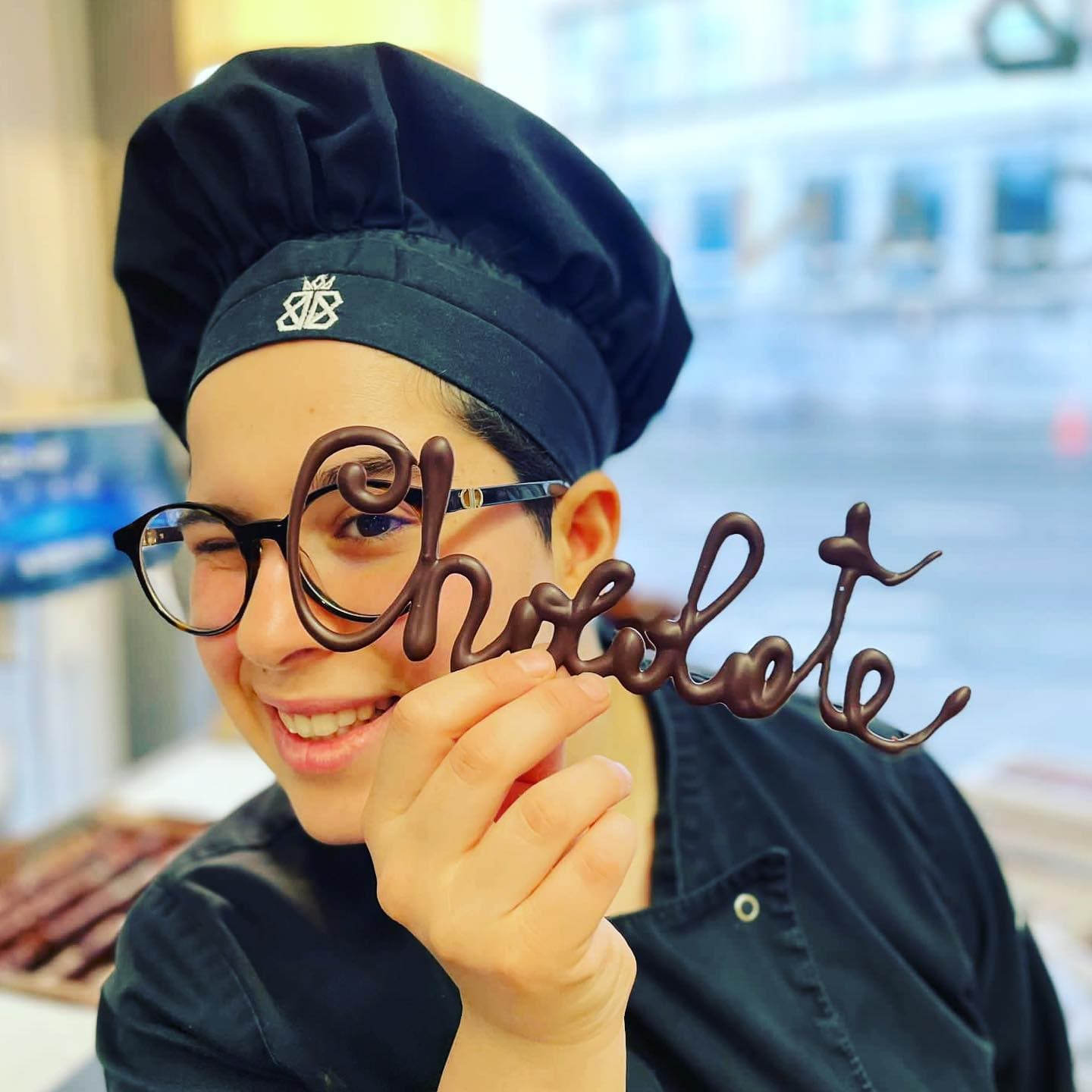
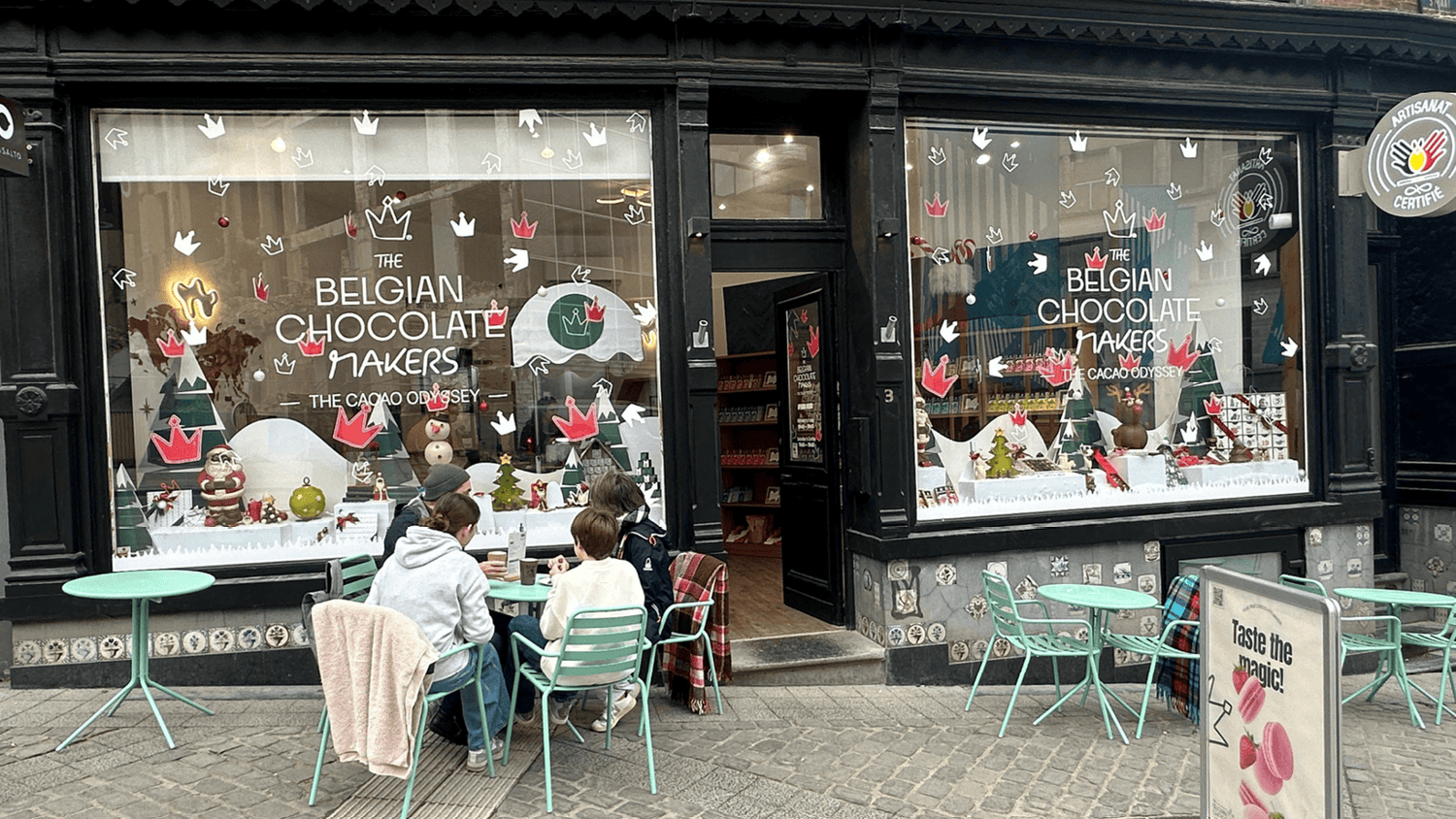
For buyers, transparency is a practical standard. A maker should be able to speak clearly about ingredients, origin, and production. The Belgian Chocolate Makers, for example, produces chocolate in its Brussels workshop from carefully sourced beans, connecting Belgian confectionery craft with the flavor and accountability of bean-to-bar production.
A thoughtfully chosen chocolate bar or box does not need a complicated tasting vocabulary to be appreciated. Start with a maker that is clear about its beans, generous with its craft, and attentive to the person who will enjoy it. Then take the time to taste one piece slowly - that is often where the real difference becomes unmistakable.